

When a Rendering Just Isn’t Enough
There’s a particular kind of frustration that architects and homeowners both know well. You’ve spent hours maybe days refining a 3D model on screen. The proportions feel right. The roofline looks clean. The way the kitchen opens into the living area seems logical. And then you walk the actual site, or you sit across from a client, and suddenly that confidence starts to waver. Screens are flat. Screens lie, in the kindest possible way. They flatten depth, compress scale, and make everything feel more resolved than it actually is.
That’s the gap that physical 3D printing fills. Not as a novelty, and not as a luxury reserved for big architectural firms with equipment budgets the size of small cars. Increasingly, it’s become a practical, accessible step in the home design process one that changes how people understand space before a single wall goes up.
The Difference Between Seeing and Holding
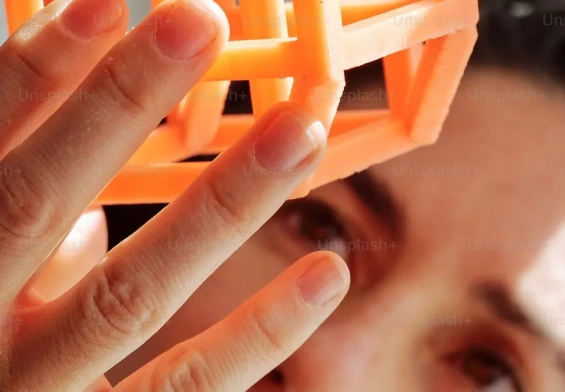
There’s something almost primal about holding a physical object in your hands. When you rotate a printed model of your future home, your brain processes spatial relationships in a way that no screen interaction can replicate. You notice that the garage feels disproportionately large relative to the front entrance. You realize the second-floor balcony, which looked elegant in the render, actually blocks natural light from reaching the dining room below. These aren’t things you failed to notice because you weren’t paying attention. They’re things the screen simply couldn’t communicate.
Cognitive scientists sometimes refer to this as embodied cognition the idea that understanding isn’t purely a mental exercise but is shaped by physical interaction with the world. When design decisions live only inside a computer, they remain abstract, no matter how photorealistic the rendering. The moment you can pick up a model, turn it over, peer through a window opening with one eye closed, the abstraction collapses. The house becomes real in a way it wasn’t before.
For homeowners who aren’t trained to read architectural drawings or navigate 3D software, this shift is even more dramatic. A physical model is a universal language.
Getting Your Digital Model Print-Ready
The process begins well before anyone touches a printer. Most home design software whether you’re working in SketchUp, Revit, Chief Architect, or even more consumer-friendly platforms like Planner 5D can export files in formats suitable for 3D printing. The most common is STL, though OBJ and 3MF files are also widely accepted. The key is making sure your model is what the printing community calls “watertight” meaning the geometry is fully enclosed with no gaps, holes, or overlapping surfaces that would confuse the printer’s slicing software.
This is where many first-timers hit their first wall. A model that looks perfect on screen can be riddled with invisible geometry errors. Surfaces that appear connected might technically be floating a fraction of a millimeter apart. Interior walls might be modeled at real-world thickness say, six inches which at a print scale of 1:100 becomes a sliver too thin to print reliably. Roof overhangs that seem structurally sound in the digital world might require support structures that complicate the print.
Tools like Meshmixer, Netfabb, or the repair functions built into Microsoft 3D Builder can diagnose and fix most of these issues automatically. Running your file through one of these before sending it to the printer saves considerable frustration. Some printing services also offer file repair as part of their workflow, which is worth asking about if you’re outsourcing the job.
Scale matters enormously. A 1:100 scale is common for full home models it keeps the print manageable in size while preserving enough detail to be readable. A house with a 50-foot footprint becomes about 6 inches at this scale, which fits comfortably on a desk and can be held in two hands. If you want to focus on a specific area a kitchen layout, a staircase configuration, an entry sequence printing at 1:50 or even 1:20 gives you far more detail and makes subtle spatial decisions much easier to evaluate.
Choosing the Right Printer and Material
If you have access to a desktop FDM printer the kind that melts plastic filament and builds up layers you can produce a perfectly serviceable architectural model. PLA filament is inexpensive, widely available, and prints cleanly at the detail levels most home models require. The layer lines give the model a slightly textured surface, which some people find charming and others find distracting. Printing in a single neutral color white or light gray tends to read best for architectural purposes, since it keeps the eye focused on form rather than finish.
Resin printers offer significantly higher resolution, capturing finer details like window mullions, decorative trim, or the texture of a stone facade. The tradeoff is messiness resin printing involves liquid photopolymers that require careful handling and proper ventilation and cost. Both the printers and the resin itself run higher than FDM equivalents. For most residential models, FDM is more than adequate. For presentation-quality work or particularly detail-rich designs, resin is worth the additional effort.
If you don’t own a printer, the options have expanded considerably. Local makerspaces and libraries often have printers available for member use, sometimes at very low cost. Online services like Shapeways, Craftcloud, or Treatstock let you upload your file and receive a finished print by mail, with material and finish options ranging from basic plastic to full-color sandstone composite. For a one-time model, outsourcing often makes more economic sense than purchasing equipment.
Reading the Model: What to Look For
Once the print is in your hands, the real work begins. The instinct is to admire it and that’s fine, for a moment. But then you want to start interrogating it.
Walk around it slowly. Notice where your eye naturally travels. Does the facade have a clear focal point, or does it feel scattered? Hold it at eye level and imagine standing at the front door. What’s the first thing you see? Does the entry sequence feel welcoming, or does it feel like an afterthought?
Look at the relationship between indoor and outdoor spaces. If you’ve printed the surrounding site even a simplified version you can start to understand how the house sits on the land. Does it turn its back on the best view? Does the backyard feel private or exposed?
For interior layouts, a model with a removable roof section is invaluable. This requires a bit more planning during the modeling phase designing the roof as a separate component that lifts off cleanly but the payoff is significant. You can peer down into the floor plan from above, move a small object through the space to simulate circulation, and immediately feel whether a hallway is too narrow or a room too isolated.
Some designers go further, printing furniture at scale and arranging it within the model. A sofa that fits perfectly in the software can feel cramped when you actually place it in the room and realize it blocks the path to the window. These discoveries, made with a few grams of plastic and an afternoon of attention, are infinitely cheaper than making them during construction.
The Conversation the Model Opens
Perhaps the most underappreciated value of a physical model isn’t what it reveals to you it’s what it makes possible between people. Homeowners and architects often struggle to communicate across a knowledge gap. The professional sees the drawings and understands them intuitively. The client nods along, trusting the process, and then is surprised when the finished house doesn’t match the image they’d been carrying in their head all along.
A physical model levels that playing field. It gives everyone in the room the same object to look at, touch, and react to. Disagreements that might have simmered for months surface immediately. One partner loves the open floor plan; the other, holding the model, suddenly realizes they find it unsettling too exposed, too loud. That conversation is far better to have over a small plastic house on a kitchen table than over a contractor’s invoice.
There’s something quietly radical about that. Design has long been mediated by expertise, by the ability to read technical documents and visualize abstract space. The printed model democratizes that process in a small but meaningful way. It says: here is the thing we’re building. Tell me what you think.
And sometimes, holding it in your hands, you think something entirely unexpected and the design gets better for it.