
There’s a particular kind of chaos that happens around the dinner table when you have a dog or cat in the house. A tail sweeps a water glass. A curious nose appears at knee level, hoping for a handout. Someone drops a piece of chicken, and before you’ve even registered the sound of it hitting the floor, it’s gone. Living with pets means accepting that mealtimes carry a certain unpredictability but it doesn’t mean surrendering your dining space to permanent disorder.
The real challenge isn’t just cleanliness. It’s designing a space that works for both species simultaneously, one that respects the animal’s natural behavior without turning your home into something that smells faintly of wet fur and kibble. That balance is harder to strike than most people admit, and the solutions that actually hold up over time tend to come from understanding why the mess happens in the first place.
Why Pet-Friendly Design Fails Most Homeowners
The most common mistake people make is treating pet-proofing as an afterthought a reaction to damage rather than a design philosophy. They buy the nice linen chairs, the open-weave rug, the light-colored cushions, and then spend the next three years fighting a losing battle with stains and hair. The problem isn’t the pets. It’s that the space was never designed with them in mind.
Pets operate on instinct. Dogs gravitate toward food smells, and in a dining room, those smells are concentrated and constant. Cats will find the highest surface available if they feel like observing the room. Both animals shed, track in debris, and occasionally have accidents. None of this is misbehavior in any meaningful sense it’s just biology. A well-designed dining space acknowledges these patterns and works around them rather than against them.
The other failure mode is overcorrection. Some pet owners go so far in the direction of practicality that the dining area stops feeling like a home and starts feeling like a kennel with a table. Rubber flooring, plastic furniture, bare walls technically easy to clean, but deeply unpleasant to eat in. Good design doesn’t ask you to choose between aesthetics and function. It finds materials and layouts where those two things reinforce each other.
Flooring That Does the Heavy Lifting
If there’s one single decision that will shape how manageable your dining space is, it’s the floor. Carpet in a dining room with pets is, frankly, an act of optimism that reality will eventually punish. Even with the best training and the most careful feeding routines, food particles work their way into fibers, moisture follows, and the result is a smell that no amount of cleaning fully eliminates.
Hardwood and tile remain the gold standard for pet households, and for good reason spills wipe up immediately, hair is visible and easily swept, and neither material harbors odor the way soft surfaces do. But there are meaningful differences between them. Hardwood, particularly softer species like pine, will show scratches from claws over time. Harder woods like hickory or Brazilian cherry hold up significantly better, and a matte or satin finish will disguise minor scuffs far more effectively than high-gloss lacquer.
Luxury vinyl plank has quietly become the practical favorite for pet owners who want the look of wood without the vulnerability. Modern LVP products are waterproof down to the subfloor, scratch-resistant, and warm underfoot in a way that tile isn’t. For households with large dogs that skid and scramble across smooth surfaces, it also offers slightly more grip, which matters for the animal’s joint health as much as anything else.
If you want a rug and there are good reasons to want one, both aesthetic and acoustic choose one with a low, tight pile rather than anything looped or shaggy. Flatweave rugs in darker tones or complex patterns hide hair and minor staining between cleanings. More importantly, look for rugs that can actually be washed, not just spot-cleaned. Several brands now make dining-room rugs specifically rated for machine washing, and that single feature will change your life.
Furniture Choices That Age Honestly
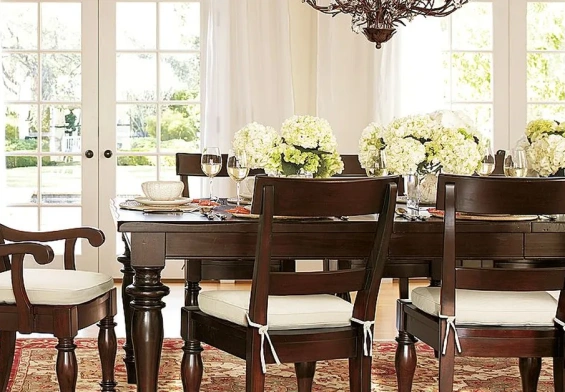
Upholstered dining chairs are beautiful and they’re also, in a pet household, a slow-motion disaster. Fabric collects hair, absorbs odors, and provides an irresistible scratching surface for cats. If you’re committed to upholstered seating, the material matters enormously.
Performance fabrics particularly those made with solution-dyed acrylic or tightly woven synthetic blends are engineered specifically for this kind of abuse. Brands like Sunbrella, originally developed for outdoor furniture, have found a second life in pet-friendly interiors because they resist moisture, release stains without absorbing them, and hold up to repeated cleaning without degrading. Leather and high-quality faux leather are also worth considering: hair doesn’t embed in the surface, spills bead up, and a quick wipe is usually sufficient.
The chair legs deserve attention too. Pets, particularly puppies and young cats, chew. Metal legs are impervious to this. Solid wood legs in darker finishes will show damage less than light-stained wood. Avoid anything with wicker or rattan detailing at the base it’s essentially an invitation.
The dining table itself is less vulnerable than the seating, but the finish matters. A table with a polyurethane or lacquer top will be far easier to clean than one with an oil finish, which requires more maintenance and can be damaged by moisture sitting on the surface. Round or oval tables are worth considering in smaller spaces they eliminate the sharp corners that dogs tend to bump into and that cats use as scratching posts.
The Feeding Zone Question
One of the more contentious decisions in a pet-friendly dining space is where to put the animal’s own food and water. Many households default to the kitchen, which makes sense, but in open-plan homes where the kitchen flows directly into the dining area, this can create a complicated dynamic. The animal learns to associate the entire zone with food, which intensifies their presence around the table during human mealtimes.
Creating a dedicated feeding station slightly separated from the main dining area, ideally in a corner or alcove gives the pet a defined place that belongs to them. This spatial clarity actually helps with training. When the animal has a clear location for their meals, they’re less likely to treat the human dining table as an extension of their own feeding territory.
The feeding station itself should be designed with cleanup in mind. A silicone mat beneath the bowls catches water splashes and food debris and can be lifted and rinsed in seconds. Elevated feeders reduce the amount of food that gets pushed out of the bowl during enthusiastic eating. Stainless steel bowls are easier to sanitize than ceramic and don’t develop the micro-scratches that plastic bowls accumulate scratches that harbor bacteria over time.
Air Quality and the Smell Problem
Clean surfaces and clean air are two different things, and a dining space that looks immaculate can still carry the ambient scent of a pet household. This is particularly true in smaller rooms or homes with limited ventilation. The solution isn’t scented candles or air fresheners, which tend to layer smells rather than eliminate them.
A quality air purifier with a true HEPA filter and an activated carbon layer will address both particulate matter pet dander, which is the actual allergen, not the hair itself and odor molecules. Placed in or near the dining area, it runs quietly in the background and makes a measurable difference, especially during and after mealtimes when activity stirs up whatever has settled on surfaces.
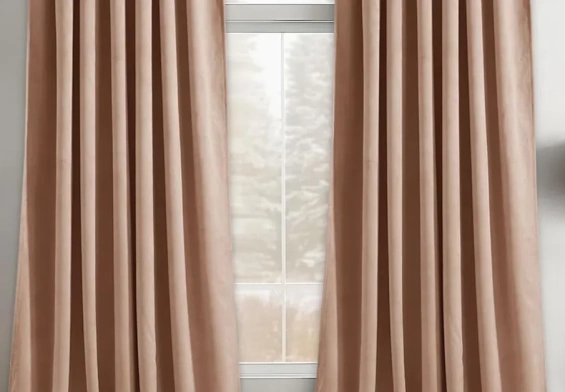
Upholstered surfaces in the room, including any curtains or cushions, should be laundered more frequently than most people think to do. Pet dander accumulates in fabric, and that accumulation is what produces the persistent smell that guests notice even when residents no longer do. Washable slipcovers on any upholstered pieces aren’t a compromise they’re a system.
Training as Infrastructure
No amount of material selection or spatial planning fully substitutes for behavioral boundaries. A dining space that stays genuinely clean over time is one where the pet has learned what the space means and what their role in it is. This isn’t about severity it’s about consistency.
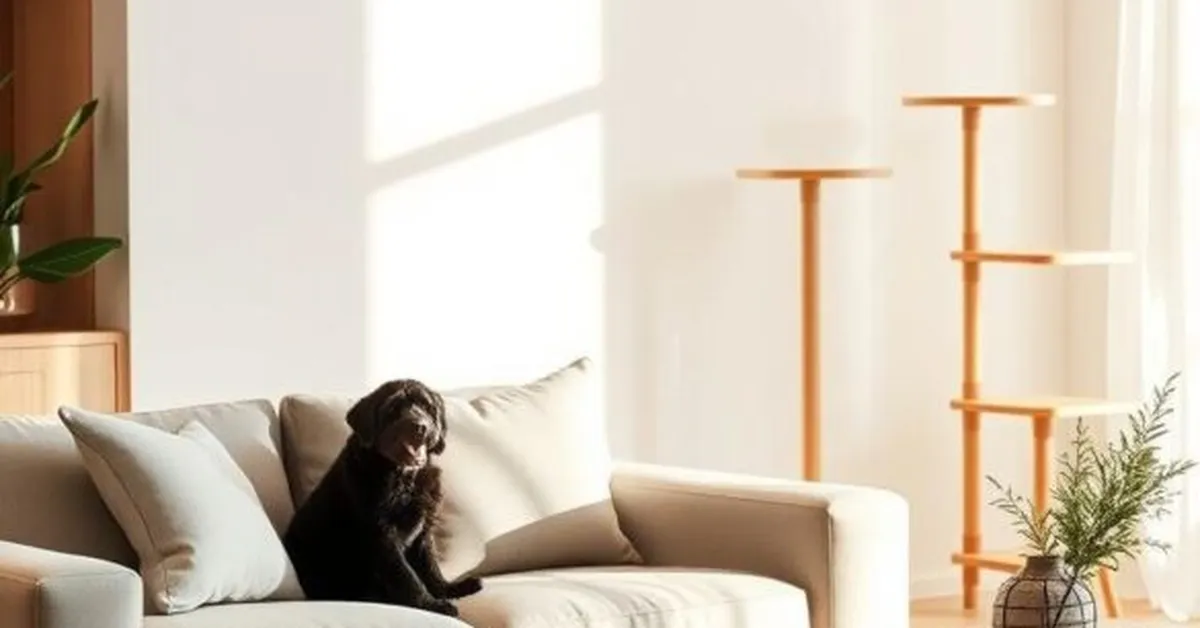
Establishing a place command, where the dog goes to a specific bed or mat during mealtimes, is one of the most effective tools available. The mat itself becomes a signal. Over time, many dogs will move to their spot voluntarily when they see the table being set, because the association has been made so many times. Cats are less responsive to formal training but can be redirected effectively through environmental design a comfortable perch near but not at the table gives them proximity and observation without putting them in the food zone.
The cleanliness of a pet-friendly dining space is ultimately maintained in layers: the right materials resist damage, the right layout reduces opportunity for mess, and the right habits close the gap between the two. None of these layers is sufficient on its own. Together, they create something more durable than any single solution a space that accommodates the full reality of living with animals without asking you to pretend that reality doesn’t exist.
The goal was never a sterile room. It was a room that could absorb life, including the four-legged kind, and still feel worth sitting down in.