

There’s a moment most of us know well you climb into bed exhausted, close your eyes, and then your brain decides it’s the perfect time to replay every awkward conversation from the past decade. You lie there, staring at the ceiling, aware of the laundry pile in the corner, the blue glow of a charging phone, the faint hum of the city outside. Sleep, which should be the most natural thing in the world, starts to feel like something you have to earn.
The bedroom has a complicated relationship with modern life. We’ve turned it into a home office, a doom-scrolling lounge, a storage unit, and a place to eat cereal at midnight. Somewhere in that transformation, we lost the thread of what a sleeping space is actually supposed to do for us. It’s not just a room with a bed. At its best, it’s a psychological signal a place your nervous system learns to associate with safety, rest, and release.
Redesigning that space doesn’t require a renovation budget or an interior designer. It requires something more deliberate: understanding what your senses are picking up when you walk through that door, and making intentional choices about what stays and what goes.
The Weight of Visual Clutter
Walk into your bedroom right now and look at it like a stranger would. What’s the first thing your eye lands on? If it’s a stack of unread books, a tangle of charging cables, or a chair that’s become a second closet, your brain is already doing quiet work cataloging unfinished tasks, registering disorder, generating low-level stress before you’ve even pulled back the covers.
Visual clutter isn’t just an aesthetic problem. Research in environmental psychology consistently shows that disordered spaces elevate cortisol levels and make it harder for the mind to disengage. The bedroom, more than any other room, needs to feel resolved. Not sterile resolved. There’s a difference between a space that feels lived-in and warm versus one that feels like it’s waiting for you to deal with it.
A practical starting point: remove anything from the bedroom that belongs to a different part of your life. Work documents, gym bags, half-finished projects they carry the energy of the tasks they represent. Even if you’re not consciously thinking about them, they’re there, in your peripheral vision, nudging your nervous system toward alertness rather than rest.
Light Does More Than You Think
Lighting is one of the most underestimated variables in sleep quality, and also one of the easiest to change. The problem isn’t just screens though screens are a real issue it’s the entire light environment of your evening.
Overhead lighting, the kind that floods a room from a single ceiling fixture, is designed for productivity. It mimics midday sun. Using it right up until you get into bed is essentially telling your circadian rhythm to stay awake. Swapping to warm, low-level light sources in the hour or two before sleep a bedside lamp with a soft bulb, a salt lamp, even a few candles shifts the room’s atmosphere in a way that’s almost immediate. The body reads warm, dim light as dusk. It starts winding down.
Blackout curtains are worth every penny if you live somewhere with streetlights or early sunrises. The quality of darkness in a room has a direct relationship with melatonin production. Even small light leaks the standby light on a TV, the glow of a power strip can be enough to disrupt the depth of sleep. A piece of electrical tape over a blinking LED sounds almost comically simple, but it works.
Temperature, Texture, and the Body’s Quiet Preferences
The body has opinions about sleep that it rarely voices directly. It just makes you uncomfortable until you figure them out.
Core body temperature needs to drop slightly for sleep to initiate typically by one to two degrees Fahrenheit. A room that’s too warm fights this process. Most sleep researchers point to somewhere between 65 and 68 degrees as the sweet spot, though individual preference varies. If you run hot, a lighter duvet and breathable cotton or linen sheets make a real difference. If you run cold, layering a lighter blanket you can kick off, a heavier one within reach gives you control without overheating.
The texture of what you sleep on and under matters more than people give it credit for. There’s a reason certain sheets feel luxurious and others feel like sleeping inside a paper bag. Thread count is part of it, but weave and material matter more. Percale cotton has a crisp, cool feel. Sateen is softer and slightly warmer. Linen breathes exceptionally well and gets better with every wash. Choosing bedding that genuinely feels good against your skin isn’t an indulgence it’s an investment in the quality of the hours you spend in it.
Sound, Silence, and the Spaces Between
Silence isn’t always peaceful. For people who’ve spent years sleeping in cities, or who live with ambient noise they can’t control, complete silence can actually feel unsettling the absence of familiar sound becomes its own kind of alertness.
White noise machines have become popular for good reason. They create a consistent audio backdrop that masks irregular sounds a car alarm, a neighbor’s television, a dog three houses down without adding stimulation. Pink noise, which has a slightly warmer, more natural quality than white noise, has shown some promise in studies for deepening slow-wave sleep. Rain sounds, ocean waves, and similar recordings work on a similar principle: they’re complex enough to occupy the brain’s pattern-recognition tendency without triggering it.
For those who prefer genuine quiet, the issue is usually about reducing intrusion rather than adding sound. Heavy curtains, rugs, and upholstered furniture all absorb sound. A room with hard floors and bare walls is acoustically live every sound bounces. Softening the surfaces softens the soundscape.
Scent as a Shortcut to Calm
The olfactory system has a more direct line to the brain’s emotional centers than any other sense. Smell bypasses the thalamus the brain’s relay station and connects almost immediately to the amygdala and hippocampus, the regions involved in emotion and memory. This is why a particular scent can transport you somewhere instantly, without any conscious effort.
Lavender’s reputation as a sleep aid is well-documented enough to be taken seriously. Studies have shown it can reduce heart rate and blood pressure, and lower anxiety scores in clinical settings. But the specific scent matters less than the consistency. If you use the same scent every night whether that’s lavender, cedarwood, sandalwood, or something else entirely your brain begins to associate it with sleep. It becomes a cue, a sensory signal that the transition is beginning.
A diffuser with a timer, a linen spray on the pillow, or even a sachet tucked inside a pillowcase are all low-effort ways to introduce this. The key is repetition. The scent doesn’t work because of magic chemistry alone it works because you’ve trained your nervous system to respond to it.
The Screen Problem Nobody Wants to Fully Solve
Let’s be honest about this one. Most people know that screens in the bedroom are bad for sleep. Most people also have their phone on the nightstand. The gap between knowing and doing is where the real conversation lives.
The blue light argument is real but slightly overstated. Yes, blue light suppresses melatonin. But the more significant issue is cognitive and emotional activation. Checking email, reading news, scrolling social media these activities engage the brain in ways that are fundamentally incompatible with the transition to sleep. It’s not just the light. It’s the content. It’s the comparison, the outrage, the unresolved threads of conversation that follow you under the covers.
A phone charger in another room is the most effective solution, and also the one that meets the most resistance. If the phone is in another room, it can’t be the last thing you look at before sleep or the first thing you reach for when you wake at 3 a.m. An alarm clock a simple, cheap, analog alarm clock solves the “but I need it for my alarm” objection entirely.
If a full bedroom ban feels too extreme, a compromise that actually works: phone goes face-down, on do-not-disturb, at least 30 minutes before you intend to sleep. Not in your hand. Not within easy reach. The friction of having to reach for it becomes, over time, enough of a deterent.
Making It Yours
There’s a version of sleep hygiene advice that turns the bedroom into a clinical environment white walls, no personality, nothing that might stimulate a thought. That’s not what this is about. A sanctuary isn’t a sensory deprivation chamber. It’s a space that feels like it belongs to you, that holds the things you love without being overwhelmed by them.
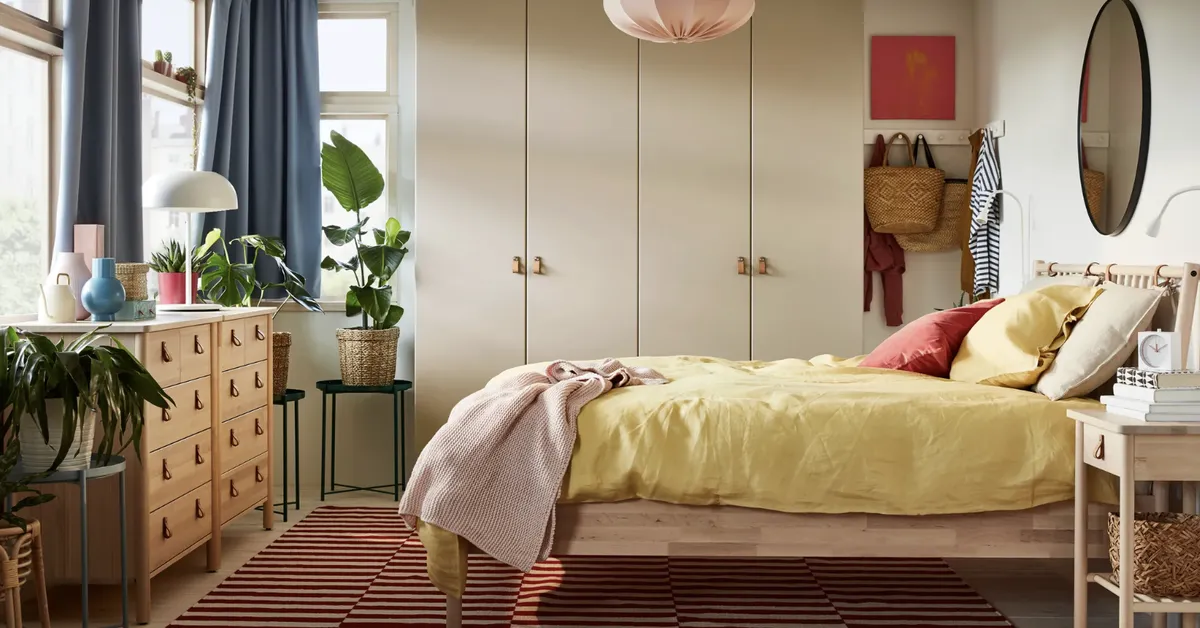
A few objects that carry genuine meaning a photograph, a plant, a piece of art that makes you feel something good contribute to the sense of safety a bedroom should provide. The goal isn’t minimalism for its own sake. It’s intentionality. Every object in the room should either serve a function or bring you genuine comfort. Anything that does neither is just noise.
Plants, for what it’s worth, do more than look nice. They introduce a small amount of humidity, which can ease breathing in dry climates or during winter months. The act of caring for something living even something as low-maintenance as a pothos or a snake plant has a grounding quality that’s hard to quantify but easy to feel.
The bedroom you sleep in shapes the sleep you get, and the sleep you get shapes almost everything else. Energy, mood, decision-making, emotional resilience all of it runs on rest. Treating the space where that rest happens as an afterthought is a strange kind of self-neglect, especially when the changes required are, in most cases, small.
Pick one thing tonight. The light, the clutter, the phone. Change it and see what shifts. The room will tell you what it needs next.