
There’s a particular kind of dining room that exists in older homes and city apartments the one where natural light arrives as a rumor rather than a fact. Maybe there’s a single north-facing window, or the room sits between two walls of an adjacent building, or the overhead fixture does all the heavy lifting while the sun stays mostly theoretical. These spaces aren’t broken. They just require a different kind of thinking when it comes to greenery.
The instinct, for most people, is to give up on plants entirely in these rooms. Or to rotate a sad succulent in from the windowsill every few weeks and hope for the best. But the reality is that a well-chosen plant doesn’t just survive in low light it can anchor a dining room in a way that no centerpiece bowl of wax fruit ever could. The trick is understanding what “low light” actually means to a plant, and then choosing accordingly.
What Low Light Really Means (And What It Doesn’t)
Low light is not no light. This distinction matters more than most people realize. A room that feels dim to human eyes still receives ambient light reflected off walls, bounced from hallways, filtered through curtains. Plants that evolved on the forest floor or in the understory of dense canopies developed precisely to work with this kind of scattered, indirect illumination. They’re not struggling in your dining room. They’re in their element.
What kills plants in low-light rooms isn’t usually the darkness it’s overwatering driven by guilt. People see a drooping leaf and reach for the watering can, when the real issue is that slow photosynthesis means slow water uptake, which means the soil stays wet far longer than expected. Understanding this single dynamic changes everything about how you care for these plants.
Pothos: The One That Earns Its Reputation
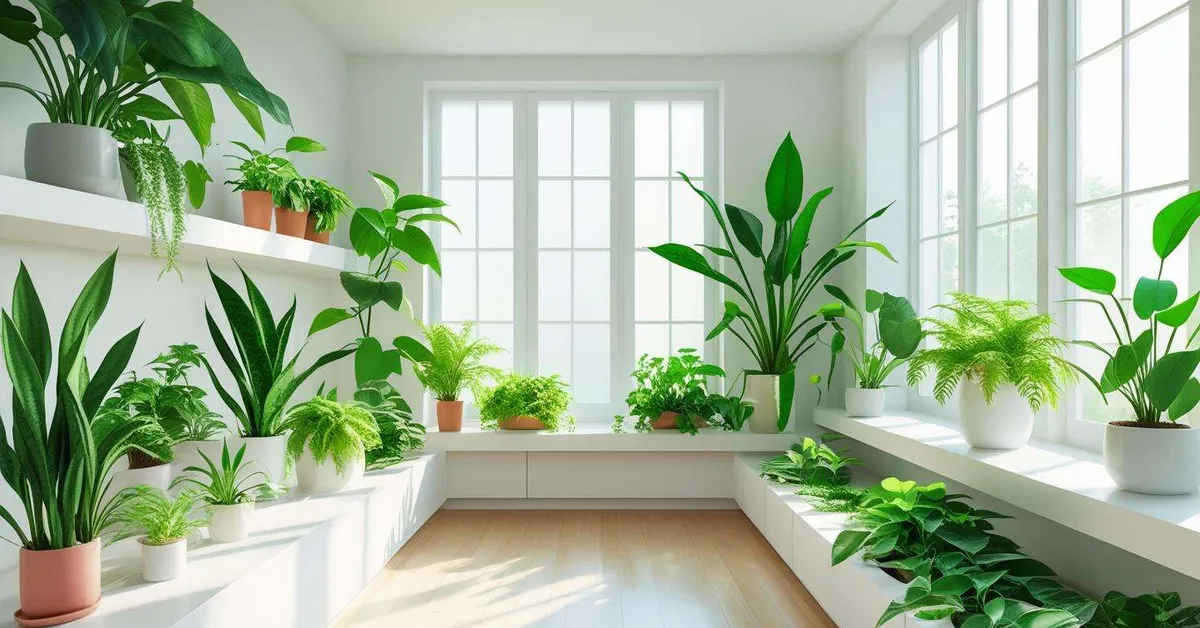
Golden pothos has become something of a cliché in the houseplant world, and clichés exist for a reason. This plant is genuinely, almost stubbornly, good at surviving low-light conditions. Its heart-shaped leaves variegated in cream and green, or a deep solid emerald depending on the variety trail beautifully from a high shelf or cascade down a bookcase near the dining table.
What makes pothos particularly well-suited to dining rooms is its adaptability to irregular care. Dinner parties happen, weeks get busy, watering schedules slip. Pothos doesn’t hold grudges. It wilts slightly as a signal, you water it, and within hours it’s back to looking composed. For a room that sees heavy use on weekends and gets ignored on Tuesday afternoons, that kind of resilience is genuinely useful.
The neon pothos variety a near-fluorescent chartreuse does something interesting in dim rooms. It seems to generate its own glow, making it a smart choice if you want a plant that reads as a design element rather than just a living accessory.
ZZ Plant: Architectural Presence Without the Demands
If pothos is the reliable friend, the ZZ plant is the one who shows up looking effortlessly put-together regardless of circumstances. Its upright, waxy stems and glossy oval leaves have an almost sculptural quality that suits dining rooms with a more formal or modern aesthetic. It doesn’t sprawl or trail it stands, and it does so with a quiet authority.
The ZZ plant stores water in its rhizomes, underground potato-like structures that act as reserves during dry spells. This means it genuinely thrives on neglect in a way that isn’t marketing language it’s biology. In a low-light dining room, where photosynthesis runs slow and soil dries even slower, a ZZ plant on a sideboard or in a corner might need water only once every two to three weeks, sometimes less in winter.
One honest caveat: ZZ plants are toxic if ingested, so households with young children or pets who explore with their mouths should factor that in. But for the right home, it’s close to the ideal dining room plant.
Cast Iron Plant: The Name Says Everything
The Aspidistra elatior earned its common name honestly. Victorian-era households kept these plants in dark hallways and parlors heated by coal fires, in conditions that would finish off almost anything else. They survived. They continue to survive. If your dining room is genuinely challenging low light combined with temperature fluctuations from an exterior door, or the dry heat of a nearby radiator the cast iron plant is the one to reach for.
Its long, deep green leaves are bold without being dramatic, and the plant grows slowly enough that it maintains a tidy silhouette for years without much intervention. It won’t vine across your ceiling or sprout new growth every week. What it will do is stay green, stay upright, and stay alive through conditions that would humble more temperamental species. There’s something almost comforting about that.
Peace Lily: The One That Actually Flowers
Most low-light plants earn their keep through foliage alone, which makes the peace lily something of an anomaly. Given even moderate indirect light the kind a dining room with a frosted or curtained window can provide it will produce its distinctive white spathes, those elegant, hood-like blooms that rise above the dark green leaves on slender stems.
Peace lilies also do something practically useful in a room where people eat and gather: they process certain airborne compounds, including those released by cleaning products. Whether or not you lean into the air-purification angle, the plant’s ability to signal its own thirst (it droops visibly before any real damage sets in, then recovers quickly after watering) makes it an honest communicator in a way that many plants aren’t.
The key with peace lilies in low-light dining rooms is to resist the urge to fertilize aggressively. In dim conditions, the plant’s growth slows, and excess nutrients accumulate in the soil rather than getting used. A light feeding once in spring and once in early summer is usually plenty.
Snake Plant: Vertical Drama, Horizontal Neglect
The snake plant Sansevieria, now reclassified as Dracaena trifasciata, to the mild irritation of everyone who memorized the old name brings something that most low-light plants can’t: genuine vertical drama. Its stiff, upright leaves, banded in silver and dark green or edged in gold depending on the cultivar, can reach three feet or more, making it one of the few plants that reads as a statement piece in a dining room without requiring a hanging installation or elaborate staging.
It tolerates low light with the same equanimity it brings to everything else. Growth will slow in dim conditions, but the plant remains healthy, and that structural silhouette stays intact. Place it in a corner near the dining table, in a ceramic pot that picks up a color from your upholstery or tableware, and it stops being a plant and starts being part of the room’s visual logic.
Thinking About Placement Beyond the Obvious
Most people default to putting plants on windowsills or in corners, but dining rooms offer more interesting possibilities. A trailing pothos on top of a china cabinet creates a sense of layered height. A pair of snake plants flanking a buffet table reads as intentional rather than incidental. A single peace lily centered on the dining table itself used in place of a traditional floral arrangement brings something living and continuous rather than something cut and slowly dying.
The light in a dining room also shifts depending on time of day and season in ways that are easy to underestimate. A room that feels dark at noon might receive warm, low afternoon light in winter that travels farther into the space than summer sun ever does. Spending a few days simply observing where light lands, and when, before committing to plant placement will save a lot of second-guessing later.
There’s also the question of what these plants do to the atmosphere of the room itself. Dining rooms are spaces of gathering of meals that last longer than they need to, of conversations that wander, of the particular kind of ease that comes from being around a table with people you actually like. A plant that’s genuinely thriving in that space, rather than merely surviving, contributes something to that atmosphere that’s difficult to name but easy to feel. It signals that someone paid attention. That the room was thought about. That living things belong here too.