

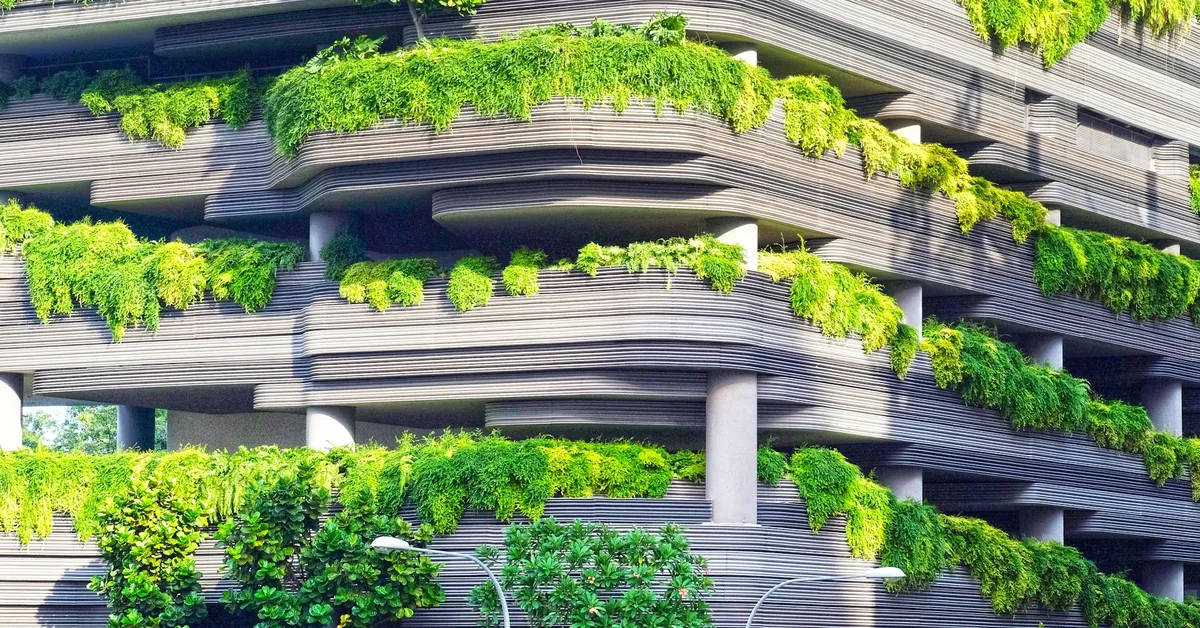
The Blueprint Was Never the Limit
For most of human history, the shape of a home was determined by what hands could build and what materials could bear. A wall had to be straight because a crooked one would fall. A roof had to slope because gravity demanded it. Rooms were rectangular not because architects lacked imagination, but because the tools of construction the saw, the plumb line, the wooden frame made anything else prohibitively expensive or structurally reckless.
That constraint is dissolving. Not slowly, either. Within the span of a single generation, design software has quietly dismantled the geometric tyranny that governed residential architecture for centuries. The homes being designed today and increasingly, being built look less like shelter and more like sculpture. And the technology making this possible isn’t some distant laboratory experiment. It’s running on laptops in architecture firms, in contractor offices, and increasingly in the hands of homeowners who have never taken a drafting class in their lives.
When Computation Replaced the Compass
The shift began in earnest with parametric design a method where a building’s form isn’t drawn by hand but generated through mathematical relationships. Instead of specifying that a wall is twelve feet tall, a parametric model might define it as a variable that responds to sunlight angles, neighboring structures, and interior volume targets simultaneously. Change one input, and the entire geometry recalculates.
Software like Grasshopper, which runs as a plugin inside Rhino 3D, made this approach accessible to architects who weren’t programmers. Suddenly, a firm designing a family residence in the hills outside Los Angeles could generate hundreds of roof configurations in an afternoon each one optimized for passive cooling, each one structurally coherent, each one visually distinct from anything a pencil and ruler could have produced.
The implications weren’t immediately obvious to the broader public. Architecture firms were excited. Contractors were nervous. Most homeowners didn’t know it was happening at all.
The Curve Problem, Solved
Curves have always been the enemy of affordable residential construction. A curved wall requires custom framing. Custom framing requires skilled labor. Skilled labor costs money that most housing budgets don’t have. So curves stayed in the domain of museums and concert halls buildings with institutional funding and patient timelines.
What changed this wasn’t just design software. It was the marriage of design software with digital fabrication. When an architect models a sinuous exterior wall in software like Revit or ArchiCAD, that model can now communicate directly with CNC routers and robotic fabricators. The machine reads the geometry and cuts the components to fit no interpretation required, no skilled tradesperson squinting at a blueprint trying to approximate a curve with a series of flat panels.
The Fibonacci House, a private residence completed in rural Vermont in 2021, offers a striking example. Its exterior follows a logarithmic spiral derived algorithmically from the site’s topography. The form would have been unbuildable twenty years ago without a budget that would embarrass most municipal governments. It was completed on a budget comparable to a high-end conventional custom home. The difference was almost entirely attributable to the precision of the software pipeline from generative model to fabrication file to site assembly.
BIM and the Invisible Revolution
Building Information Modeling BIM doesn’t sound exciting. The name suggests spreadsheets and compliance checklists, not architectural poetry. But BIM platforms like Autodesk Revit have done something quietly radical: they’ve made complex, non-standard geometry manageable at the construction level.
Before BIM, a dramatically shaped home created a coordination nightmare. The architect’s vision lived in one set of drawings. The structural engineer worked from another. The mechanical contractor had a third. When those three documents described a building with irregular geometries a tilted column, a hyperbolic roof surface, an interior void that spiraled through three floors the gaps between them became expensive. Errors accumulated. Change orders mounted.
BIM collapses those documents into a single shared model. Every discipline works inside the same three-dimensional environment. A structural engineer can see immediately that a proposed column placement conflicts with an HVAC duct. A contractor can extract precise material quantities from the model weeks before ground breaks. For conventionally shaped homes, this is useful. For radically shaped ones, it’s transformative it’s the difference between a bold design being built and a bold design being abandoned halfway through construction because nobody could coordinate the complexity.
What Homeowners Are Actually Asking For
The democratization of these tools has produced something unexpected: homeowners themselves are arriving at design conversations with sophisticated formal ambitions. A decade ago, a client might bring a magazine clipping to an architect. Today, they bring a model they’ve built in SketchUp or explored in Enscape. They’ve walked through a virtual version of their future home. They’ve seen how the light moves through an unconventional window placement. They’ve decided they want a roof that cantilevers in a way that would have made a traditional builder wince.
This shift in client expectation is accelerating the adoption of advanced software even among smaller residential firms that might otherwise have been slow to change. When a client walks in knowing what’s technically possible, the architect who can’t deliver it loses the commission to one who can.
The shapes being requested aren’t always dramatic in the way that architectural photography celebrates. Sometimes they’re subtle a gently curved interior wall that eliminates the hard corner of a living room, a staircase that fans outward as it descends, a bathroom where the ceiling follows the slope of the roof rather than being flattened into a dropped plane. These aren’t headline-grabbing gestures. But they accumulate into homes that feel genuinely different from the rectangular boxes that dominated residential construction for most of the twentieth century.
The Structural Honesty of Algorithmic Form
There’s a critique worth taking seriously here. Some architects argue that software-generated forms are aesthetically arbitrary that a building shaped by an algorithm has no more meaning than a random number. If the form isn’t responding to anything human, if it’s just the output of a computational process optimizing for variables the software was told to care about, is it actually architecture? Or is it just geometry?
The strongest counterargument comes from watching how the best practitioners actually use these tools. The algorithm doesn’t replace judgment it expands the range within which judgment operates. An architect using generative design isn’t surrendering authorship to the machine. They’re setting the parameters, evaluating the outputs, discarding most of them, and selecting the one that serves the site, the client, and the light in ways that a purely intuitive process might never have surfaced.
There’s also something structurally honest about many algorithmically derived forms. When a roof shape emerges from a simulation of wind load and snow accumulation, it isn’t arbitrary it’s a material response to physical reality, made visible. That’s not so different from the logic that shaped the Gothic vault or the adobe dome. The tools are new. The impulse to let structure express itself is ancient.
Where the Walls Go Next
AI-assisted design is already entering the conversation, and it’s doing so faster than most of the industry expected. Tools like Midjourney and Stable Diffusion are being used not to generate final designs but to explore visual directions early in a project to give a client a feeling for a formal language before any technical decisions have been made. More specialized platforms are beginning to automate the translation from rough spatial intent to buildable geometry.
The homes that will be designed ten years from now may bear almost no formal resemblance to the homes being built today. Not because architects will abandon human judgment, but because the software will continue to lower the cost and complexity of realizing forms that currently require exceptional resources and patience.
The rectangle isn’t dead. It’s efficient, it’s familiar, and for many people it’s exactly what home should feel like. But for the first time in the history of residential construction, the rectangle is a choice rather than a constraint. That distinction between choosing simplicity and being forced into it is where something genuinely new begins.