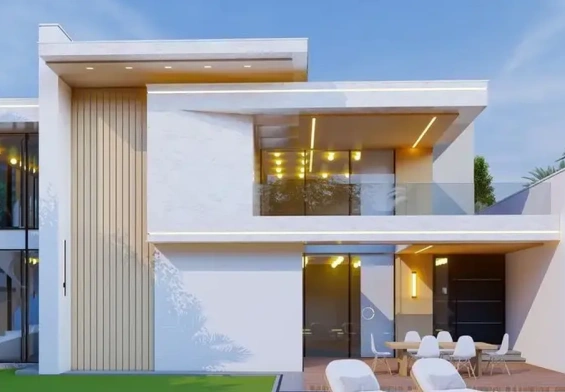


There’s a particular kind of fantasy that lives in the pages of architectural magazines and the mood boards of ambitious homeowners: a house made almost entirely of glass, perched on a hillside or nestled among trees, where the boundary between interior life and the natural world dissolves into something almost spiritual. Light pours in from every angle. The seasons perform themselves like theater. You wake up to mist curling through pine branches, and you fall asleep watching stars through a ceiling that doesn’t pretend to be a ceiling.
It’s a beautiful idea. It’s also, in practice, one of the most psychologically complicated spatial problems a person can choose to live inside.
The Myth of Transparency as Freedom
The glass house as an architectural ideal has roots in modernism’s utopian ambitions. Mies van der Rohe’s Farnsworth House, completed in 1951, was meant to be a meditation on purity a single-room retreat where the occupant could exist in harmony with the surrounding Illinois landscape. Philip Johnson built his own Glass House in Connecticut that same era and actually lived in it for decades. Both structures remain icons. Both also tell a more complicated story than their photographs suggest.
Edith Farnsworth, the physician who commissioned Mies’s masterpiece, eventually sued the architect and later sold the house, describing her experience of living in it as deeply uncomfortable. The lack of visual privacy wasn’t the only issue, but it was a significant one. She felt exposed. Watched. The house that was designed to dissolve boundaries ended up making her acutely aware of them.
This tension between the visual openness that makes a glass-heavy home feel transcendent and the psychological need for enclosure that makes a home feel safe is not simply an aesthetic debate. It’s a fundamental question about how human beings relate to space, and it becomes even more layered when you’re designing in three dimensions rather than just thinking about it in plan view.
What “3D Thinking” Actually Changes
When architects and designers talk about balancing views with privacy in 3D, they’re pointing to something that flat drawings consistently fail to capture. A floor plan can show you where windows are placed. It cannot show you what a neighbor three stories up in an adjacent building sees when they look down at your kitchen table. It cannot show you how a roofline that appears to offer shelter on paper actually frames a sightline directly into your bedroom at the specific angle of the afternoon sun in January.
This is where three-dimensional modeling has genuinely transformed the conversation. Software tools that allow designers and increasingly, homeowners to simulate a structure in full spatial context have made it possible to interrogate privacy before a single wall is poured. You can stand virtually inside a proposed room and rotate your perspective to understand not just what you see out, but what others see in. You can import neighboring structures, topography, even approximate tree canopy, and test how those elements interact with your glazing strategy across different times of day and different seasons when foliage disappears.
The difference this makes is not trivial. A west-facing wall of glass that feels perfectly private in summer, screened by mature maples, becomes a lit stage in November when those trees go bare and the low winter sun backlights every silhouette inside. A rooftop terrace that seems enclosed at street level might be completely exposed to a taller building two blocks away. These are discoveries that used to happen after construction, at significant emotional and financial cost. Now they can happen in the design phase, when they’re still just a problem to solve.
The Design Toolkit Nobody Talks About Enough
There’s a tendency in discussions of glass houses and privacy to jump immediately to the obvious solutions frosted glass, curtains, strategic landscaping as if the problem reduces to a simple binary between transparency and opacity. But the actual toolkit available to designers working in three dimensions is considerably richer, and more interesting, than that framing suggests.
Depth is one of the most underused tools. A deep overhang or a recessed window well doesn’t just provide shade; it creates a zone of visual ambiguity. From outside, the glass reads as shadow rather than as a clear aperture into your life. From inside, you retain the sense of connection to the outdoors without the feeling of exposure. The same principle applies vertically a planted roof edge or a parapet that rises just enough to interrupt sightlines from adjacent buildings can preserve an open sky view from inside while blocking the downward gaze of anyone looking in.
Layering is another. Rather than treating the building envelope as a single plane of glass or solid, contemporary designs increasingly work with multiple layers an outer screen of perforated metal, timber louvers, or planted trellis systems that create a breathing zone between the interior and the exterior. These layers do something psychologically important: they give the eye something to rest on before it reaches the person inside, which fundamentally changes the experience of being observed. You’re not invisible, but you’re not legible either. There’s a difference.
Orientation and zoning deserve more credit than they typically receive. A house designed with genuine privacy intelligence doesn’t try to make every room equally open. It maps the rhythms of how people actually live the relative publicness of a kitchen or living space versus the intimacy of a bedroom or bathroom and calibrates glazing accordingly. The social rooms face the view. The private rooms face the garden, or the hillside, or simply a carefully planted buffer. This sounds obvious when stated plainly, but it’s routinely ignored in favor of a uniform aesthetic that treats every facade as an opportunity for maximum glass.
The Psychological Dimension That Architecture Can’t Fully Solve
Here’s what the technical solutions can’t entirely address: privacy is not just a physical condition. It’s a felt one. And the felt experience of privacy in a glass-heavy home is shaped by factors that no amount of clever louvering or strategic planting can fully control.
Research in environmental psychology has consistently shown that people’s sense of privacy is tied not just to whether they can actually be seen, but to whether they feel they might be seen. The uncertainty is itself a stressor. A house that is technically private where the geometry has been carefully worked out and the sightlines have been modeled and the neighbors are nowhere near close enough to see anything can still feel exposed if it reads visually as open. The brain doesn’t always wait for evidence. It responds to cues.
This is why some of the most successful glass-heavy homes are ones that create what you might call psychological anchors moments of deliberate enclosure, visual weight, material solidity that give the nervous system somewhere to rest. A thick stone wall in an otherwise transparent living space. A library with floor-to-ceiling shelving that interrupts the glass. A sunken seating area that puts you below the sightline of the windows above. These elements aren’t concessions to a failure of nerve. They’re part of what makes the open moments feel genuinely liberating rather than merely unprotected.
When the View Becomes the Point
There are contexts where the balance tips decisively toward openness, and where that tipping is the right call. A remote mountain cabin with no neighbors within miles. A cliffside retreat where the only audience is the ocean. A desert house where the landscape is so vast and the nearest road so distant that the question of being observed barely registers. In these cases, the glass house fantasy can be lived more or less as imagined, and the design challenge shifts from privacy management to something more purely compositional how to frame the view, how to let the light move through the day, how to make the structure feel like it belongs to the land rather than imposed upon it.
But most people don’t build in those conditions. They build in suburbs, on hillsides with other hillside houses, in urban neighborhoods where the density of human life means that openness is always, to some degree, a negotiation. And it’s in those conditions that the 3D thinking becomes not just useful but essential because the fantasy of the glass house is seductive enough that it can override common sense, and the regret of having built something that feels like a fishbowl is significant enough that it deserves to be taken seriously before the concrete is poured.
The glass house, at its best, is a conversation between a person and the world outside. Like any good conversation, it requires some measure of choice about what you reveal and what you hold back. The architecture that understands this that works with the full three-dimensional complexity of how light and sightlines and human psychology actually interact doesn’t have to choose between the view and the life being lived inside it.
It just has to be honest about the fact that both are real.