
Luxury Lighting for Less: Where to Splurge and Where to Save
The Room You’re Not Decorating
There’s a particular kind of disappointment that comes from finishing a room and feeling like something is still wrong. The furniture is right. The rug anchors everything beautifully. The paint color is exactly what you agonized over for three weekends. And yet the space feels flat, somehow unfinished like a photograph taken in bad light. That’s usually because it was. Bad light, or rather, the wrong light, is quietly undermining everything else you’ve done.
Lighting is the invisible architecture of a room. It shapes how surfaces read, how colors behave after sundown, how large or intimate a space feels when you’re actually living in it. And yet most people treat it as an afterthought a final checkbox before calling the room done. The result is spaces lit with whatever was affordable and available, which almost always means harsh overhead fixtures, thin lampshades that cast unflattering shadows, and a general sense that the room exists in fluorescent purgatory.
The good news is that luxury lighting doesn’t require a luxury budget. It requires something rarer: knowing where quality actually matters and where it genuinely doesn’t.
What “Luxury” Actually Means in a Light Fixture
Before deciding where to spend, it helps to understand what you’re paying for when a fixture costs $800 versus $80. The answer is rarely just aesthetics.
High-end lighting manufacturers invest in materials that age well solid brass that develops a patina rather than flaking, hand-blown glass that refracts light in ways that mass-produced molded glass simply cannot replicate, and hardware that remains smooth to operate years after installation. There’s also the matter of engineering: the way a fixture is balanced, how its electrical components are housed, whether the finish will hold up in a humid bathroom or a kitchen prone to grease. These are real differences, not imagined ones.
But here’s what the lighting industry doesn’t advertise: many of these qualities are irrelevant depending on where and how a fixture is used. A pendant light hung twelve feet above a dining table in a rental apartment doesn’t need to be heirloom-quality brass. Nobody is touching it. Nobody is scrutinizing its hardware. What matters there is how it looks from below and how it distributes light across the table. That’s a very different set of requirements than a bedside sconce you reach for every night, or a bathroom vanity fixture you stand inches away from every morning.
Where to Spend Without Hesitation
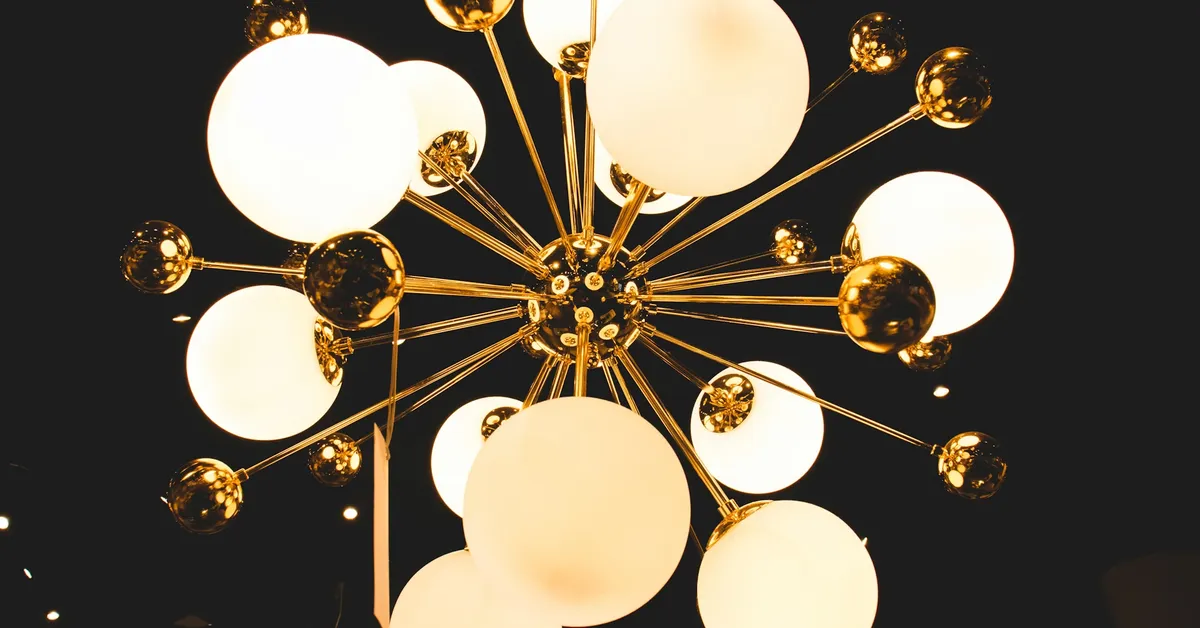
Statement pieces in rooms where you spend real time are worth the investment. The living room chandelier or pendant, the dining room fixture, the primary bedroom sconce these are the lights that define how a space feels during the hours you’re actually inhabiting it. They’re also the fixtures people notice, comment on, and photograph. Skimping here tends to be visible in a way that skimping on, say, a laundry room fixture never will be.
Bathroom vanity lighting deserves more budget than most people allocate. You stand directly in front of these fixtures twice a day, minimum. The quality of light they produce affects how you see yourself literally. Cheap vanity bars often emit a color temperature that’s either too cool (making skin look washed out and clinical) or poorly diffused (creating harsh shadows under the eyes and nose). A well-made vanity fixture with proper diffusion and a warm, accurate color rendering index is one of those purchases that pays dividends in daily quality of life in a way that’s hard to quantify but immediately felt.
Dimmers and switches also fall into the “spend here” category, though they’re easy to overlook because they’re not glamorous. A quality dimmer switch one that’s compatible with your bulbs and doesn’t cause flickering or buzzing transforms how a fixture performs. Many people buy a beautiful fixture and then pair it with a cheap dimmer that undermines the entire effect. The fixture gets blamed when the real culprit is a $12 switch.
Where Smart Savings Make Perfect Sense
Utility spaces are the obvious answer, but let’s be more specific than that. Closets, laundry rooms, garages, and storage areas are places where function is the only real criterion. A basic flush-mount fixture with a good LED bulb does everything required. Spending more here is genuinely wasteful not in a moralistic sense, but in a practical one. The money serves you better elsewhere.
Secondary bedrooms and guest rooms offer real savings opportunities too, particularly if they’re used infrequently. A well-chosen mid-range fixture something with clean lines and a finish that coordinates with the rest of the home reads as intentional and considered without requiring a significant outlay. Guests aren’t cataloging your hardware choices. They’re noticing whether the room feels warm and welcoming, which is more a function of bulb color temperature and lampshade diffusion than fixture price.
Outdoor lighting is another category where the calculus shifts. Weather exposure, UV degradation, and the fact that outdoor fixtures are viewed from a distance rather than up close mean that mid-range options often perform just as well visually as premium ones and sometimes outlast them, since many luxury outdoor fixtures prioritize aesthetics over weatherproofing. The exception is entryway lanterns, which flank your front door and are seen at close range by every visitor. Those are worth a modest splurge for the curb appeal they generate.
The Bulb Conversation Nobody Wants to Have
Here’s an uncomfortable truth: a mediocre fixture with the right bulb often outperforms an expensive fixture with the wrong one. Color temperature and color rendering index the CRI matter more to how a room actually looks and feels than almost any other variable. A CRI of 90 or above renders colors accurately and makes skin tones look natural. Most cheap LED bulbs hover around 80. The difference is subtle in isolation and immediately obvious in comparison.
Warm white (2700K to 3000K) works in virtually every residential space. It’s the color of incandescent light, which is the color of candlelight, which is the color that humans have been finding flattering and comfortable for most of recorded history. Cool white and daylight bulbs have their place task lighting in a home office, under-cabinet lighting in a kitchen but as a default for living spaces, they tend to produce an environment that feels institutional rather than residential.
If you’ve invested in a quality fixture and it still doesn’t look right, change the bulb before assuming anything else is wrong. It’s a $10 experiment that frequently solves a problem people have been attributing to everything else.
The Layering Principle
One fixture per room is almost never enough. Luxury lighting, at its core, isn’t about expensive fixtures it’s about layered light sources that can be adjusted independently to suit different times of day and different activities. An overhead fixture provides ambient light. A table lamp or floor lamp adds warmth and intimacy. Task lighting under cabinets, over a desk, beside a reading chair handles specific functional needs.
When these layers work together, even modest fixtures create a room that feels rich and considered. When a room relies on a single ceiling fixture to do everything, no amount of spending on that fixture will make the space feel truly luxurious. The investment in multiple mid-range sources almost always beats the investment in one expensive one.
This is the insight the showroom doesn’t sell you, because it’s not in their interest to. A $2,000 chandelier is a cleaner transaction than explaining that what you actually need is four $150 fixtures placed thoughtfully around the room. But the latter is almost always the better answer both for the space and for your bank account.
The rooms that stop people in their tracks, the ones that feel warm and alive and somehow more real than the spaces around them, are rarely lit by a single spectacular fixture. They’re lit by intention. And intention, unlike imported hand-blown glass, doesn’t have a price tag.