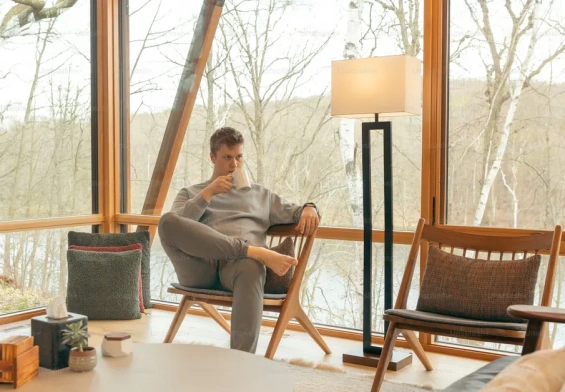

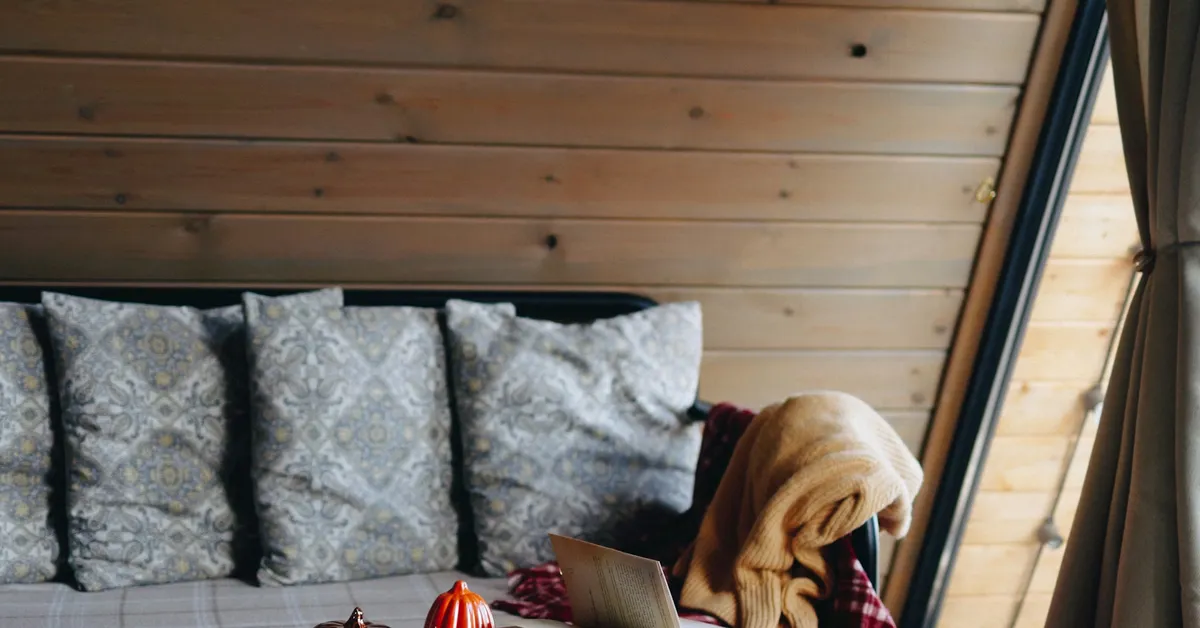
There’s a moment, walking into certain rooms, when something shifts. The air feels different. Your shoulders drop. You didn’t plan to sit down, but now you’re reaching for a cushion and pulling your feet up onto the sofa. Nobody announced that this room was comfortable. It just was. And almost every time that happens, textiles are doing the quiet, invisible work behind it.
We talk about coziness like it’s a feeling you either have or you don’t an accident of good taste or the right lighting. But the truth is more interesting than that. Coziness, at least the kind that endures beyond a first impression, is a layered construction. It’s built deliberately, one surface at a time, through decisions about weight, texture, temperature, and visual rhythm. Textile layering is less decorating and more environmental design. And once you understand the mechanics of it, you can’t unsee them.
Why Your Brain Responds to Texture Before Your Eyes Do
The human nervous system is, in a very real sense, touch-obsessed. Long before language or complex visual reasoning, our ancestors were reading environments through tactile feedback the scratch of bark, the softness of moss, the warmth of animal skin. That ancient wiring doesn’t disappear just because we live in climate-controlled apartments. It stays active, interpreting visual information about surfaces as proxy touch data.
When you look at a chunky knit throw draped over the arm of a chair, your brain isn’t just seeing a pattern. It’s running a rapid simulation of what that material would feel like in your hands. Neuroscientists call this embodied cognition the brain’s habit of grounding perception in the body’s physical experience. Rooms that engage this system feel richer. Rooms that don’t think minimalist spaces where every surface is smooth, hard, and visually uniform can feel beautiful but somehow cold. Correct, but not welcoming.
This is why texture matters more than color in the science of coziness. Color affects mood, certainly. But texture speaks directly to the body’s sense of safety and warmth in a way that hue alone cannot replicate. A beige room layered with linen, wool, and velvet can feel warmer than a deep burgundy room furnished entirely in leather and lacquered wood. The brain is reading the surfaces, not just the palette.
The Logic of Layering: Base, Middle, and Accent
If you’ve ever tried to make a room feel cozier and ended up with a space that just looked cluttered, the problem was almost certainly structure. Textile layering isn’t about accumulation it’s about sequence. There’s a logic to it, borrowed loosely from the way we layer clothing, and it works for the same reason: each layer serves a different function, and the relationship between layers is what creates the final effect.
The base layer is the largest surface area the rug, the upholstery, the curtains. These establish the room’s foundational temperature, both visual and physical. A jute rug reads differently than a wool rug, even at the same color. One signals summer, the other winter. Heavy linen curtains that pool slightly on the floor create a sense of enclosure and warmth that sheers simply cannot, regardless of how beautiful the light is. At this layer, the goal is not drama but grounding. The base layer should feel inevitable, like the room couldn’t exist without it.
The middle layer is where personality enters. Throw pillows, blanket throws, upholstered ottomans, smaller area rugs layered over the base these are the textiles that shift with seasons and moods, and they carry most of the room’s tactile complexity. This is where you introduce contrast. If the sofa is smooth, the pillows should be textured. If the rug is flat-woven, the throw should have weight and loft. The contrast doesn’t need to be extreme. A subtle difference in pile height between two adjacent fabrics is enough for the eye and the nervous system to register richness.
The accent layer is the smallest and most deliberate. A single velvet cushion. A folded cashmere blanket in a basket. A sheepskin draped over a reading chair. These pieces function almost like punctuation they don’t change the sentence, but they tell you how to read it. The accent layer is where coziness tips from ambient into intimate, and it’s often what separates a room that looks styled from one that actually feels lived-in.
Temperature and Weight: The Invisible Variables
Not all softness is equal. A room can be full of textiles and still feel wrong if the weight distribution is off. Weight the physical density of a fabric communicates warmth and substance in a way that lighter materials can’t fake. A thin cotton throw, no matter how attractively folded, doesn’t carry the same psychological warmth as a heavy wool blanket. The body knows the difference before you consciously register it.
Seasonal layering takes this seriously. In winter, the logic shifts toward heavier fabrics: bouclé, chunky knits, velvet, flannel. These materials have mass and loft; they trap air and create visual warmth even before anyone touches them. In warmer months, the same layering structure applies, but the materials shift linen, cotton, lighter weaves. The room stays layered, but it breathes differently.
One underused technique is layering rugs of different weights and textures. A flat-woven kilim laid over a thicker wool rug creates both visual interest and a genuine change in underfoot sensation as you move through the space. It sounds like too much, until you see it done well. The key is keeping the color story cohesive enough that the layers read as a conversation rather than an argument.
Pattern, Scale, and the Art of Not Matching
Here’s where most people get nervous: mixing patterns. The fear is chaos, and it’s not entirely unfounded badly mixed patterns can make a room feel anxious and unresolved. But the solution isn’t to avoid pattern altogether. It’s to understand scale.
Pattern mixing works when the scales are meaningfully different. A large-scale geometric on a rug can live comfortably with a small-scale floral on a cushion because the eye doesn’t try to resolve them against each other they operate at different visual frequencies. The mistake is pairing two patterns of similar scale and similar visual weight. That’s when the room starts to feel competitive.
Solid fabrics are the negotiators in this equation. A solid velvet cushion between a patterned lumbar and a textured knit gives the eye somewhere to rest. Without that pause, pattern mixing can tip into visual noise. Think of solids less as a safe fallback and more as a structural tool they’re what make the patterns legible.
Color repetition is the other mechanism that holds mixed patterns together. If a throw has three colors in it, and two of those colors appear elsewhere in the room in the rug, in the curtains, in the upholstery the patterns will feel related even if they share no motif. The brain uses color as a coherence signal. Give it that, and it will forgive a great deal of pattern complexity.
The Rooms That Get It Right
Think about the living rooms you remember feeling genuinely comfortable in. Not the most impressive ones, not the most photogenic. The ones where you stayed longer than you planned. Almost universally, those rooms had something in common: they weren’t trying to be perfect. There were layers of use visible in them a blanket that had been pulled and replaced, cushions that had been rearranged, a rug that showed the slight compression of furniture legs. The textiles told a story of habitation.
This is the hardest thing to manufacture and the easiest thing to accidentally design away. Rooms that are too precisely styled where every textile is pristine and in its designated place can feel like stage sets. Beautiful to look at, uncomfortable to actually inhabit. The coziness evaporates because the room doesn’t seem to want you to touch anything.
The science of textile layering ultimately points toward something that resists pure science: the warmth of a room is partly a function of its willingness to be used. Fabrics that soften with washing, rugs that shift slightly underfoot, throws that invite being grabbed and pulled these are materials that participate in living rather than simply decorating it.
And maybe that’s the real principle underneath all of it. The rooms that feel most like home are the ones where the textiles have absorbed a little of the life lived inside them. You can engineer the conditions for that. You can choose the weights, the textures, the layers. But the coziness itself that particular quality of a room that makes you reach for a cushion and stay that comes from use. From the room being trusted enough to actually live in.