
The “Expensive” Look: 6 Designer Secrets for a High-End Feel on a Budget
There’s a particular kind of confidence that walks into a room before the person does. You’ve seen it someone dressed in what appears to be a carefully curated wardrobe, or standing in a living space that looks like it belongs in an architectural digest spread, and yet something about it feels effortless rather than labored. The assumption is always money. But spend enough time around people who actually work in design fashion, interior, product and a different truth emerges. The expensive look isn’t about price. It’s about literacy. It’s about understanding a visual language that most people were never taught, and once you learn it, you can’t unsee it anywhere.
This isn’t a list of “buy this dupe instead of that.” That approach misses the point entirely. What follows is closer to a set of principles the actual reasoning that designers use when they’re working with constrained budgets, which, contrary to popular belief, is most of the time.
Fit Is the Only Luxury That Matters
A $900 blazer that doesn’t fit looks cheaper than a $60 one that does. This is not an exaggeration. Tailoring is the single most underused tool available to anyone trying to look put-together, and it remains surprisingly affordable relative to the transformation it delivers. A basic hem, a taken-in waist, a shortened sleeve these alterations typically run between $15 and $40 per piece, and they do something no amount of brand prestige can replicate: they make clothes look like they were made for your body, because after the alteration, they essentially were.
The same logic applies to interiors. Curtains hung too low, too short, or too narrow are the fastest way to make a room feel cheap regardless of the fabric. Designers hang curtains close to the ceiling and let them pool slightly on the floor. That single adjustment changes the perceived height of a room and costs nothing beyond the rod placement.
Fit is the invisible hand behind every “expensive” look. When something fits with precision, the eye reads it as intentional, and intentional reads as quality.
Commit to a Neutral Foundation, Then Add One Point of Tension
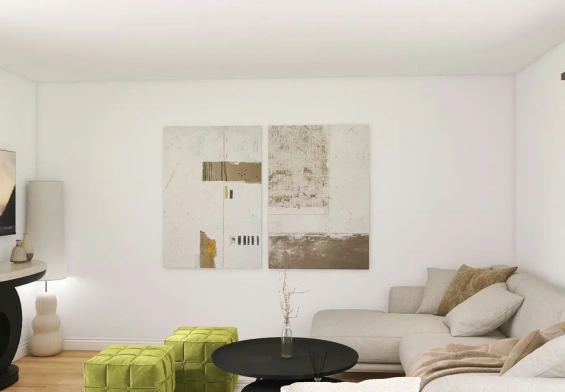
There’s a reason designer showrooms and high-end retail spaces tend toward restraint. Beige, ivory, warm gray, camel, black these aren’t boring choices. They’re strategic ones. A neutral foundation creates visual coherence, and coherence is what the brain interprets as sophistication. When everything competes for attention, nothing wins, and the overall effect feels chaotic rather than curated.
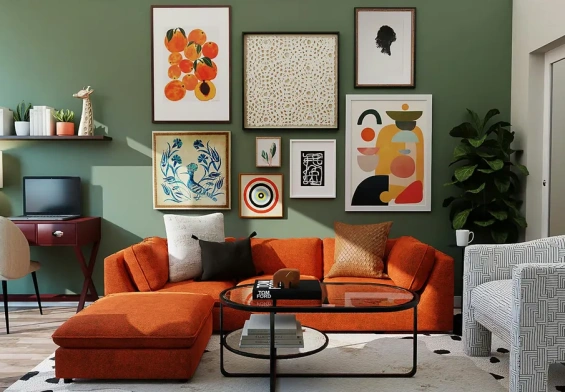
The move that separates a flat neutral palette from a genuinely interesting one is what designers sometimes call “the point of tension” one element that breaks the calm. A deep terracotta throw in an otherwise ivory room. A single cobalt vase on a shelf of natural wood and white ceramics. In fashion, it’s the unexpected shoe color, the one printed piece in an otherwise monochrome outfit.
One point of tension. Not three. The discipline of stopping at one is harder than it sounds, and it’s exactly what most people get wrong when they try to replicate a look they admired and end up with something that feels busy instead of bold.
Material Perception Is About Surface, Not Price Tag
Linen, matte ceramics, unfinished wood, stone these materials photograph expensively and read expensively in person because they have texture, weight, and visual depth. Shiny, synthetic surfaces do the opposite. A glossy plastic picture frame from a discount store signals cheap not because of its price but because of what the surface communicates: that no one thought carefully about material choice.
This is a learnable distinction. Start paying attention to what surfaces appear in spaces and on people that you find visually compelling, and you’ll notice a pattern. The materials tend to be matte or subtly textured. They tend to absorb light rather than reflect it aggressively. They tend to feel like they have some relationship to the natural world, even when they’re manufactured.
Thrift stores, estate sales, and discount home goods chains regularly carry items in these materials at a fraction of their original cost. A heavy ceramic bowl, a linen pillowcase, a solid wood frame these items exist at every price point. The skill is in learning to recognize material quality independent of brand context.
Edit More Aggressively Than Feels Comfortable
Every designer, at some point, will tell you that the hardest part of their job is knowing what to remove. Restraint is a discipline, not a personality trait, and it’s one that runs counter to the accumulation instinct most of us carry. We add. We layer. We fill. And the result is spaces and outfits that feel cluttered even when each individual piece is perfectly nice.
High-end spaces tend to have breathing room. There’s negative space areas where the eye can rest before moving to the next point of interest. This isn’t minimalism in the austere, everything-must-be-white sense. It’s simply the understanding that objects need context to be seen properly, and that context is often empty space.
The practical application: take something away. From the shelf, from the outfit, from the room. If you’ve been building a look and something feels off, the instinct is usually to add something to fix it. Almost always, the right answer is subtraction. Remove one thing and see what happens. More often than not, the whole composition settles into itself.
Consistency of Finish Creates the Illusion of Curation
Here’s something that interior designers know that most people don’t: mismatched metals and finishes are one of the primary reasons a space looks unintentional. Not because mixing metals is inherently wrong it can be done beautifully but because doing it without awareness reads as oversight rather than choice.
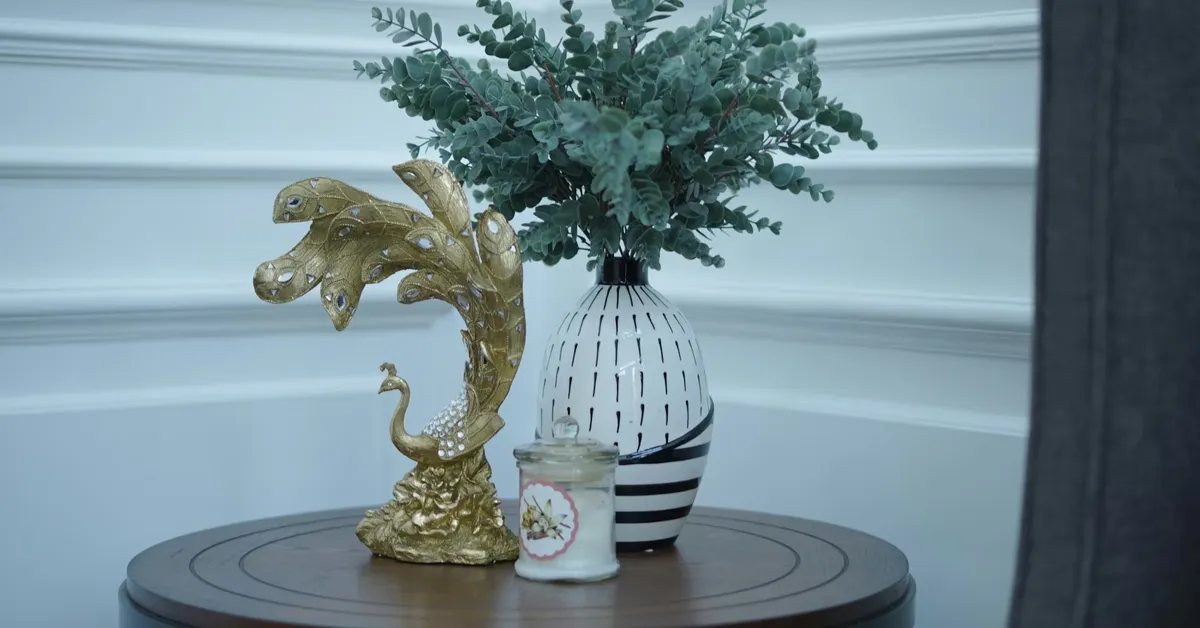
Pick a dominant finish and let it appear in at least three places. Brushed brass in the lamp base, the picture frame, and the cabinet hardware. Matte black in the faucet, the curtain rod, and the candle holders. The repetition creates a through-line, and through-lines signal that someone made decisions on purpose.
This principle translates directly to fashion. The bag hardware matching the shoe hardware. The watch metal echoing the belt buckle. These are the details that stylists obsess over, and they’re the details that, when present, make an outfit look considered rather than assembled.
Buy Less, Buy Better Even at the Low End
This last principle is perhaps the most counterintuitive, because it sounds like advice that requires more money. It doesn’t. It requires more patience. The logic is simple: one well-chosen piece at $80 will always look more expensive than four mediocre pieces at $20 each. The same $80 spent. Completely different result.
The well-chosen piece has better proportions, better material, better construction. It works with more things in your existing wardrobe or space. It lasts longer. And critically, it doesn’t dilute the visual coherence of everything around it the way a poorly chosen piece inevitably does.
Designers working on tight budgets don’t shop more. They shop slower. They wait. They pass on the thing that’s almost right and hold out for the thing that’s actually right. That patience is itself a form of taste, and taste not money is what the expensive look is actually made of.
There’s something quietly radical about understanding this. It means the visual language of quality was never behind a paywall. It was always behind a learning curve and learning curves, unlike price tags, are open to anyone willing to pay attention.