
The Square Footage Myth
There’s a quiet revolution happening in American homes, and it doesn’t look the way most people expect. It doesn’t involve sprawling open floor plans or soaring ceilings. It happens in spaces smaller than most hotel rooms under 200 square feet where a growing number of architects, designers, and homeowners are proving that luxury was never really about size to begin with.
The assumption that bigger equals better is so deeply embedded in the American psyche that questioning it still feels radical. For decades, square footage was the primary metric by which we measured success, comfort, and aspiration. A larger home meant you had arrived. But that logic is cracking. Rising land costs, a renewed cultural appetite for intentional living, and a generation of designers who treat constraint as creative fuel have collectively rewritten the rules. The tiny house isn’t a compromise. In the right hands, it’s a masterpiece.
What Luxury Actually Means in a Small Space
Before you can design luxury into 200 square feet, you have to strip the word “luxury” down to its bones. In a conventional home, luxury often gets expressed through excess more rooms, more finishes, more square footage that rarely gets used. In a tiny house, that kind of excess is simply not available. What takes its place is something more precise: quality over quantity, intention over accumulation, experience over inventory.
Think about the most memorable hotel room you’ve ever stayed in. Chances are it wasn’t the largest room. It was the one where every surface felt considered. The lighting hit the right angles. The materials had weight and warmth. The layout moved you through the space without friction. That’s the design philosophy tiny house architects are borrowing from hospitality design, and it translates remarkably well.
Designers like Christopher Tack and firms such as New Frontier Tiny Homes have demonstrated this repeatedly. Their builds feature reclaimed wood paneling, quartz countertops, full-size appliances tucked into ingenious configurations, and sleeping lofts that feel like a retreat rather than an afterthought. The difference between a cramped tiny house and a luxurious one isn’t budget alone it’s the decision to treat every inch as intentional real estate.
The Architecture of Compression
Designing under 200 square feet forces a kind of architectural honesty that larger homes rarely demand. Every wall, every corner, every vertical inch must justify its existence. This is where the most innovative thinking in residential design is happening right now.
Multifunctionality is the baseline. A dining table that folds into a desk. A staircase with integrated drawers. A Murphy bed that reveals a full home office when raised. These aren’t gimmicks they’re the result of serious design thinking about how human beings actually move through their days. When a space has to serve multiple functions without feeling chaotic, the designer must understand human behavior at a granular level.
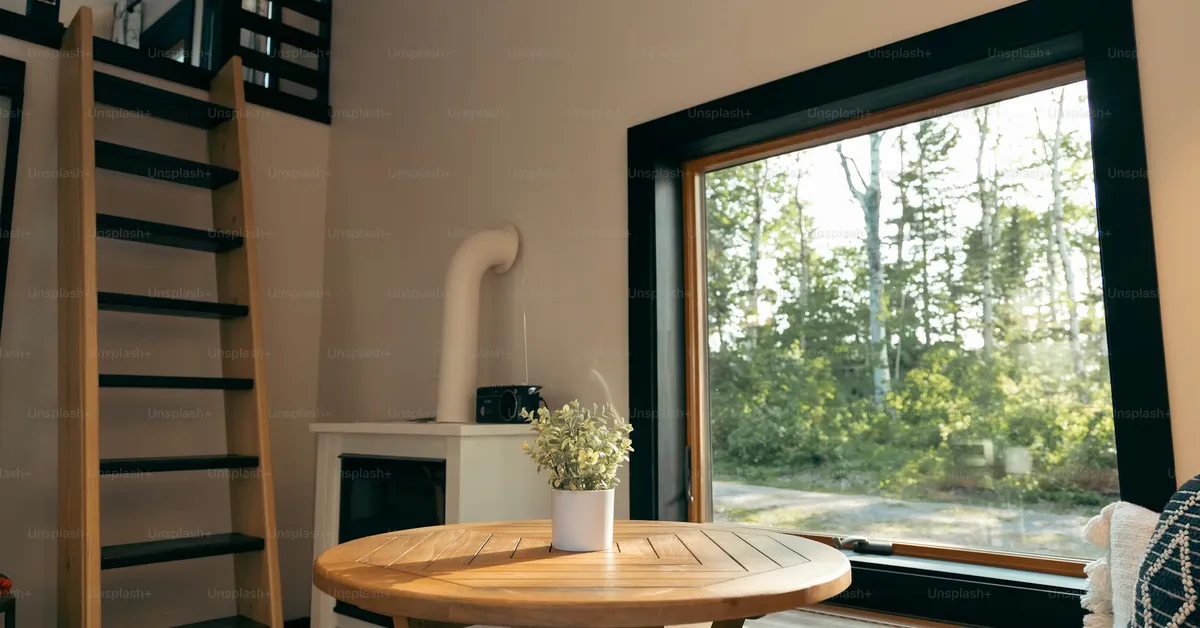
Vertical space becomes a currency. In a 180-square-foot footprint, the floor plan is fixed, but the ceiling height is negotiable. Lofted sleeping areas, shelving that climbs to the roofline, windows positioned high to draw the eye upward these moves expand perceived space without adding a single square foot. Natural light is equally transformative. A well-placed skylight or a wall of south-facing glass can make a tiny house feel twice its size by the time afternoon sun floods through.
One of the most compelling examples is the Minimaliste Project, a Canadian design collective that builds tiny homes with full-height glazing, cedar cladding, and interiors that prioritize material quality over material quantity. Their homes regularly sell for six figures and attract buyers who could afford far larger spaces. The appeal isn’t poverty it’s precision.
Materials, Texture, and the Sensory Experience
In a small space, your senses are closer to everything. That’s actually an advantage, if you use it correctly. The texture of a wall, the grain of a wooden countertop, the coolness of concrete underfoot these tactile details register more intensely when you’re living within arm’s reach of them. Luxury tiny house designers understand this intuitively.
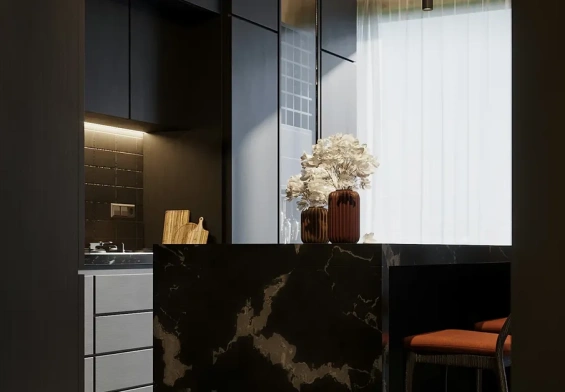
The material palette in a high-end tiny house tends to be restrained but rich. Rather than introducing ten different surfaces, a skilled designer might work with three: a warm wood, a matte stone or concrete, and a single metal finish. The repetition creates coherence. The quality of each material creates depth. When you’re not diluting attention across hundreds of square feet, even modest upgrades to material quality have an outsized perceptual impact.
Lighting deserves its own conversation. In a tiny house, a single overhead fixture is a design failure. Layered lighting ambient, task, and accent creates the kind of atmospheric flexibility that makes a space feel alive at different times of day. Recessed LED strips under a lofted bed, a pendant over the kitchen island, a reading sconce beside the sofa: these small decisions collectively determine whether a tiny house feels like a retreat or a storage unit.
The Psychological Architecture of Small Living
There’s a dimension to tiny house luxury that rarely appears in design magazines, and it has nothing to do with finishes or fixtures. It’s psychological. The experience of living in a well-designed small space changes how you relate to your possessions, your time, and your attention.
When everything you own must earn its place, the relationship between person and object shifts. Clutter which is, at its core, deferred decisions becomes impossible to sustain. Tiny house dwellers often describe a kind of mental clarity that follows the physical clarity of their space. Researchers in environmental psychology have documented the correlation between spatial order and cognitive load; a cleaner visual field genuinely reduces mental noise.
This isn’t an argument for minimalism as an aesthetic trend. It’s an observation about what happens when design forces a certain discipline. The luxury of a tiny house, in its deepest sense, might be the luxury of focus. You stop managing a large home and start actually living in your space.
There’s also something to be said for the relationship between a small home and its surroundings. Many tiny house designs are explicitly conceived in dialogue with the landscape large windows that frame a tree line, a deck that extends the living space outward, a roofline that echoes the slope of a hill. When the interior is compact, the exterior becomes part of the home. The view isn’t decoration; it’s square footage.
The Cost Equation Nobody Talks About Honestly
Luxury tiny houses are not cheap. A high-end build under 200 square feet can run anywhere from $80,000 to well over $150,000, and that figure doesn’t account for land, foundation, or utility hookups. The per-square-foot cost of a premium tiny house often exceeds that of a conventional home. Anyone selling tiny living as a budget solution is telling only part of the story.
What shifts the equation is the total cost of ownership. A smaller space costs less to heat, cool, insure, and maintain. The mortgage if there is one is smaller. The time spent cleaning, organizing, and managing the home is dramatically reduced. For many tiny house owners, the financial argument isn’t about spending less upfront; it’s about redirecting resources over time. The money not spent on a larger mortgage becomes travel, experiences, savings, or simply more hours not spent at work.
That reframing is itself a kind of luxury the luxury of optionality.
When Constraint Becomes the Point
The most interesting thing about the high-end tiny house movement isn’t the design solutions it generates, impressive as those are. It’s what the movement reveals about how we’ve been thinking about home all along.
We built bigger because we could, and because the culture told us that more space equaled more life. But a beautifully designed 180-square-foot home challenges that assumption at its root. It suggests that the quality of a life lived in a space has almost nothing to do with the volume of that space, and almost everything to do with how thoughtfully that space was conceived.
Some of the most celebrated residential architecture in the world operates on exactly this principle. Japanese machiya townhouses. Parisian studio apartments in Haussmann buildings. Scandinavian summer cabins perched above fjords. These spaces are beloved not despite their size but because their size demanded a certain quality of attention from everyone who touched them.
The tiny house, at its best, is an argument that constraint is not the enemy of luxury. It might be the very condition under which luxury becomes possible stripped of excess, left with only what genuinely matters.