
Wall Panelings Are Back: Modern Ways to Add Architectural Interest
There’s a moment in interior design when something dismissed as dated quietly starts appearing everywhere again in design magazines, in high-end renovations, in the background of aspirational Instagram posts and you realize the pendulum has swung back. Wall paneling is having exactly that moment. Not the heavy, dark wood paneling of your grandfather’s study, the kind that seemed to absorb light and announce a certain kind of masculine seriousness. Something different is happening now. Lighter, more considered, more architecturally intentional.
The revival makes a certain kind of sense when you trace it back. After years of the minimalist aesthetic dominating residential design white walls, open shelving, the deliberate absence of ornament interiors started to feel a little cold. Functional, yes. Photogenic, certainly. But not particularly warm or alive. Paneling offers something those bare walls never could: texture, shadow, depth. It gives a room a spine.
Why Paneling Feels Different This Time
The version of wall paneling making its comeback isn’t trying to replicate the past. It’s borrowing the structural logic of traditional paneling the idea that a wall can be articulated, that it can have rhythm while stripping away the heaviness. Contemporary paneling tends to work in thinner profiles, lighter woods, painted finishes, and geometric patterns that feel more architectural than decorative. The distinction matters. When paneling reads as decoration, it can feel fussy. When it reads as architecture, it grounds the room.
Part of what’s driving the resurgence is a broader cultural shift toward craft and permanence. After years of flat-pack furniture and disposable interiors, there’s a growing appetite for things that feel built, considered, and meant to last. Paneling signals investment not necessarily financial investment, though it can be that too but investment in a space. It says someone thought carefully about this room.
Designers working in this space often point to the psychological effect of paneling, which doesn’t get discussed enough. A room with articulated walls feels more finished, more contained. The eye has places to rest. There’s a sense of enclosure that doesn’t feel claustrophobic but instead quietly reassuring the difference between a room that holds you and one that simply exists around you.
The Materials Doing the Heavy Lifting
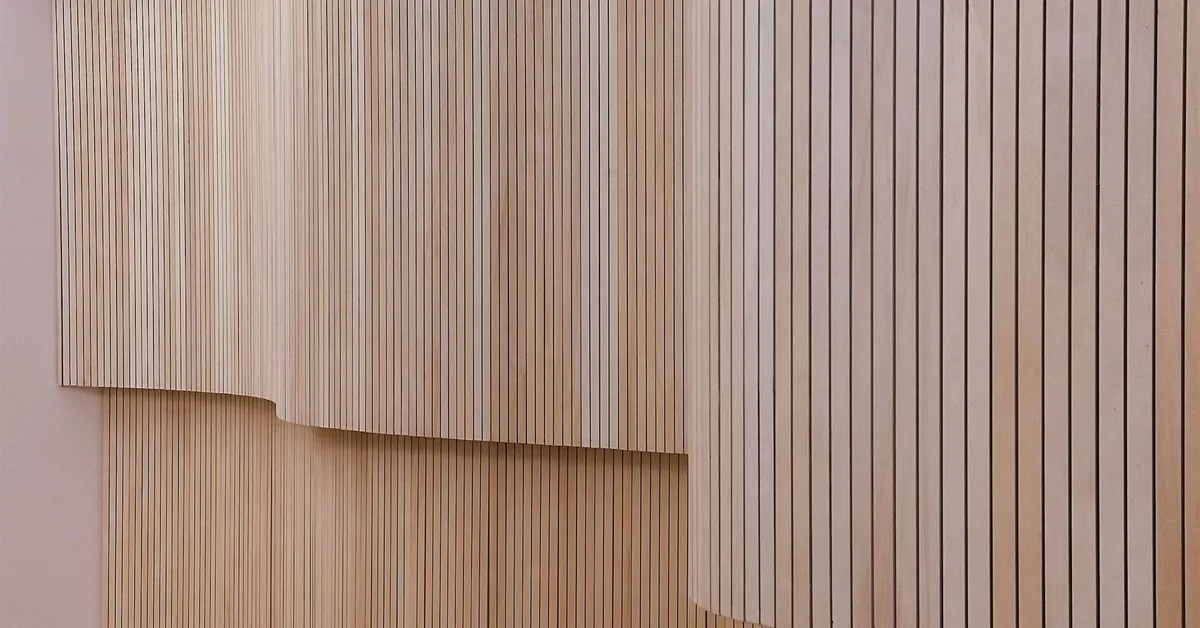
Wood remains the dominant material, but the range of what counts as “wood paneling” has expanded considerably. Shiplap the horizontal plank style that spent years as a signature of farmhouse-chic interiors has largely given way to more refined options. Fluted wood panels, with their vertical grooves creating shadow lines across the wall, are everywhere right now. They bring a sculptural quality that reads differently depending on the light: subtle in the morning, dramatically textured by afternoon sun coming in at an angle.
Reeded panels work similarly, though with a rounder, more tactile profile. Run your hand along a reeded wall and it has a satisfying physicality that flat paint never could. This is part of the appeal paneling engages the senses in a way that purely visual design cannot.
MDF (medium-density fiberboard) has quietly become one of the most important materials in the paneling revival, particularly for painted applications. It takes paint beautifully, cuts cleanly, and allows for precision in geometric patterns that would be difficult or expensive to achieve in solid wood. The grid-style paneling now appearing in bedrooms, dining rooms, and entryways those clean rectangular frames applied directly to drywall is almost always MDF. It’s honest about being a manufactured material while still achieving something genuinely beautiful.
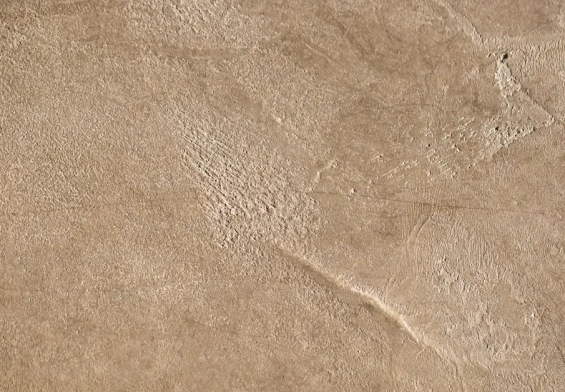
For those willing to spend more, limewashed wood panels carry a depth and variation that manufactured materials can’t quite replicate. The technique, which involves applying a diluted white or pigmented lime wash to raw wood, creates a surface that looks ancient and new simultaneously. Each board absorbs the wash differently, producing a kind of organic inconsistency that reads as texture rather than imperfection.
Where Paneling Works Hardest
Not every room needs paneling, and not every wall within a room does either. Part of what makes contemporary paneling feel sophisticated rather than overwhelming is restraint in its application.
Entryways are perhaps the most natural starting point. The entry hall sets the tone for an entire home, and paneling even just on the lower half of the wall, in a classic dado configuration immediately elevates the space. There’s something about arriving into a room with articulated walls that signals care. Visitors notice it even when they can’t name what they’re noticing.
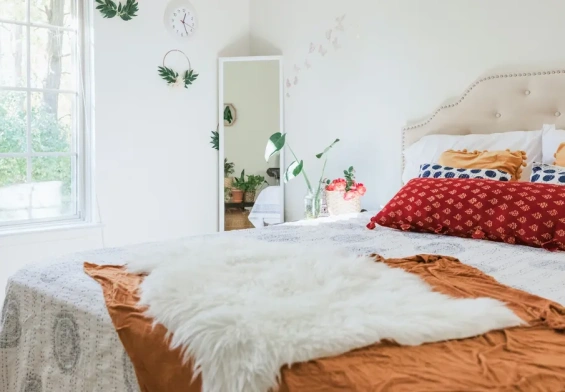
Bedrooms have become another prime location, particularly the wall behind the headboard. Rather than a traditional headboard, some designers are now paneling the entire wall floor to ceiling, sometimes in a soft color that pulls from the bedding or drapery creating something that functions architecturally as a headboard while transforming the entire character of the room. It’s a commitment, but one that photographs beautifully and ages well.
Dining rooms benefit from paneling in a specific way: they tend to be rooms we inhabit in the evenings, by candlelight or warm overhead light, and paneling in these conditions creates shadow and depth that flat walls simply cannot. A dining room with fluted or beadboard paneling painted in a deep, saturated color forest green, navy, a warm terracotta becomes something close to theatrical. The effect is immersive without being excessive.
The Color Conversation
One of the reasons contemporary paneling has broken free from its traditional associations is the willingness to paint it in colors that feel current rather than period-appropriate. Traditional paneling lived in the territory of dark walnut stains and mahogany beautiful in their own right, but heavy with historical associations.
Today’s paneling is just as likely to be painted a chalky sage green, a warm off-white with yellow undertones, a muted dusty rose, or a deep slate blue. The paint does something interesting: it unifies the texture of the paneling while allowing the shadow lines and profiles to remain visible. You get the architectural benefit without the material dominating the room’s color story.
Some designers are pushing further, painting paneling in the exact same color as the ceiling and trim to create a fully enveloped, tonal room. The effect is cocooning and surprisingly contemporary it draws on the logic of color-drenching, a technique that’s been gaining traction in high-design interiors for the past several years. When every surface is the same color, the texture becomes the entire story, and paneling’s texture is suddenly doing all the work.
DIY Reality vs. Professional Installation
The appeal of wall paneling has been amplified by the fact that certain styles are genuinely achievable for a skilled DIYer. The grid-panel look those rectangular frames applied to a flat wall requires patience and precision more than specialized skill. With a miter saw, some MDF trim, construction adhesive, and a willingness to spend a weekend measuring and remeasuring, the result can look professionally installed.
Fluted and reeded panels are a different story. Achieving consistent spacing, handling corners cleanly, and ensuring the panels are perfectly plumb requires more experience. Mistakes in these installations are visible in ways that other DIY projects forgive. This is the category where hiring a skilled carpenter pays for itself.
There’s also the question of what happens to the room’s existing features electrical outlets, light switches, heating vents when paneling goes up. These details require planning that’s easy to underestimate. An outlet that was flush with a drywall surface is suddenly recessed behind a panel, requiring an extender. A heating vent needs to be accommodated without interrupting the paneling’s rhythm. None of these are insurmountable problems, but they’re the kind of thing that separates a paneling project that looks finished from one that looks like an afterthought.
The Longer Arc of This Trend
It’s worth asking whether wall paneling is a trend in the way that, say, shiplap was a trend something that will peak and then become a marker of a specific cultural moment or whether it’s something more durable. The honest answer is probably both, depending on how it’s executed. Shiplap became overexposed because it was applied indiscriminately, in every room of every house, regardless of whether it suited the architecture or the aesthetic. Paneling risks the same fate if it becomes a reflex rather than a decision.
But the underlying logic of paneling that walls can be more than surfaces, that a room benefits from architectural articulation, that texture and shadow are legitimate design tools is not a trend at all. It’s a principle that has recurred across centuries of interior design for the simple reason that it works. The specific profiles and materials change. The impulse doesn’t.
Walk into a room with well-executed paneling and something settles in you before you’ve consciously registered what you’re looking at. The room feels resolved. That’s not a trend. That’s just good design finding its way back.