
What Your Living Room Says About Your Personality
The Room You Didn’t Know Was Talking
Walk into someone’s living room for the first time, and you already know more about them than they’ve told you. Before a word is exchanged, before coffee is poured, the room has introduced itself. The throw pillows stacked with geometric precision. The stack of half-read books colonizing the corner of the couch. The television mounted like an altar at the center of everything. These aren’t accidents. They’re a portrait one that the person living there has been painting, unconsciously, for years.
Interior designers have long understood what psychologists are only recently catching up to: the spaces we inhabit are extensions of our inner architecture. We don’t just decorate rooms. We externalize ourselves into them. And nowhere is this more revealing than the living room the one space in a home designed explicitly for being seen.
Minimalism Isn’t Just an Aesthetic, It’s an Argument
There’s a particular kind of living room that stops you cold the moment you enter. Bare walls. A single low sofa in a neutral tone. One carefully chosen object on the coffee table a smooth stone, perhaps, or a single stem in a narrow vase. No clutter. No noise.
People who live like this are often misread as cold or emotionally unavailable. But spend enough time with them and a different picture emerges. They tend to be people who are deeply uncomfortable with chaos not because they lack feeling, but because they feel too much. The clean room is a controlled environment for an interior life that is anything but sparse. They need the visual silence because their inner world is loud.
There’s also a quiet confidence in minimalism that’s easy to miss. Choosing less is a form of resistance in a culture that constantly urges accumulation. The person who strips their living room down to essentials is making a statement, even if they’d never frame it that way: I know what I need. Everything else is noise.
The Collected Life
On the other end of the spectrum is the living room that functions as a personal museum. Shelves crowded with objects vintage cameras, ceramic figurines, stacks of vinyl records, framed photographs layered three deep. Every surface holds something. Every something has a story.
This is often dismissed as hoarding by another name, but that reading misses the point entirely. People who surround themselves with objects are usually people who think in narratives. Each item is a chapter. The living room is the book. They don’t just want to remember their lives they want to live inside the memory of them. There’s a warmth to these spaces that’s hard to manufacture, a sense that the room has been lived in rather than staged.
What’s interesting is how these collectors respond to guests. They don’t just invite people into a room they invite them into a conversation. Every object is a potential opening. Pick up the small brass elephant on the side table and you’ll learn about a trip to Rajasthan in 2009, a market at dawn, a vendor who spoke no English but somehow communicated everything. The room is an invitation to ask.
What the Sofa Arrangement Reveals
Furniture placement is one of the most psychologically loaded choices a person makes without realizing it. Consider two common configurations.
In the first, all seating faces the television. The couch and chairs are angled toward the screen like a small theater. This isn’t necessarily a sign of intellectual vacancy it’s often a sign of someone who values shared experience. Watching together, laughing together, reacting together. These are people who bond through parallel activity rather than direct conversation. They’re comfortable with companionable silence. They don’t need to be talking to feel connected.
In the second configuration, the seating faces inward chairs and sofas arranged around a central table, facing each other. No clear focal point except the people in the room. This arrangement signals someone who prioritizes dialogue. They want to see your face when you speak. They’re probably the kind of host who refills your glass before you notice it’s empty, who asks follow-up questions, who remembers what you said six months ago and brings it back up at exactly the right moment.
Neither arrangement is superior. But they are different personalities wearing different furniture.
Color as Confession
The palette of a living room tells a story that the person who chose it may not be fully conscious of. Deep, saturated colors forest green, burgundy, navy tend to appear in the homes of people who are comfortable with intensity. They don’t shy away from strong opinions, strong emotions, strong coffee. These rooms feel like a firm handshake.
Soft, muted tones dusty rose, warm beige, sage often belong to people who prize harmony above almost everything else. They’re the mediators in their friend groups, the ones who sense tension before it surfaces and quietly defuse it. Their living rooms feel like a held breath, pleasant and careful.
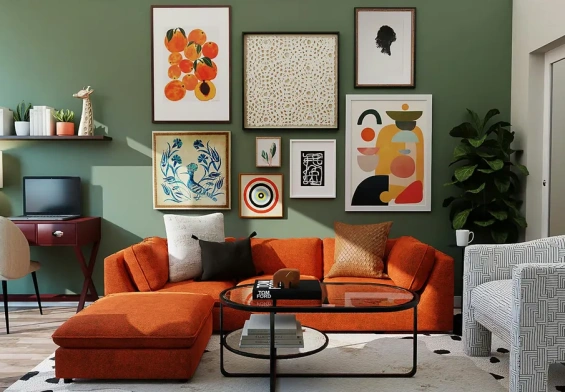
And then there are the people who paint one wall a color that has no business being in a living room burnt orange, cobalt blue, a yellow so bright it almost hums. These are people who got tired of waiting for permission. They decided at some point that the conventional palette was a suggestion, not a rule, and they stopped following suggestions they didn’t agree with. Their rooms are a little aggressive in the best possible way. Spending time in them tends to make you feel slightly more alive.
The Books, the Plants, and the Things Left Out
Two objects deserve special attention because of how consistently they appear and what they consistently signal.
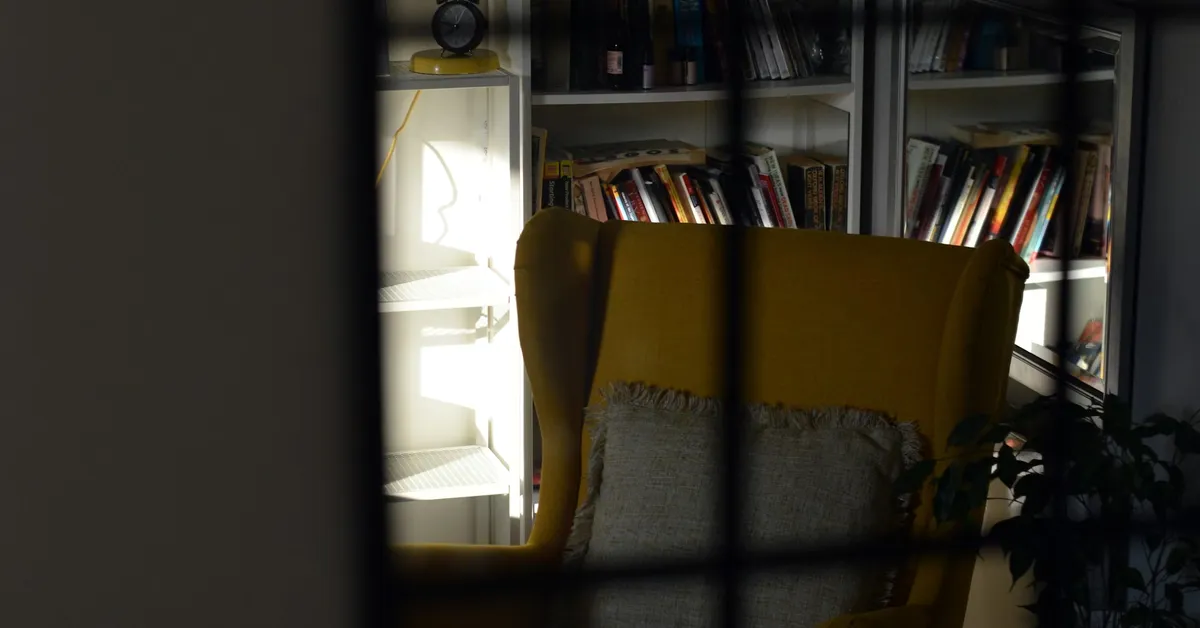
Books in a living room not shelved neatly in a home office, but scattered, stacked, present in the communal space suggest someone who doesn’t separate their intellectual life from their social one. They want ideas in the room. They want the possibility of a conversation about what they’re reading to emerge organically. The book left face-down on the armrest is an open door.
Plants are more complicated. A living room full of thriving, tended plants says something specific: this person shows up consistently for things that cannot advocate for themselves. They remember. They notice. A drooping fern and a cactus that’s been there since 2018 without being watered or repotted tells a different story someone who begins things with enthusiasm and then gets distracted by the next beginning.
And what about what’s absent? The living room with no personal photographs is often the room of someone who keeps their emotional life private, who is generous with their time but guarded with their history. The room with no books at all doesn’t mean the person doesn’t read it might mean they’re intensely private about what they consume intellectually, or that they’ve made a deliberate choice to keep that part of themselves offline, unshared, protected.
The Room as Ongoing Autobiography
What makes the living room such a rich subject is that it’s never finished. It accumulates. It shifts. The person who lived in a maximalist apartment at twenty-four and now keeps a spare, quiet home at forty-two hasn’t changed their taste they’ve changed. The room followed.
This is what makes visiting someone’s home for the first time feel so intimate, sometimes uncomfortably so. You’re not just seeing where they live. You’re seeing who they’ve been deciding to become, one small choice at a time a lamp moved here, a painting replaced, a shelf cleared of things that no longer feel true.
The living room doesn’t lie. It can’t. It’s too honest, too accumulated, too much the result of a thousand unconsidered decisions that, taken together, add up to something remarkably close to the truth.