

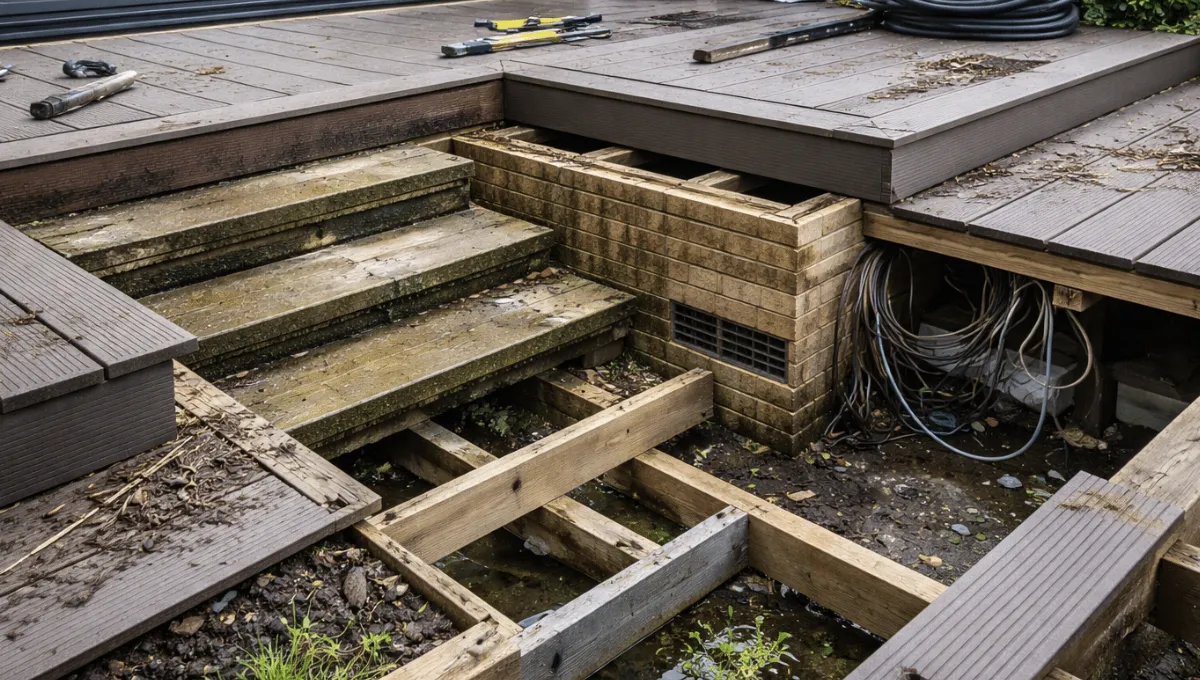
There’s a particular kind of regret that comes with a deck. It doesn’t announce itself right away. It waits through the first summer of backyard barbecues, through the second season when you notice a board starting to warp, through the third year when a contractor tells you the whole structure needs to come down. By then, you’ve already spent the money. And now you’re about to spend it again.
Decks are one of the most popular home improvement projects in America, and for good reason. Done right, they add livable square footage, boost resale value, and genuinely change how you use your home. Done wrong, they become expensive lessons in what not to do. The frustrating part is that most of the costliest mistakes aren’t dramatic blunders they’re quiet oversights that compound over time until the bill becomes impossible to ignore.
Here are five of the most common ones, and why they end up costing far more than anyone expects.
Skipping the Permit and Paying for It Later
It’s tempting. Permits take time, cost money upfront, and feel like bureaucratic friction standing between you and a finished deck. So a lot of homeowners skip them, especially for smaller builds or when a contractor quietly suggests it’s “not really necessary.”
It is necessary. Almost always.
When you sell your home, a deck built without permits becomes a liability that shows up in the inspection. Buyers either walk away or demand a price reduction that far exceeds what the permit would have cost. In some cases, municipalities require unpermitted structures to be torn down entirely before a sale can close. That’s not a hypothetical it happens regularly, and it’s a gut punch when it does.
Beyond the sale, unpermitted decks can void your homeowner’s insurance coverage for any incident that occurs on that structure. Someone gets hurt, a fire starts nearby, a storm causes damage and suddenly your insurer has grounds to deny the claim. The permit fee, which typically runs a few hundred dollars depending on your location, starts to look like the best money you never spent.
Choosing the Wrong Decking Material for Your Climate
Walk into any home improvement store and you’ll find a dizzying array of decking materials pressure-treated pine, cedar, redwood, composite, PVC, tropical hardwoods. Each one has a sales pitch. Not all of them have future in your specific backyard.
Pressure-treated lumber is the default choice for millions of homeowners because it’s affordable and widely available. In dry climates with moderate temperature swings, it performs reasonably well. But in humid regions, or anywhere with significant freeze-thaw cycles, untreated or improperly sealed pressure-treated wood absorbs moisture, expands, contracts, and eventually cracks, warps, or rots. What looked like a bargain at the lumber yard becomes a replacement project within five to eight years.
Composite decking gets marketed as the low-maintenance forever solution, and in many ways it delivers. But not all composite is created equal. Cheaper composite products particularly older-generation or budget-line boards can fade dramatically, develop mold in shaded areas, and get uncomfortably hot underfoot in direct sun. Homeowners who buy on price alone often find themselves with a deck that looks worn out in a fraction of the time they expected.
The real mistake isn’t choosing the wrong material in isolation it’s choosing without accounting for your specific conditions. Sun exposure, rainfall, proximity to saltwater, how much foot traffic the deck will see, whether you have pets or kids all of it matters. A conversation with a local contractor who builds decks in your area year-round is worth more than any product brochure.
Underbuilding the Foundation
Above the surface, a deck can look perfectly solid. Below it is where the real story lives.
Footings the concrete piers or pads that anchor the deck’s posts to the ground are the foundation of the entire structure. Get them wrong and everything above them is compromised, no matter how carefully the rest of the deck was built. The most common foting mistake is going too shallow. In climates where the ground freezes, footings must extend below the frost line, which can be anywhere from 12 inches to over4 feet depending on where you live. Footings that don’t reach that depth will heave as the ground freezes and thaws, causing posts to shift, boards to buckle, and the entire structure to rack out of square over time.
The second foting mistake is undersizing them. A deck that will hold a hot tub, a large dining set, and a crowd of people on a Saturday night needs footings calculated for that load. Many DIY builds and even some contractor builds use a one-size-fits-all approach that works fine for a simple platform but fails under real-world conditions.
Fixing foting problems after the fact is expensive and disruptive. It often means tearing up sections of the deck, excavating, pouring new concrete, and rebuilding from the posts up. The cost to do it right the first time is a fraction of that.
Ignoring Water Management
Water is patient. It will find every gap, every low spot, every place where two materials meet imperfectly, and it will work on those spots for years until the damage becomes visible. By the time you see rot, the structural damage underneath is usually far worse than what’s on the surface.
The most overlooked water management issue is the ledger board the horizontal board that attaches the deck to the house. When this connection isn’t properly flashed and sealed, water infiltrates the gap between the ledger and the house’s rim joist. It sits there, hidden behind siding and framing, roting the structural members of your home. This isn’t a deck repair. This is a house repair, and it can run into the tens of thousands of dollars.
Proper ledger flashing involves a specific sequence of waterproof membrane, metal flashing, and sealant that directs water away from the connection point. It’s not complicated, but it requires attention and the right materials. A lot of decks including many built by contractors skip steps in this process because it’s hidden work that no one will see.
Drainage between deck boards matters too. Boards need adequate spacing to allow water to drain rather than pool. Debris accumulates in tight gaps, holds moisture, and accelerates decay. The spacing that looks best aesthetically is often not the spacing that performs best over time.
Treating Electrical and Lighting as an Afterthought
Outdoor lighting has become a standard expectation for decks, and the options have never been better recessed post cap lights, under-rail LED strips, in-deck step lighting, string lights overhead. The problem is that most homeowners plan the lighting after the deck is already built, which means running wires through finished framing, drilling through posts after the fact, and making compromises that affect both the aesthetics and the safety of the installation.
Electrical work done as an afterthought tends to be messier, more expensive, and more prone to problems. Conduit gets surface-mounted where it should be concealed. Junction boxes end up in awkward locations. Circuits get overloaded because the original electrical plan didn’t account for the load. In some cases, homeowners attempt the wiring themselves without understanding that outdoor electrical work has specific code requirements around weatherproofing, GFCI protection, and burial depth for underground runs.
The fix is simple in concept: plan the electrical before the deck is built. Decide where outlets will go, where lighting will be installed, how the circuits will be routed, and whether you want the capacity for a future hot tub or outdoor kitchen. Run conduit and pull wire during the framing stage, when everything is accessible. Cap it off and finish it later if you’re not ready to install fixtures yet. The incremental cost at that stage is minimal. The cost to retrofit it properly after the fact is not.
There’s also the question of permits again electrical work on a deck typically requires its own permit and inspection, separate from the structural permit. Skipping it creates the same downstream problems: insurance exposure, sale complications, and the possibility of having to redo work that was done incorrectly.
The Compounding Cost of Small Decisions
What makes decking mistakes so financially painful is that they rarely announce themselves as expensive at the time they’re made. Skipping a permit saves a few hundred dollars today. Choosing cheaper lumber saves a few thousand. Rushing through the ledger flashing saves an afternoon. Each decision feels like a reasonable trade-off in the moment.
The compounding happens quietly, over years, until the deck that was supposed to add value to your home becomes a liability that has to be disclosed, repaired, or demolished. The homeowners who end up spending the most on their decks are often the ones who tried hardest to spend the least.
A well-built deck, designed for your climate, properly permitted, correctly anchored, and thoughtfully detailed, can last 25 to 30 years with routine maintenance. It becomes part of the house in the best sense something that works, that holds up, that you stop thinking about because there’s nothing to worry about. That’s the version worth building.