
The Moment You Realize the Box Won’t Fit Through the Door
There’s a particular kind of dread that hits somewhere between the parking lot and the front door. You’ve just loaded a flat-pack wardrobe into your car or more accurately, you’ve spent forty minutes convincing yourself it’ll fit and now you’re standing in your entryway, staring at a cardboard rectangle that is, by every physical law, too wide for the hallway. The instruction booklet is still sealed in plastic. The Allen wrench is still taped to the side panel. And the realization is settling in like cold water: you never actually measured anything.
This is the IKEA Fail. Not the wobbly shelf. Not the missing cam lock. The real failure happens before the box is even opened in the gap between what you imagined and what your actual space can hold.
The flat-pack furniture industry has made home furnishing feel almost frictionless. A few clicks, a warehouse trip, a flat cardboard box. But that frictionlessness is a kind of illusion. It papers over the genuinely complex spatial problem sitting in your living room, bedroom, or home office a problem that a product photo taken in a Scandinavian studio simply cannot solve for you.
Why Your Brain Is a Terrible Measuring Tape
Human spatial intuition is notoriously unreliable. Studies in environmental psychology have repeatedly shown that people tend to overestimate the size of empty rooms and underestimate the footprint of furniture once it’s placed. An empty corner looks generous. A 200cm bookcase looks reasonable on a screen. Put them together and you’ve suddenly lost the only natural light source in the room.
Part of this is a failure of abstraction. When you read “78 x 59 x 197 cm” on a product page, your brain processes it as data, not as volume. Numbers don’t carry weight or shadow. They don’t tell you that the dresser will block the radiator, that the bed frame will make the door swing awkward, or that the desk you’ve been eyeing for months will eat the entire window wall and leave you working in a cave.
The other part is emotional. We fall in love with furniture before we understand it. The clean lines, the finish, the lifestyle it implies all of that arrives before the tape measure comes out. And once you’re emotionally committed to a piece, the spatial math starts to feel like an obstacle rather than useful information.
This is precisely where 3D space planning tools stop being a novelty and start being a genuine necessity.
What “Testing in 3D” Actually Means
The phrase gets thrown around loosely, but it’s worth being specific about what spatial testing can and can’t do.
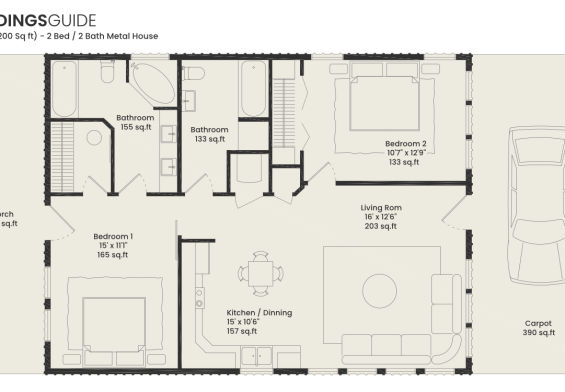
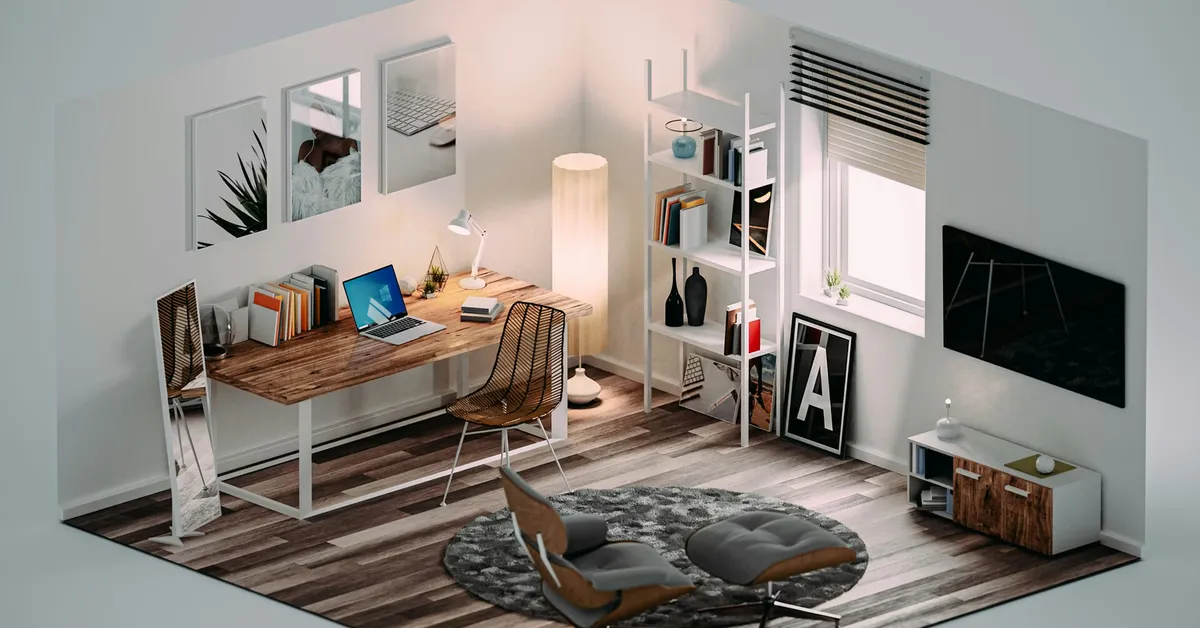
At its most basic level, testing flat-pack furniture in your 3D space means placing a scaled digital model of a piece or multiple pieces into an accurate digital representation of your room before you buy or build anything. You’re not decorating a mood board. You’re running a simulation. Can the sofa reach its position without being tilted through a doorway? Will the wardrobe clearance allow both doors to open fully? Does the dining table leave enough circulation space on all four sides, or will guests be eating with their elbows against the wall?
Tools like IKEA’s own room planner, Roomstyler, Planner 5D, and a growing number of AR-enabled apps have made this process accessible to people with no design background whatsoever. Some of them let you import exact product dimensions directly from manufacturer catalogs. Others use your phone’s camera to overlay furniture onto a live view of your actual room. The technology ranges from serviceable to surprisingly sophisticated.
But the tool is only as good as the information you feed it. And this is where most people shortcut the process and end up right back at the IKEA Fail, just in digital form.
The Measurements That Actually Matter
Floor area is the obvious starting point, but it’s rarely the limiting factor. The measurements that actually determine whether a piece of flat-pack furniture works in a real space are the ones people consistently forget to take.
Door and hallway clearance. A wardrobe that’s 60cm deep needs a delivery path that can accommodate that depth at every turn not just the final room, but every corridor, stairwell landing, and doorframe between the entrance and the destination. Flat-pack helps here, because panels travel flat. But “flat-pack” doesn’t mean “infinitely maneuverable.” Long panels still need turning radius. Some staircases simply don’t allow it.
Ceiling height relative to tall furniture. A 200cm bookcase in a room with 210cm ceilings sounds fine until you realize the baseboard adds 10cm and the bookcase needs to be tilted upright during assembly. Suddenly you’re 20cm short of clearance and the piece can’t go vertical without hitting the ceiling mid-tilt.
Radiators, outlets, and switches. These are almost never included in the mental model people construct when they’re shopping. A sideboard placed against the wrong wall will block a radiator and turn your living room into a heat trap. A desk positioned for the best light might cover the only outlet on that wall.
Window and door swing arcs. Furniture placed near doors needs to account for the full arc of the door’s movement, not just its closed position. A 90cm door swings through a significant amount of floor space. In a small bedroom, that arc can eliminate entire placement options.
When you input all of this into a 3D planner not just the room’s length and width, but the actual architectural constraints the simulation stops being decorative and starts being diagnostic.
The Flat-Pack Variable Nobody Talks About
There’s a layer of complexity specific to flat-pack furniture that even careful spatial planning can miss: the assembly envelope.
Flat-pack pieces are shipped disassembled, but they’re assembled in the room. This means the room itself becomes the workshop, at least temporarily. A wardrobe with a 60cm depth and a 200cm width needs a clear floor area larger than its footprint during assembly, because panels need to be laid flat, connected, and then raised. In a small bedroom, this can mean temporarily moving the bed into the hallway. In a studio apartment, it can mean the assembly simply isn’t physically possible without removing other furniture first.
This isn’t a reason to avoid flat-pack it’s genuinely one of the most practical furniture formats for urban living. But it’s a variable worth running through your spatial model before the delivery arrives. Some 3D planning tools now include assembly simulation modes. Most don’t. Until they do, the workaround is simple: measure your largest panel’s dimensions from the product spec sheet, then check whether that panel can lie flat in the target room with enough surrounding space to work.
It sounds tedious. It takes about four minutes. And it’s the difference between a satisfying Sunday project and a disassembled wardrobe in your hallway for three weeks because you can’t figure out how to get the back panel into position.
When the Digital Model Lies to You
3D planning tools have a seductive quality. A room that looks balanced and spacious on screen can feel cramped and awkward in reality, and the gap between the two is often a matter of visual weight rather than actual dimensions.
Digital models render furniture as clean geometric forms. They don’t capture the visual mass of a dark wood finish in a low-light room, or the way a large sectional sofa creates a psychological barrier even when the circulation space technically meets the minimum. A 3D model will tell you a piece fits. It won’t tell you whether it belongs.
This is where the simulation has to be supplemented by judgment. Print the floor plan to scale and walk the space with it. Use painter’s tape on the floor to mark the furniture’s footprint an old designer’s trick that costs nothing and communicates spatial reality better than any app. Live with the tape outline for a day before you order. Notice whether you’re stepping around it constantly, whether it blocks the view you actually use, whether the room still feels like the room you want to be in.
The goal of 3D testing isn’t to replace your instincts. It’s to give your instincts accurate information to work with.
The Longer Game
There’s something worth sitting with here, beyond the practical logistics. The IKEA Fail in all its forms is really a story about the distance between desire and reality, between the life we’re imagining and the physical space we actually inhabit. Flat-pack furniture promises transformation at low cost. And it can deliver, genuinely. But transformation requires friction. It requires the unglamorous work of measuring twice, modeling carefully, and sometimes accepting that the piece you love won’t work in the space you have.
The 3D simulation is a tool for closing that distance not perfectly, not completely, but meaningfully. It turns the abstract into the concrete just enough to make better decisions. And better decisions, in the context of furniture and rooms and the daily texture of where you live, have a way of compounding quietly over time.
The Allen wrench is still in the box. But at least now you know the box will fit through the door.