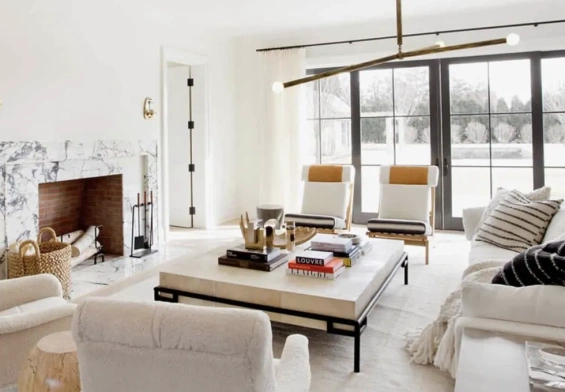

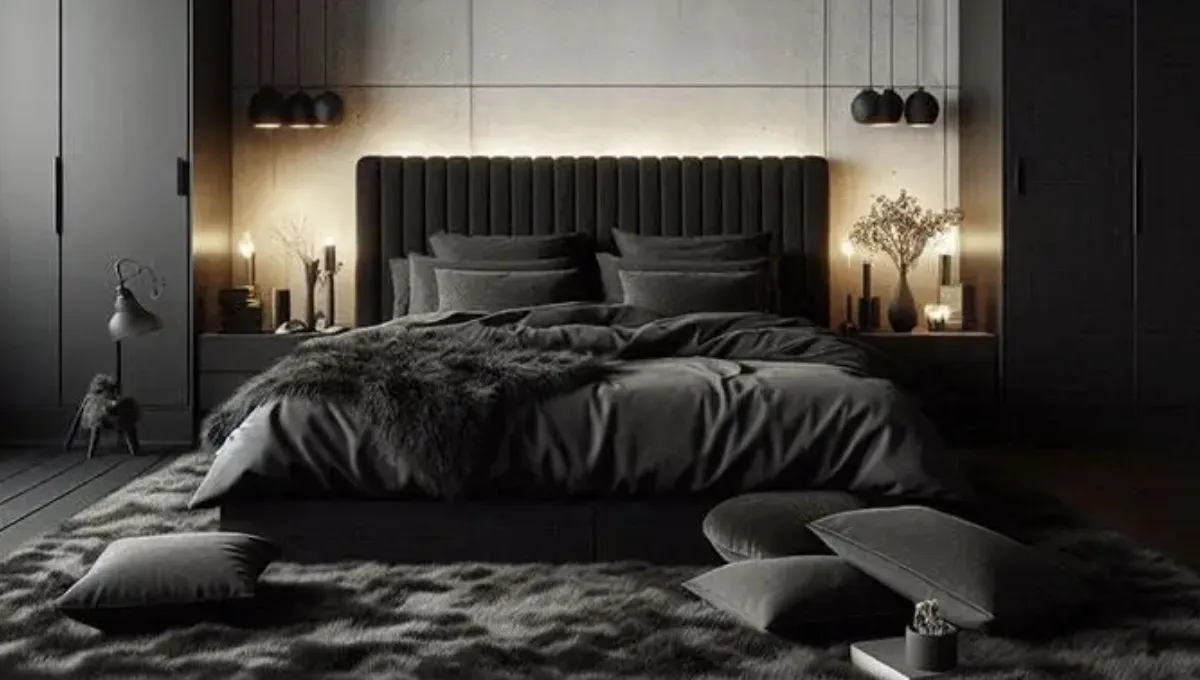
There’s a moment most couples know but rarely talk about. You walk into the bedroom after a long day, and something feels off. Not between you and your partner, exactly. The room itself feels wrong. Clutered. Heavy. Maybe the bed is shoved into a corner because that’s where it fit when you moved in three years ago, and nobody ever questioned it. The laundry chair every couple has one has grown into a small mountain. The lighting is harsh, or there’s no lighting at all besides the overhead fixture that makes everything look like a hospital corridor.
You pick a fight about dishes.
But was it really about the dishes?
Feng shui practitioners would argue it wasn’t. They’d say your environment was doing something to you long before you opened your mouth. And while it’s easy to dismiss this as mystical nonsense, there’s a more interesting conversation buried underneath the incense and bagua maps one that touches on psychology, neuroscience, and the strange ways physical space shapes emotional intimacy.
The Room as a Third Party in Your Relationship
Most relationship advice focuses on communication, boundaries, love languages. All internal, interpersonal work. What gets overlooked is the container those interactions happen in. Your bedroom isn’t just where you sleep. It’s where you’re most vulnerable, honest, most likely to either connect or disconnect from the person beside you.
Feng shui, at its core, is spatial philosophy. Strip away the metaphysical language about chi and energy flow, and what remains is a system of intentional design. It asks: does this space support the life you want to live in it? For a relationship, that question becomes pointed. Does this room support intimacy? Does it invite presence, or does it scatter attention?
Think about it practically. A bedroom with a desk piled in work papers brings the office into your most private space. A TV mounted directly across from the bed turns two people into parallel viewers rather than partners. Mirrors facing the bed feng shui warns against this specifically create a subtle sense of being watched, of performance rather than rest. You don’t need to believe in energy meridians to recognize that these design choices carry psychological weight.
Environmental psychology has studied this for decades. Researchers at the University of Texas found that people in clutered environments show elevated cortisol levels. Cortisol is the stress hormone. It makes you reactive, defensive, short-tempered. So when your bedroom doubles as a storage unit, you’re not just living in mess you’re marinating in a low-grade stress response. And then you wonder why every conversation before bed turns into an argument.
Symmetry, Pairs, and the Subconscious Architecture of Togetherness
One of feng shui’s most repeated principles for romantic spaces is the idea of pairs. Two nightstands. Two lamps. Two pillows. Space on both sides of the bed. It sounds almost comically simple, but the reasoning underneath it is worth sitting with.
When one side of the bed is pressed against a wall, one partner is literally boxed in. They have to climb over the other person to get up in the night. Their side has no table, no lamp, no autonomy. It’s a small thing. But small things accumulate into feelings, and feelings harden into resentments that nobody can quite name.
Symmetry in a shared space communicates equality. It says: this room belongs to both of us. Neither person is a guest in the other’s territory. Couples therapists often notice that spatial imbalances mirror relational ones. The partner whose stuff dominates the room often dominates decisions. The partner with no drawer space often feels they have no voice. These aren’t coincidences. They’re patterns, and feng shui identified them centuries before Western therapy gave them clinical names.
There’s also the matter of the bed’s position. Feng shui insists the bed should face the door but not be directly in line with it the so-called “command position.” Practically, this means you can see who enters without being in the path of foot traffic or drafts. It’s a security principle. When you feel safe in a space, your nervous system downregulates. You soften. You become available for connection rather than braced for threat. Sleeping with your back to the door, unable to see what’s coming, keeps a part of your brain on alert even during rest. Over months and years, that low-level vigilance erodes the ease between two people sharing a bed.
What Clutter Really Means
Feng shui treats clutter as stagnant energy. Psychology treats it as deferred decisions. Either way, the effect is the same: it weighs on you.
A clutered bedroom tells a story. It says: we don’t have time for this space. We don’t prioritize rest. We’re too busy, too overwhelmed, too disconnected from our environment to tend it. And if you can’t tend your shared space, what does that say about tending the relationship itself?
This isn’t about blame or perfectionism. Plenty of happy couples live in creative chaos. The question feng shui raises isn’t whether your room is magazine-ready. It’s whether the objects in your space serve your present life or anchor you to the past. Old letters from an ex shoved in a bedside drawer. Gifts from people who hurt you, kept out of guilt. Furniture from a previous life that doesn’t fit the one you’re building now. These things carry associations, and associations shape mood, even when you’re not consciously aware of them.
One woman I spoke with described clearing out her bedroom after particularly rough patch in her marriage. She didn’t follow any feng shui guide. She just started removing things that made her feel heavy. A painting her mother-in-law had given them that she’d always hated. A pile of self-help books that reminded her of their worst year. An exercise bike that had become a coat rack and a monument to failed intentions. Within a week, she said, the room felt like it belonged to them again. Conversations got easier. They started going to bed at the same time. Nothing else in their lives had changed. Just the room.
The Bedroom Door You Keep Open
There’s a feng shui principle about doors that resonates beyond spatial design. A door should close fully. A bedroom door that won’t latch, that swings open on its own, that stays permanently ajar because of kids or pets or habit it represents a boundary that can’t hold.
Boundaries matter in relationships. The ability to close a door, to create a space that is just for the two of you, signals that the relationship has its own protected territory. When the bedroom becomes a thoroughfare kids wandering in at all hours, the door always open to the hallway, no lock, no sense of enclosure intimacy loses its container. It leaks out into the general noise of domestic life and becomes harder to access.
This doesn’t mean shuting your children out or building a fortress. It means recognizing that a relationship needs a room of its own. A space where you are not parents, not employees, not homeowners managing a to-do list. Just two people, present with each other. Feng shui understood this architecturally. Modern couples often have to fight for it intentionally.
Color, Light, and the Mood You Didn’t Choose
Walk into a room painted bright red and your heart rate increases slightly. Walk into a room washed in cool blue and your breathing slows. This isn’t feng shui mysticism it’s documented chromatic response. Color affects physiology.
Feng shui recommends warm, skin-adjacent tones for bedrooms. Soft whites, blush, teracotta, warm grays. Colors that echo the body rather than stimulate the mind. Bright whites feel sterile. Dark colors can feel oppressive in small spaces. Neon or highly saturated walls keep the nervous system activated when it should be winding down.
Lighting matters even more. Overhead lighting is the enemy of intimacy. It flattens everything, eliminates shadow, removes mystery. Layered lighting a bedside lamp with a warm bulb, a dimer switch, candles if you’re inclined creates depth. It softens faces. It invites closeness. There’s a reason nobody has ever felt romantic under fluorescent tubes.
These aren’t esoteric principles. They’re design choices that shape how you feel in a space, and how you feel determines how you relate to the person sharing it with you.
Intention as the Deeper Current
Perhaps the most valuable thing feng shui offers relationships isn’t any specific rule about mirror placement or bed direction. It’s the underlying premise: that your space deserves intention. That the room you share with your partner is not a neutral backdrop but an active participant in your dynamic. That arranging it with care is itself an act of care for yourself, for them, for what you’re building together.
Couples who take time to shape their environment together often report feeling more aligned. The act of choosing things jointly, of asking what makes the other person comfortable, of compromising on aesthetics it’s relational work disguised as interior design. You learn something about your partner when you discover they can’t sleep with the closet door open, or that they need complete darkness, or that the sound of a ticking clock makes them anxious. These small negotiations build the muscle of attentiveness.
So can the feng shui of your room affect your relationship? The honest answer is less mystical than the question implies. Your room affects your nervous system. Your nervous system affects your mood. Your mood affects how you show up for the person you love. The chain is simple, even if we rarely trace it all the way back to the nightstand that’s missing or the door that won’t close.
Maybe the real question isn’t whether feng shui works. Maybe it’s why we so rarely ask what our rooms are doing to us and what it would mean to finally, deliberately, answer.