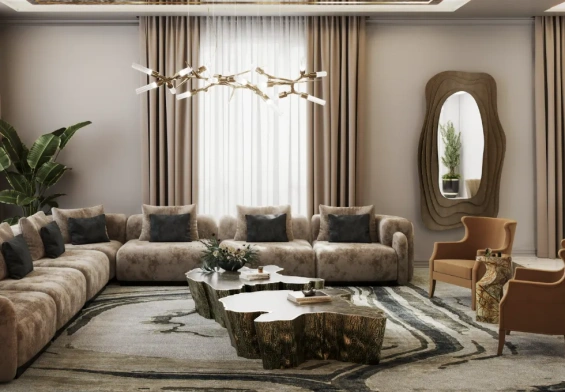

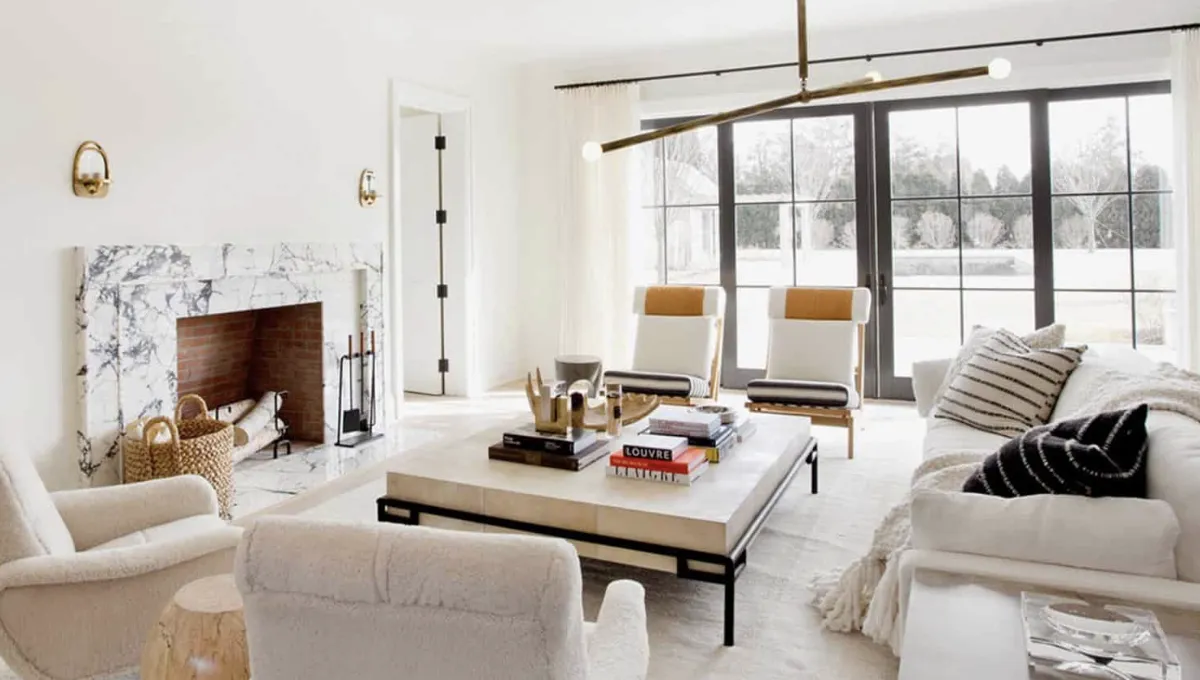
There is a persistent myth interior design that neutral equals safe, and safe equals dull. Walk into any paint store and watch someone reach for the beige swatch with a slight grimace, as if they are settling for something less than what they actually want. The assumption runs deep: color is where personality lives, and without it, a room flatlines into forgettable territory.
But spend any real time studying the spaces that stop you mid-scroll, the ones that make you lean closer to the screen or linger in a doorway, and you will notice something interesting. Many of the most magnetic rooms in contemporary design operate almost entirely within the neutral spectrum. They are not playing it safe. They are playing a more sophisticated game, one where texture, proportion, light, and material do the heavy lifting that a bold paint color might otherwise mask.
The Misunderstanding of Neutral
Neutral has become shorthand for “no opinion,” which is a fundamental misread. A room swathed in warm ivory plaster, anchored by a low walnut credenza, layered with undyed linen and raw ceramic, is not a room without a point of view. It is a room with such a refined point of view that every single element has to earn its place. There is nowhere to hide.
Think of it this way. A maximalist space can absorb a mediocre side table because the eye is already overwhelmed with stimuli. In a neutral room, that same table becomes the entire conversation. Its proportions, its grain, the shadow it casts at four in the afternoon. Neutral design demands better objects, more intentional placement, and a sharper eye for what belongs and what cluters.
This is why the best neutral interiors often feel expensive even when they are not. The discipline required to edit a space down to its essential elements creates an atmosphere of calm authority. You sense that someone made deliberate choices rather than accumulating things by accident.
Texture as the Secret Language
Strip away color and you are left with surface. This is where neutral rooms either sing or collapse into monotony. The difference between a boring beige room and a breathtaking one almost always comes down to textural range.
Consider a living room where the walls carry a hand-applied lime wash, slightly uneven, catching light differently as the day moves. The sofa is upholstered in a heavyweight Belgian linen with visible slub. A coffee table in honed travertine sits on a jute rug whose weave is loose and organic. The curtains are a sheer wool gauze. A single throw pillow in bouclé. Every surface in this room is neutral, but no two surfaces feel the same under your hand.
This layering creates what designers sometimes call “quiet drama.” Your eye moves through the space not because something is shouting for attention but because each material offers a slightly different frequency. Matte against sheen. Rough against smooth. Dense against airy. The room breathes because its surfaces are in conversation with one another.
The Role of Contrast Within Restraint
People often confuse neutral with monochromatic, but the most compelling neutral spaces actually work a wide tonal range. A room might move from deep charcoal at the floor through warm greige on the walls to cream at the ceiling, with furniture occupying various stops along that gradient. The palette stays cohesive because everything shares an undertone, but the contrast keeps the eye engaged.
Dark-stained oak floors beneath pale plaster walls. A blackened steel fireplace suround against a room otherwise dressed in sand and cream. These moments of weight prevent a neutral space from drifting into that washed-out, everything-blends-together territory that gives the approach bad name.
Some of the most striking examples come from Belgian and Japanese design traditions, both of which have long understood that restraint is not the absence of interest but the careful calibration of it. Walk through an Axel Vervoordt interior and you will find rooms that technically contain only brown, cream, gray, and black yet feel as rich and layered as any jewel-toned space. The secret is always contrast deployed with precision.
Light Becomes a Material
In a colorful room, light enhances what is already there. In a neutral room, light practically becomes a design element in its own right. The way morning sun warms a plaster wall from cool gray to golden cream. The way a single sculptural pendant casts a pool of amber across a stone countertop at night. These shifts register more powerfully when the palette is quiet because there is less visual noise competing for your attention.
This is why architecture matters so much in neutral interiors. Window placement, ceiling height, the depth of a reveal around a doorframe. These structural decisions shape how light enters and moves through a space, and in neutral room, that movement is part of the experience. Designers working in this mode often think about room across the full arc of a day rather than optimizing for a single moment. The space at noon is not the space at dusk, and both versions should feel intentional.
Artificial lighting deserves equal care. Neutral rooms benefit enormously from warm, low light sources placed at multiple heights. A floor lamp beside a reading chair, a table lamp on a console, perhaps a single pendant hung lower than expected over a dining table. The goal is to create pockets of warmth rather than flooding the room with uniform overhead light, which tends to flatten everything and strip away the shadows that give neutral surfaces their depth.
The Furniture Edit
There is a reason so many neutral interiors lean toward fewer, larger pieces rather than many small ones. Scale and proportion become more visible when color is not directing the eye, and room with too many objects, regardless of how tasteful each one might be individually, starts to feel clutered faster in a neutral context.
The most successful approach tends to involve anchor pieces with strong silhouettes. A sofa with a clean but generous profile. A dining table with real presence, perhaps a thick slab of natural stone or a substantial wood top on an architectural base. Chairs that read almost as sculpture. When these pieces are well-chosen, the room needs very little else.
This does not mean neutral rooms should feel sparse or cold. The warmth comes from material honesty. A hand-thrown ceramic vase. A stack of linen-bound books. A wooden bowl with visible tool marks. These objects carry warmth not through color but through evidence of human touch, and they prevent a space from tipping into that sterile, showroom quality that makes people afraid to sit down.
Why Neutral Keeps Evolving
One practical advantage of a neutral foundation that rarely gets discussed is its adaptability over time. A room built on strong bones, good materials, and a restrained palette can absorb seasonal shifts, new art, or a change in mood without requiring a complete overhaul. Swap the throw pillows, bring in a differentrug, hang a new piece on the wall, and the room feels refreshed without losing its identity.
This is not about being noncommittal. It is about building a space with enough structural integrity that it can evolve alongside the people living in it. Life changes. Tastes shift. A well-designed neutral room accommodates that movement gracefully, which is more than can be said for a space built around a very specific color story that felt perfect in2019 and exhausting by 2023.
The current wave of neutral interiors also reflects a broader cultural craving for calm. After years of overstimulation, both digital and physical, many people are drawn to spaces that ask nothing of them. Not in a boring way, but in a restorative way. A room that lets your nervous system settle rather than demanding a reaction. There is sophistication in that kind of generosity.
The Courage in Quiet
It takes a particular confidence to commit to a neutral room and trust that it will hold interest. The temptation to add “just one pop of color” is real, and sometimes that instinct is correct. But often it comes from a fear that quiet is not enough, that a room needs to perform in order to justify itself.
The most sophisticated neutral spaces push back against that anxiety. They trust the architecture. They trust the materials. They trust that a person walking into the room will feel something without being told what to feel. That is a harder thing to achieve than painting an accent wall emerald green, and when it works, it creates an atmosphere that color alone rarely matches.
So the next time someone dismisses a neutral palette as the safe choice, consider what it actually requires. Better materials. Sharper editing. More attention to light, proportion, and texture. A willingness to let silence do the talking. There is nothing boring about a room that has been thought through that carefully. If anything, it is one of the boldest moves in design, the decision to let quality speak for itself without raising its voice.