
The Forgotten Layer Between You and the World Outside
There’s a particular kind of dinner that stays with you long after the plates are cleared. Not because of what was served, but because of how the room felt the way sound seemed to soften at the edges, the way the light fell heavy and warm, the way conversation moved without effort, without the intrusion of street noise or the clatter from a kitchen two rooms over. Most people credit the food, or the company, or maybe the wine. Rarely does anyone think to thank the curtains.
But they should.
Velvet curtains occupy a strange and underappreciated position in interior design simultaneously decorative and functional, historically aristocratic yet surprisingly accessible in the modern market. When applied to dining spaces specifically, they do something that almost no other single design element can accomplish: they alter both the acoustic character and the visual atmosphere of a room at the same time. That dual function is worth slowing down to understand, because most homeowners treat these two problems as entirely separate projects, each requiring its own contractor, its own budget, its own headache.
Why Dining Rooms Are Acoustically Hostile by Default
Think about the average dining room for a moment. Hard floors tile, hardwood, polished concrete. A glass table, or at minimum a lacquered wooden surface. Bare walls hung with framed art behind glass. A ceiling with no texture. Every surface in that room is designed, whether intentionally or not, to reflect sound rather than absorb it. The result is a space where conversation competes with itself, where the scrape of a fork becomes oddly amplified, where a table of six people sounds like a table of twelve.
Acoustic engineers have a term for this: flutter echo. It’s the rapid, repetitive reflection of sound between parallel hard surfaces, and dining rooms are almost purpose-built to produce it. Restaurants figured this out the hard way during the minimalist design boom of the 2010s, when exposed brick and open ceilings became fashionable and customer complaints about noise levels spiked dramatically. The solution, when it came, was soft surfaces banquettes, upholstered panels, heavy drapery.
The home dining room has the same problem and the same solution available to it. Velvet, specifically, is one of the most effective soft furnishing materials for sound absorption because of its pile structure. Those thousands of tiny looped or cut fibers create a surface with enormous actual surface area relative to its visual footprint. Sound waves entering that surface don’t bounce back cleanly they’re scattered, dampened, partially converted to heat energy through friction. The thicker the pile and the heavier the fabric, the more pronounced the effect.
Floor-to-ceiling velvet panels on even a single wall can reduce the perceived echo in a dining room noticeably. Cover two walls particularly if one of them contains a window and the transformation becomes genuinely striking. The room stops fighting you. Conversation becomes easier. The whole register of the space drops by several degrees of chaos.
The Weight of Luxury and What It Actually Costs
Velvet has a reputation problem. It reads as expensive, as high-maintenance, as the kind of material that belongs in a manor house or a boutique hotel lobby rather than a suburban dining room. That reputation is partly earned and partly mythology.
The earned part: quality velvet silk velvet, in particular is genuinely expensive, and it does require care. Silk velvet crushes if handled carelessly, fades in direct sunlight, and cannot be cleaned with the casual confidence you might apply to polyester. If your dining room gets harsh afternoon sun through south-facing windows, raw silk velvet is probably not your friend.
The mythology part: the velvet category is enormous. Cotton velvet is durable, relatively affordable, and machine-washable in many cases. Polyester velvet has improved dramatically in quality over the past decade and can be visually indistinguishable from its more expensive cousins in most lighting conditions. Velvet-weave blends cotton-polyester, cotton-linen offer a middle path that balances texture and practicality. For a dining room, where the curtains are unlikely to face the kind of daily friction that bedroom or living room textiles do, mid-range cotton or blended velvet is a perfectly sensible choice.
The cost calculation also changes when you factor in what you’re replacing. Acoustic panels the foam or fabric-wrapped boards that recording studios use are not cheap, and they are not beautiful. A set of custom velvet drapes that covers the same square footage as several acoustic panels will often cost less, last longer, and contribute something those panels never could: a sense of occasion.
Color, Light, and the Psychology of the Table
There’s a reason that restaurant designers obsess over drapery color in ways that seem almost neurotic to outsiders. Color in a dining space doesn’t just set a mood in the abstract it interacts with the light sources in the room to change how food looks, how skin looks, how the entire meal is perceived.
Deep jewel tones forest green, burgundy, midnight blue, aubergine are the classic velvet palette for a reason. These colors absorb rather than reflect light, which creates a visual coziness that pulls the room inward. Candlelight or warm-toned Edison bulbs against deep green velvet produces a quality of illumination that is almost impossible to achieve by other means. The fabric seems to drink the light and give it back transformed, richer and more amber than it started.
This matters at the table because warm, diffused light is flattering to faces, to food, to the general sense that the evening is going well. Restaurants in the fine dining category have understood this for decades. The velvet curtains in a classic French brasserie or a mid-century American steakhouse weren’t purely decorative choices; they were part of a calculated atmosphere that made everything on the plate look better and everyone at the table feel more at ease.
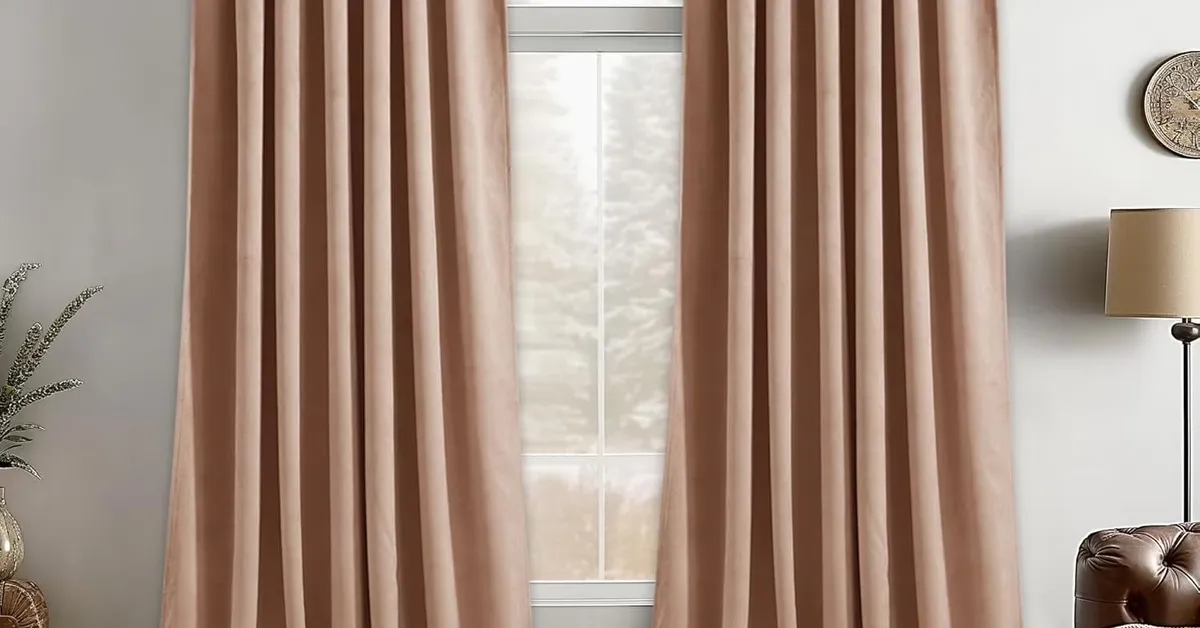
Lighter velvet tones dusty rose, pale sage, champagne work differently. They reflect more light, which can feel airy and romantic in a room with good natural light during the day, though they require more careful management of evening lighting to avoid the cold flatness that pale walls can produce under overhead fixtures.
Hanging Them Right, Because the Details Matter
A velvet curtain hung at window height is a window treatment. A velvet curtain hung at ceiling height is an architectural statement. The difference in installation height often a matter of twelve to eighteen inches changes the entire perceived volume of a room. Mounting curtain rods as close to the ceiling as possible, and letting the fabric pool slightly on the floor, creates an effect of height and grandeur that no amount of interior decoration can replicate by other means.
Panel width matters equally. The common mistake is to buy curtains that, when drawn, just barely cover the window. Generous velvet drapery panels wide enough to create soft, full folds when closed reads as luxurious. Skimpy panels read as an afterthought. The general rule of thumb is to buy fabric that totals two to two-and-a-half times the width of the window or wall section you’re covering. The extra material creates the fullness that makes the difference between a curtain and a drape, between functional and genuinely beautiful.
For soundproofing purposes, the panels should be lined ideally with a heavy interlining layer between the velvet face and the lining fabric. This additional mass dramatically increases the acoustic and thermal insulation properties of the curtain. It also helps the panels hang with the kind of controlled, weighted elegance that makes velvet look its best.
An Atmosphere That Earns Its Keep
There’s something almost philosophical about choosing velvet curtains for a dining room a quiet insistence that the act of eating together deserves a proper setting. Not every meal needs ceremony, of course. But the rooms we design for gathering tend to shape the gatherings themselves in ways we don’t always consciously register.
When the sound is softer, people lean in less and interrupt each other less. When the light is warmer, faces look kinder. When the room has weight and texture and a sense of considered intention, the people inside it tend to rise, almost unconsciously, to meet it.
The curtains don’t make the meal. But they make the room. And the room, more than most of us care to admit, makes everything else possible.