
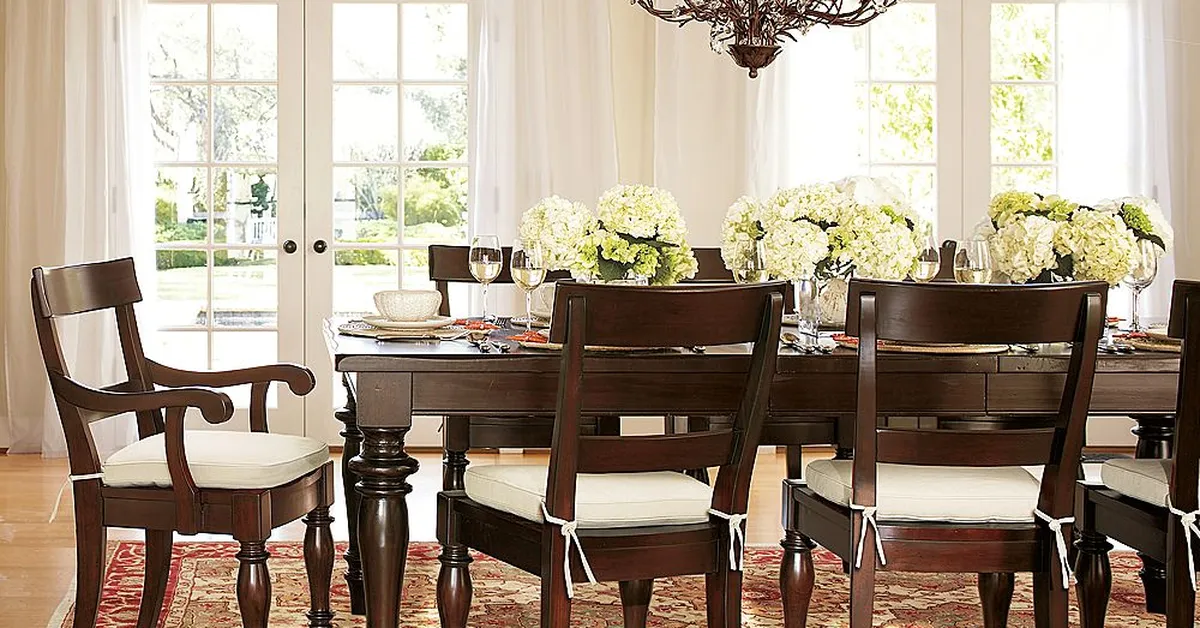
There’s a particular kind of dining room that stops you in your tracks not because it’s beautiful, but because it feels frozen in time. The chandelier is still brass. The chair cushions are still mauve. The curtains still puddle on the floor in that way that was aspirational in 1994 and exhausting ever since. Nobody set out to create a time capsule. It just happened, one unchallenged decision at a time.
The dining room is one of the most overlooked spaces in a home. People renovate kitchens. They obsess over primary bedrooms. But the dining room? It tends to sit quietly, accumulating years without anyone noticing. Which is exactly why it ages so visibly. The mistakes aren’t dramatic they rarely are. They’re subtle, structural, and surprisingly easy to fix once you know what you’re actually looking at.
The Chandelier That’s Doing Too Much
Lighting is where dining rooms go wrong most often, and most irreversibly. Not because people choose bad fixtures, but because they choose fixtures that were designed to be the entire personality of the room. The oversized, heavily ornamented chandelier all scrollwork and faux candles and amber glass was a signature of a certain era of interior design that believed more was more. It wasn’t wrong, exactly. It was just very specific to its moment.
The problem isn’t ornamentation per se. It’s scale and finish. Fixtures that hang too low over the table create visual claustrophobia. Fixtures with warm brass or antique bronze finishes, once considered timeless, now read as dated in a way that’s hard to articulate but impossible to unsee. The rooms that feel current tend to use lighting that’s confident without being loud a sculptural form in matte black, aged brass done sparingly, or something in natural materials like rattan or linen that introduces texture without demanding attention.
Height matters more than most people realize. The bottom of a dining room fixture should hang roughly 30 to 36 inches above the tabletop. Lower than that and the room feels compressed. Higher than that and the fixture floats, disconnected from the space it’s meant to anchor. Get the proportion right, and even a modest fixture can transform the entire atmosphere of the room.
Matching Sets That Match Too Well
There was a time when buying a complete dining set table, six chairs, matching buffet, coordinating china cabinet was considered the responsible, grown-up thing to do. It signaled permanence. It said: we have arrived. The furniture industry was happy to oblige, and for decades, dining rooms across the country were furnished in perfectly coordinated suites that left nothing to chance and nothing to the imagination.
The result is a kind of visual monotony that reads as deeply dated now. When every piece in a room shares the same wood tone, the same leg profile, the same hardware finish, the space loses depth. It becomes a catalog page rather than a room someone actually lives in.
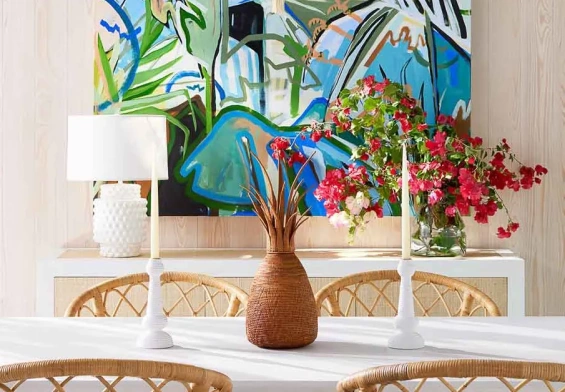
The shift toward mixing pairing a farmhouse table with upholstered chairs in a different finish, introducing a bench on one side, using a sideboard that doesn’t match the table but complements it isn’t just a trend. It reflects a more honest understanding of how rooms actually evolve over time. Real spaces accumulate pieces with different histories. That accumulation is what gives a room character. A dining room where everything matches perfectly often feels like no one has actually lived there yet.
If you’re working with an existing matched set, the easiest intervention is the chairs. Reupholstering drop-in seats in a fresh fabric, or replacing two side chairs with something in a contrasting material, is often enough to break the monotony without requiring a full overhaul.
Window Treatments That Swallow the Room
Heavy drapes, floor-to-ceiling in a fabric that coordinates with the chair cushions, which coordinate with the placemats, which coordinate with a centerpiece that no longer exists this is the window treatment situation that ages a dining room faster than almost anything else. It’s not that drapes are inherently dated. It’s that certain approaches to drapes carry a very specific timestamp.
The issues tend to cluster around a few recurring choices: curtain rods mounted too close to the window frame (which makes windows look smaller and ceilings feel lower), fabrics in jewel tones or heavy brocades that absorb light rather than diffusing it, and the aforementioned coordination impulse that ties every soft element in the room to a single color story.
Current thinking on dining room windows leans toward simplicity. Roman shades in a natural linen. Sheer panels that filter light without blocking it. Or, in rooms with genuinely beautiful windows, nothing at all just the architecture doing its job. When you do use curtains, mounting the rod close to the ceiling rather than close to the window frame is one of the highest-return moves in residential design. It’s inexpensive, takes twenty minutes, and makes the ceiling feel taller immediately.
A Rug That’s Playing It Too Safe
The beige area rug under the dining table is one of those choices that feels sensible and ends up feeling invisible which in design terms is almost the same as feeling wrong. It was chosen to not compete with anything. It succeeded. It also contributes nothing.
Dining room rugs face a specific practical challenge: they need to extend far enough beyond the table that chairs can be pulled out without catching on the edge. The standard recommendation is at least 24 inches beyond the table on all sides, which means most people are working with a rug that’s larger than they initially planned for. That’s actually an opportunity. A larger rug has more visual presence, which means it can afford to do more work a pattern, a bolder color, a texture that introduces warmth.
The dated dining room rug is usually too small, too neutral, or too formally patterned in a way that signals a different era (Persian-style rugs in deep reds and navy blues, for instance, carry a very particular connotation in this context). The rooms that feel fresh tend to use rugs that are either beautifully simple a jute or sisal in a natural tone that provides texture without color or genuinely bold, treating the rug as the primary design statement and letting everything else respond to it.
Walls That Have Forgotten What Year It Is
Paint color is the most obvious culprit, but it’s rarely the whole story. A dining room with walls in a color that was fashionable fifteen years ago certain shades of burgundy, hunter green, or the particular taupe that was everywhere in the early 2000s will feel dated regardless of what else is in the room. But the more interesting problem is what’s on the walls beyond the paint.
The gallery wall of family photos in matching black frames. The single piece of oversized art that was chosen because it was large enough to fill the space rather than because anyone particularly loved it. The decorative plate collection. The mirror with the heavy ornate frame positioned directly above the buffet in a way that’s symmetrical to the point of feeling staged. These are the wall decisions that accumulate over years and quietly signal that the room hasn’t been reconsidered in a while.
What the current moment favors is walls that feel considered rather than filled. A single piece of art that’s genuinely meaningful, hung at the right height (center of the piece at eye level, not above the furniture it’s hanging over). A mirror chosen for its frame as much as its function. Or, increasingly, walls that are treated architecturally a grasscloth wallcovering, a painted accent, a subtle texture that changes how light moves through the room at different times of day.
The dining room is a space where people gather for the moments that matter holidays, celebrations, the ordinary Tuesday dinners that somehow become the ones you remember. It deserves more than benign neglect. The good news is that most of what makes a dining room feel dated isn’t structural. It’s a chandelier at the wrong height, a rug that’s playing it safe, a matched set that’s afraid to breathe. Change one thing, and you’ll start seeing all the others. That’s not a warning. It’s an invitation.