

There’s a particular kind of guilt that cat owners know well. You come home to a knocked-over plant, a shredded couch corner, or a cat perched on the one shelf you specifically didn’t want them on and somewhere in the back of your mind, you wonder if the space you’ve built together is actually working for both of you. Not just tolerated by your cat, but genuinely designed with them in mind.
That question has started driving a surprisingly practical movement: using virtual design tools to plan, visualize, and build homes that cats don’t just survive in, but thrive in. It sounds niche. It’s becoming anything but.
Why the Space You Live In Is Also the Space They Hunt In
Cats are not decorative. That’s the first thing any honest conversation about cat-friendly design has to acknowledge. They are predators with territorial instincts, vertical ambitions, and a deeply wired need to observe their environment from positions of safety and advantage. When we design homes purely around human aesthetics low furniture, open sightlines, minimalist surfaces we are, often without realizing it, creating environments that quietly stress our cats out.
Ethologists who study feline behavior have long pointed to the importance of what’s called “environmental enrichment.” This isn’t just about toys. It’s about the architecture of the space itself: where a cat can climb, where they can hide, how they move through a room without ever touching the floor if they choose not to. A cat that can’t fulfill these instincts doesn’t disappear into contentment. They redirect. The couch gets scratched. The curtains become a ladder. The 3 a.m. sprinting begins.
Understanding this reframes the entire design challenge. You’re not decorating around a pet. You’re designing a shared habitat.
The Case for Going Virtual Before Going Physical
Here’s where things get genuinely interesting. For most of pet ownership’s history, designing a cat-friendly home meant trial and error buying a cat tree, realizing it blocks the window your cat actually wants to sit at, returning it, trying again. It was expensive, time-consuming, and often ended in a living room that looked like a compromise nobody fully wanted.
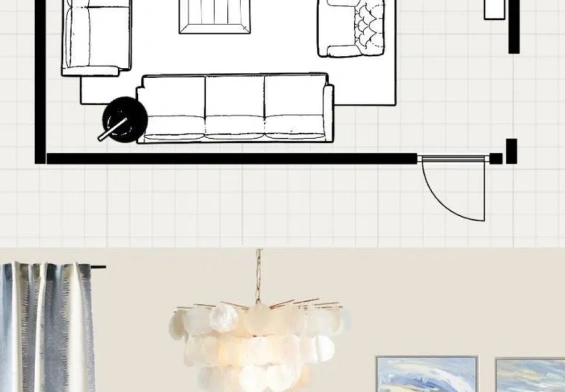
Virtual design tools have changed this calculus in a meaningful way. Platforms like RoomSketcher, Planner 5D, and even more specialized interior visualization software now allow you to map your actual floor plan, drop in furniture at scale, and walk through the space in 3D before a single piece of furniture moves. For cat owners, this is not a small thing. It means you can test whether a wall-mounted cat shelf at 60 inches creates a viable path to the top of the bookcase. You can check whether the new sectional blocks the sightline from the cat’s favorite perch to the front door something that matters enormously to a cat who needs to monitor territory.
Some owners have started working with interior designers who specialize specifically in pet-inclusive spaces, sharing virtual room renders to collaborate on solutions that are both livable for humans and genuinely functional for animals. The conversation has shifted from “where do we put the cat tree” to “how does this room move.”
Vertical Space: The Dimension Most Designers Ignore
Walk into almost any human-centric interior design showroom and notice what’s celebrated: horizontal surfaces, open floor plans, clean sightlines at eye level. Cats experience space almost entirely differently. For them, height is safety. Height is status. Height is where you go when the world feels overwhelming or when you simply want to watch without being watched.
Virtual design tools are particularly useful here because vertical space is the hardest to visualize from a floor plan alone. A 3D walkthrough lets you see, at cat-eye height from a wall shelf, what the room actually looks like whether there’s a comfortable view to the window, whether there’s a natural pathway up from a lower piece of furniture, whether the route makes sense as a connected system rather than isolated islands.
Designers working in this space talk about “cat highways” essentially, planned routes that allow a cat to move through an entire room or even a floor of a home without descending to ground level. These aren’t always obvious to build, and they absolutely need to be visualized before installation. A wall-mounted shelf system that looks elegant in a product photo can become a dead end in your actual room if the spacing doesn’t account for your specific layout. Virtual planning catches this before the screws go into the wall.
Materials, Textures, and the Honest Conversation About Furniture
There’s a version of cat-friendly design that pretends you can have everything: the pristine white linen sofa and the cat who respects it. That version is largely fictional. But there’s a more honest and ultimately more satisfying approach, which is designing with material intelligence rather than material optimism.
Cats scratch for several reasons to maintain their claws, to mark territory through scent glands in their paws, and sometimes simply because a texture is irresistible. Virtual design allows you to experiment with furniture placement relative to designated scratching surfaces, which turns out to matter quite a bit. Cats are more likely to use a scratching post that’s placed near where they already spend time, near entry points to rooms, or near their sleeping areas. Placing one arbitrarily in a corner they never visit is a design failure, not a cat failure.
Some owners use virtual tools to map out furniture in performance fabrics tightly woven materials like canvas, denim, or microfiber that are significantly more resistant to claw damage and pair those with intentional scratching surfaces in materials cats actually prefer, like sisal or corrugated cardboard. The goal isn’t to eliminate scratching. It’s to redirect it toward surfaces that can handle it, positioned in places that make behavioral sense.
Light, Windows, and the Underrated Power of a Good View
If you’ve ever watched a cat spend three hours staring out a window at what appears to be nothing, you’ve witnessed one of the most important forms of enrichment available to an indoor cat. That window is television, hunting simulation, and sensory input all at once. Designing around it really designing around it, not just leaving it accessible can make a significant difference in a cat’s daily quality of life.
Virtual room planning lets you map sunlight patterns relative to furniture placement, identify which windows get morning versus afternoon light, and position resting surfaces accordingly. A cat who has a warm, elevated perch at a south-facing window in winter is a cat who is genuinely content in a way that no toy can replicate. It sounds simple. It’s surprisingly easy to get wrong when you’re arranging furniture without thinking about where the light actually lands at 10 a.m. on a Tuesday.
Bird feeders placed outside windows visible from cat perches are a frequently cited enrichment strategy essentially turning a static view into an interactive one. This is the kind of detail that emerges naturally when you’re thinking about the home as a designed environment for your cat, not just a human space your cat happens to occupy.
The Philosophy Underneath the Floor Plan
There’s something quietly profound about the act of opening a design app and thinking, genuinely thinking, about how your cat experiences the room you share. It’s an acknowledgment that their inner life matters, that their instincts are real, that the quality of their daily experience is something worth planning for with the same seriousness you’d bring to choosing a paint color or a sofa.
Virtual design tools make this easier, but the tool isn’t really the point. The point is the shift in perspective from “how do I accommodate my cat” to “how do we both live well here.” That’s a different question, and it tends to produce different rooms. Rooms with purpose at multiple heights. Rooms where the light has been considered. Rooms where a cat can move through the whole space with agency and ease, and where a human can look around and feel, without quite being able to articulate why, that everything is exactly where it should be.