
There’s a particular kind of resignation that sets in when parents start planning their outdoor space. The mental image arrives uninvited: a plastic playset in screaming primary colors, a lawn stripped bare by foot traffic, a sandbox that somehow migrates indoors. The assumption, deeply embedded in how we talk about family design, is that a yard built for children is a yard surrendered by adults. You get the chaos, and you learn to live with it.
That assumption is wrong. And dismantling it is where good backyard design actually begins.
The most livable family backyards aren’t the ones that compromise giving kids a corner while adults claim the rest. They’re the ones designed around single honest question: what does everyone actually need out here? When you answer that question with specificity instead of assumption, the yard stops being a negotiation and starts being a place people genuinely want to spend time.
The Myth of Separate Kingdoms
The instinct to divide a backyard into “kid zone” and “adult zone” comes from a reasonable place. Parents want their children to have room to run, climb, and make a mess without encroaching on the patio where the grown-ups are trying to have a conversation. Kids, for their part, want to be near their parents even when they’re playing independently. The hard partition satisfies neither group particularly well.
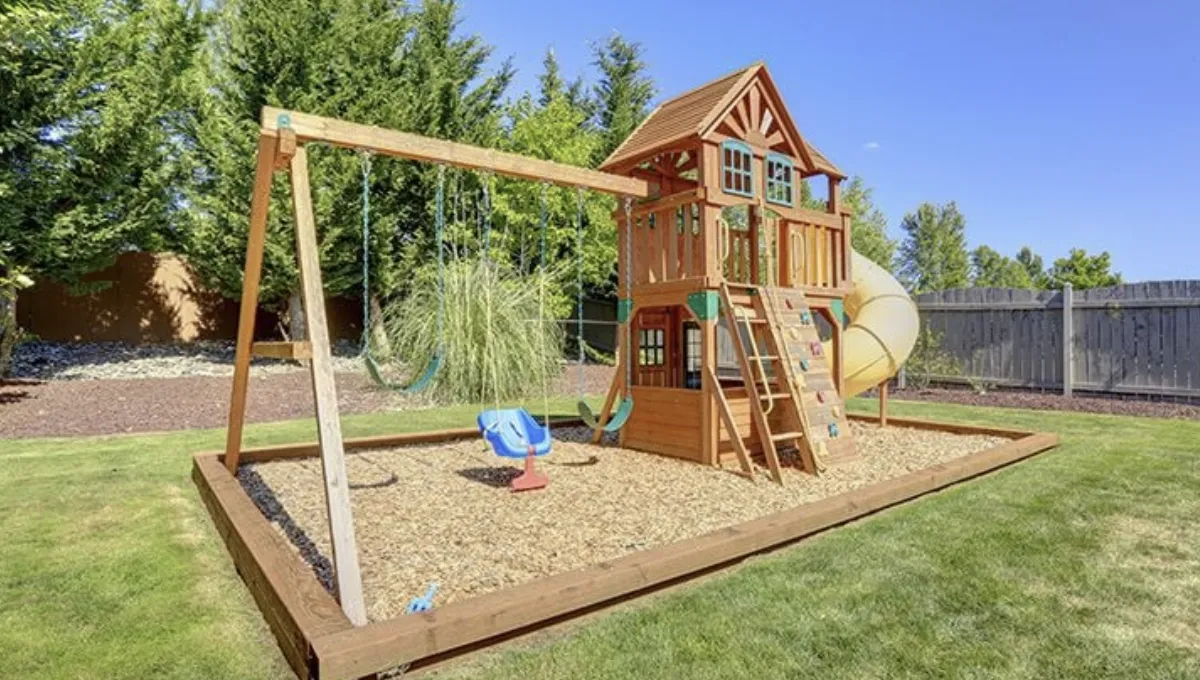
What works better is layered proximity. Think of it less like zoning a city and more like arranging a room you want sightlines, you want flow, and you want each area to feel intentional rather than leftover. A play structure positioned at the far end of the yard, visible from the main seating area, lets a child feel adventurous while a parent feels present. A low garden bed running along the fence gives kids a place to dig and plant while giving adults something genuinely beautiful to look at. The activities are different. The space is shared.
Surfaces Do More Work Than You Think
Ground cover is one of those decisions that gets made quickly and regretted slowly. Grass is the default, and it has real virtues it’s soft, it’s familiar, it cools the yard in summer. But a lawn under heavy child use tends to develop bald patches, mudy ruts, and a general look of defeat. The solution isn’t to eliminate grass but to be strategic about where it goes and what it’s paired with.
Decomposed granite and pea gravel work well around play structures because they cushion falls and drain quickly after rain. They also have a clean, natural look that reads as intentional rather than utilitarian. Rubber mulch is more forgiving underfoot and comes in colors that blend with the landscape rather than announcing themselves. For the main patio or gathering area, large-format pavers or concrete with a brushed finish hold up to both adult entertaining and kids dragging chairs around without complaint.
The transition between surfaces matters too. A slight grade change, a row of stepping stones, or a low timber border can define the shift from one area to another without building a wall. It tells children where the play space begins without making them feel fenced in, and it gives the yard a sense of structure that adults find visually satisfying.
Plants That Earn Their Place
Landscaping in a family yard requires a different kind of plant literacy. The usual concerns color, texture, seasonal interest still apply, but they share the checklist with questions like: Is this toxic if eaten? Does it have thorns at eye level? Will it survive being sat on repeatedly by a seven-year-old?
The good news is that the overlap between “safe for children” and “genuinely beautiful” is larger than most people expect. Ornamental grasses are nearly indestructible, move beautifully in the wind, and give kids something to run their hands through. Lavender is fragrant, pollinator-friendly, and non-toxic. Sunflowers grow fast enough to hold a child’s attention through the whole season. Native shrubs like viburnum or serviceberry offer beries that birds love and that won’t send anyone to the emergency room.
What avoid is less about specific species and more about placement. Roses along a path where children run are problem. A beautifully thorned barberry at the edge of a play area is a problem. The same plants positioned along a fence line, away from high-traffic zones, become assets. Context is everything.
Furniture That Doesn’t Apologize for Itself
Outdoor furniture in a family yard takes a beating. The question is whether it takes that beating gracefully or whether it looks like it’s been through something. The answer usually comes down to material choice and scale.
Teak and powder-coated aluminum are the workhorses here both weather well, clean easily, and age in ways that look intentional rather than neglected. Avoid anything with cushions that can’t be removed and washed, and avoid anything with small decorative elements that will be lost, broken, or used as projectiles within the first season.
Scale is the subtler consideration. A yard with only adult-sized furniture sends children a message, however unintentional, that the space isn’t quite for them. A small table and chairs tucked near the garden, sized for kids but not cartoonishly so, gives them a place that feels like theirs without dominating the visual landscape. Some of the best family yards include a low bench or a set of stools that work equally well for a child eating a snack and an adult setting down a drink.
Water, Shade, and the Sensory Layer
Children are drawn to water the way adults are drawn to a good view instinctively, without neding a reason. A simple water table works for toddlers. A shallow splash pad or a small recirculating stream works for older kids and doubles as a sound feature that adults find genuinely calming. Even a birdbath positioned near the seating area adds movement and life to the yard without requiring any maintenance beyond occasional refilling.
Shade is the other element that transforms a backyard from a place you visit briefly into a place you actually inhabit. A pergola with a climbing vine wisteria, jasmine, or a fast-growing clematis creates filtered shade that feels organic rather than constructed. A large market umbrella works for immediate needs. A mature tree, if you’re lucky enough to have one, does everything: it cools the air, provides a canopy for a swing, and gives the yard a sense of permanence that no structure can replicate.
The sensory dimension of a yard is something designers talk about more than homeowners do, but it’s worth thinking through. What does the yard smell like in the evening? What sounds does it make? A wind chime, a patch of herbs near the back door, a gravel path that crunches underfoot these details cost almost nothing and change the experience of being outside in ways that are hard to articulate but immediately felt.
Lighting as the Great Equalizer
Most family backyards are designed for daytime use and abandoned after dark. That’s a missed opportunity, especially in the months when evenings are warm and the kids are finally wound down enough to sit still.
String lights strung between a pergola and a fence post are the easiest upgrade a backyard can receive. They’re inexpensive, they install in an afternoon, and they transform the yard into something that feels genuinely inviting after sunset. Path lighting along walkway serves a practical function no one trips over the garden hose while also giving the yard a sense of depth and dimension at night.
For children, low-level lighting near a play area extends the usable hours of the yard into early evening without creating the harsh, stadium-light effect of a floodlight. Solar-powered stake lights are easy to reposition as the yard evolves, which matters more than it seems to when you’re in the middle of a redesign.
Building for the Yard You’ll Have in Five Years
Here’s the thing about designing a family backyard: the family changes. The toddler who needs a sandbox becomes the eight-year-old who wants a basketball hoop, who becomes the teenager who wants a fire pit and somewhere to sit with friends. A yard designed too specifically for one stage of childhood becomes obsolete faster than the investment justifies.
The most durable approach is to build the bones of the yard the paving, the planting, the structures with longevity in mind, and to keep the child-specific elements modular. A sandbox with a lid becomes a planter. A low play structure can be replaced with a hammock stand. The pergola stays. The string lights stay. The garden stays and gets better every year.
What doesn’t change, across all those years and all those stages, is the basic human desire to be outside in a place that feels cared for. Children feel it when they’re small and running barefoot across the grass. Adults feel it when they’re sitting with a drink at the end of a long day, watching the light change. The yard that serves both of them isn’t a compromise. It’s just a yard that was designed with enough honesty to admit that everyone out there is looking for the same thing.