
There’s a particular kind of confidence that comes with running a great backyard barbecue. Not the nervous energy of someone who just bought a new grill and is hoping for the best, but the quiet authority of someone who has thought it through who knows where the thermometer is, who has the right wood chips soaking in a bowl, who isn’t scrambling for tongs when the chicken is already charing. That confidence doesn’t come from talent. It comes from preparation. And preparation, in the world of outdoor cooking, starts long before the first guest pulls into the driveway.
This is a checklist, yes. But it’s also a way of thinking about what a summer barbecue kitchen actually is not just a grill on a patio, but a complete cooking environment that deserves the same intentionality you’d bring to any serious kitchen setup.
The Grill Is the Foundation, Not the Whole Story
Most people spend the bulk of their budget and attention on the grill itself, which makes sense. But the choice of grill shapes everything downstream. A gas grill offers convenience and temperature control you can dial in400°F and hold it there without babysitting. A charcoal ketle demands more attention but rewards you with a depth of flavor that gas simply can’t replicate. Pellet grills split the difference, offering wood-fired taste with digital precision, though they require electricity and a steady supply of pelets.
What matters more than which type you choose is understanding its quirks. Every grill has hot spots. Every grill has a lid that either seals well or doesn’t. Before summer hits, do a dry run. Fire it up, map the heat zones with a handful of bread slices, and get comfortable with how it behaves. A grill you understand is worth more than a grill you just bought.
One thing that often gets overlooked: the grill grates. Cast iron holds heat beautifully and creates excellent sear marks, but it requires seasoning and care. Stainless steel is more forgiving. Whatever you have, make sure the grates are clean, lightly oiled before cooking, and structurally sound. A warped or rusted grate is a liability, not just an aesthetic problem.
Tools That Actually Earn Their Place
The barbecue tool aisle at any home goods store is a graveyard of good intentions. Novelty spatulas, oversized forks, decorative sets in matching cases most of it is theater. What you actually need is a short list of things that work.
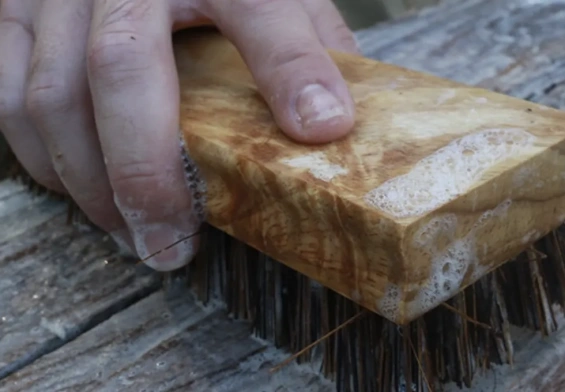
Long-handled tongs are non-negotiable. Get a pair with a good grip and a locking mechanism, and buy two one for raw meat, one for everything else. Cross-contamination at a barbecue is a real risk that a second pair of tongs eliminates entirely. A wide, sturdy spatula handles burgers and fish without them falling apart. A grill brush with stiff bristles keeps the grates clean between cooks, though you should always check that no bristles have come loose before cooking a stray wire bristle in food is a genuine hazard.
The single most underated tool in any barbecue setup is an instant-read meat thermometer. Not a probe you leave in the grill, though those have their place too, but a fast, accurate thermometer you can plunge into a thigh or a brisket and get a reading in two seconds. Cooking by feel is a skill that takes years to develop. Cooking by temperature is a skill you can have today. A chicken breast at 165°F is safe. A pork shoulder at 203°F is pull-apart tender. These numbers don’t lie.
Rounding out the essentials: a basting brush or mop for sauces, a chimney starter if you’re working with charcoal (lighter fluid is a shortcut that leaves a chemical taste), heat-resistant gloves that actually protect your hands, and a spray bottle filled with water for managing flare-ups.
The Prep Station: Where the Real Work Happens
Here’s something experienced outdoor cooks know that beginers often don’t: the grill is only where food finishes. The prep station is where it begins, and disorganized prep area will unravel even the best cook.
Set up a dedicated outdoor prep surface a folding table, a side shelf on the grill, a rolling cart. Whatever it is, it needs to be stable and large enough to hold cutting boards, platers, and containers simultaneously. Use separate cutting boards for raw proteins and everything else. Color-coded boards make this automatic rather than something you have to think about in the middle of a busy cook.
Mise en place isn’t just a restaurant concept. Before you light the grill, have everything prepped and staged: proteins marinated or seasoned, vegetables cut and oiled, sauces in squeeze bottles or small bowls, garnishes ready. Once the fire is going, you want to be managing heat and timing, not chopping onions.
A cooler positioned near the prep station not across the yard keeps proteins cold until the moment they hit the grill. Food safety at outdoor events is genuinely important. Raw chicken sitting in the sun while you’re distracted by conversation is how people end up sick. Keep cold things cold until they’re ready to cook.
Fire, Fuel, and the Art of Heat Management
If you’re cooking with charcoal, the quality and quantity of your fuel matters more than most people realize. Lump charcoal burns hotter and cleaner than briquettes, with less ash and a more natural flavor. Briquettes burn more consistently and are easier to manage for long cooks. Neither is universally better it depends on what you’re making.
Wood chips and chunks add another dimension entirely. Hickory is assertive and pairs well with pork and beef. Apple and cherry are milder, better suited to poultry and fish. Mesquite burns hot and fast with a strong flavor that can easily overwhelm. Soak chips in water for 30 minutes before adding them to coals or a smoker box; chunks don’t need soaking. Have a bag of your preferred wood on hand before the party starts, not as an afterthought.
For gas grilers, the fuel question is simpler but still worth thinking about. Check your propane tank before every major cook. A full 20-pound tank holds roughly 18 to 20 hours of cooking time at medium heat, but a half-empty tank can run out mid-session in a way that’s both embarrassing and genuinely disruptive. Keep a spare tank. It’s a small investment against a very avoidable problem.
Heat management knowing when to use direct heat versus indirect, when to open the vents and when to close them, when to move food to a cooler zone is the actual skill of grilling. It can’t be fully taught in a checklist, but it can be practiced. The more you cook outdoors, the more intuitive it becomes.
The Sauce and Seasoning Station
A barbecue kitchen without a well-stocked seasoning setup is like a regular kitchen without salt. The basics kosher salt, black pepper, garlic powder, smoked paprika, cayenne cover an enormous range of proteins and vegetables. A good all-purpose dry rub, whether store-bought or homemade, can be applied hours in advance and left to work on the meat in the fridge.
Sauces are a more personal matter. Some people are devoted to a single regional style Kansas City sweet, Carolina vinegar, Alabama white. Others keep three or four options on the table and let guests choose. What matters is having them ready before service, not scrambling to heat them up while ribs are resting. A small saucepan on a side burner, or even a cast iron skillet on the grill’s warming rack, keeps sauces at the right temperature without any drama.
Don’t forget finishing elements. Fresh herbs cilantro, parsley, basil add brightness that cuts through the richness of grilled meat. A squeeze of lemon or lime over grilled fish or vegetables does something that no sauce can replicate. These small touches are what separate a good barbecue from a memorable one.
Serving, Resting, and the Flow of the Meal
Grilled meat needs to rest. This is one of the most consistently ignored pieces of cooking advice, and it costs people real quality every time. A steak pulled off the grill and cut immediately loses a significant amount of its juices onto the cutting board. The same steak rested for five to ten minutes under a loose tent of foil retains them. Larger cuts brisket, whole chickens, pork shoulder need even longer. Build rest time into your timeline.
Have a dedicated resting and carving station separate from the grill. A large wooden cutting board, a sharp carving knife, and a set of serving platers should all be staged and ready. Guests who are watching you carve a beautifully rested brisket are already having a better time than guests who are watching you hack at something that’s still steaming.
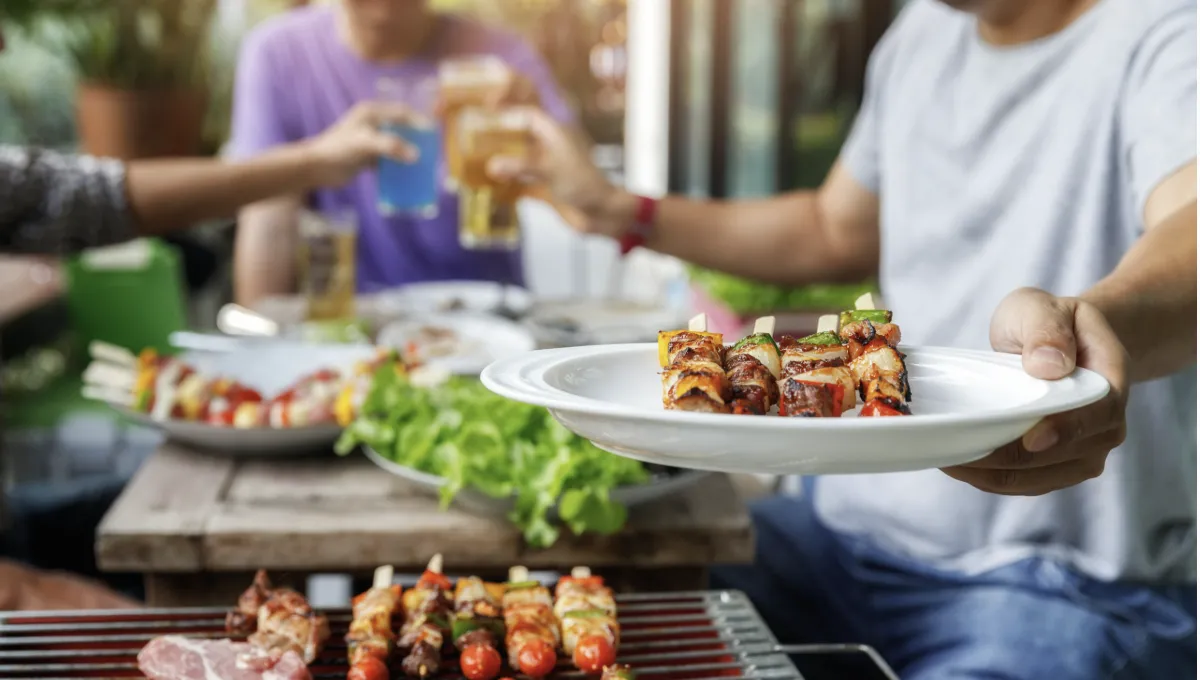
The flow of a barbecue meal is different from a sit-down dinner. Food comes off the grill in waves. Appetizers grilled corn, skewers, flatbreads keep people happy while the main proteins cook. Sides can be prepped ahead and served at room temperature. Dessert, if you’re ambitious, can go on the grill too: peaches, pineapple, pound cake.
Think about the physical layout of your space. Where will people congregate? Is the grill positioned so you can cook and still be part of the conversation, or are you isolated in a corner? The best barbecue setups are social by design the cook is at the center of things, not exiled to the edge of the yard.
Safety, Cleanup, and the Things Nobody Wants to Think About
A fire extinguisher rated for grease fires should be within reach of any outdoor cooking setup. This is not paranoia. Grease fires happen, especially withfattier cuts over high heat. Knowing where the extinguisher is and how to use it takes about thirty seconds to learn and could matter enormously.
Keep a trash station near the prep area so that packaging, paper towels, and food scraps don’t accumulate on your work surface. A clean workspace is a faster workspace. After the cook, while the grill is still warm, brush the grates clean it takes thirty seconds now versus ten minutes of scrubbing later.
The cooler that kept your proteins cold during prep can be repurposed for leftovers. Coked food left out at temperatures above 40°F for more than two hours enters the danger zone. At a summer party, where ambient temperatures are already high, that window shrinks. Pack leftovers promptly, and you’ll actually enjoy them the next day.
There’s something almost meditative about a well-run barbecue kitchen the rhythm of the fire, the smell of smoke and char, the way time slows down when you’re cooking outside. All of that is more accessible when the logistics are handled. The checklist isn’t the point. The point is what happens when you don’t need to think about the checklist anymore.