
There’s something about catching your reflection in an old mirror that feels different from glancing into a modern one. The glass isn’t quite as sharp. The edges soften. The frame tells you a story before you’ve even looked at yourself. And maybe that’s the whole point vintage mirrors don’t just reflect a room. They romanticize it.
Romance interior design isn’t about pink walls or candelabras (though those have their place). It’s about atmosphere. It’s about the feeling that a space holds memory, that it breathes a little slower than the world outside. A vintage mirror, placed with intention, does exactly that. It catches light in ways that feel accidental and beautiful. It adds depth without demanding attention. It whispers where other decor shouts.
But knowing you want one and knowing how to use one well those are two very different things.
The Psychology of Why Old Mirrors Feel Romantic
Before we talk placement and styling, it’s worth pausing on why this works at all. Why does an aged mirror feel more romantic than a brand-new floorlength one from a big-box store?
Part of it is imperfection. The slight foxing on antique mirror glass those dark spots and cloudy patches where the silver backing has oxidized over decades creates a visual texture that softens everything reflected in it. Your living room doesn’t look like a catalog image. It looks like a memory Like something painted rather than photographed.
There’s also the matter of craftsmanship in the frame. Vintage mirrors from the early twentieth century or earlier were often hand-carved, gilded, or shaped in ways that mass production simply doesn’t replicate. An ornate gold frame with visible brush strokes in the gilt, or a weathered wooden frame with paint that’s cracked into a patina these carry the weight of human hands. And romance, at its core, is a human thing. We respond to evidence of care, of time spent, of something made rather than manufactured.
Then there’s the scale factor. Many vintage mirrors were designed for entryways, parlors, and dressing rooms in homes built with higher ceilings and grander proportions. They tend to be larger, more dramatic, more theatrical than what we’d typically buy today. That sense of drama a mirror that takes up half a wall, leaning casually against it reads as confident, storied, a little bit reckless. All qualities we associate with romance.
Leaning Versus Hanging: Two Different Mods
The simplest decision you’ll make with a vintage mirror is also one of the most impactful. Do you mount it on the wall, or do you lean it?
A hung mirror feels intentional, composed, settled. It becomes part of the architecture. In a bedroom, a large vintage mirror hung above low dreser creates a vanity moment a place where getting ready becomes a ritual rather than a task. The formality of hanging suits spaces where you want romance to feel elegant, restrained, like a slow dance.
A leaned mirror, on the other hand, feels spontaneous. It suggests the room is still becoming itself, that the person who lives here values beauty but doesn’t overthink it. Lean a tall vintage mirror against a bedroom wall beside an unmade bed, and the whole room takes on the quality of a French film. There’s an ease to it, a sensuality that comes from the suggestion of impermanence.
Neither approach is better. But they create distinctly different emotional registers, and being conscious of that choice lets you control the mood more precisely.
Where Light Enters, Romance Lives
Mirrors and light have always been dance partners. In the seventeenth and eighteenth centuries, mirrors were placed opposite windows and beside candelabras specifically to multiply light in rooms that would otherwise be dim. That principle hasn’t changed, and it’s one of the most powerful tools you have.
Place a vintage mirror where it can catch natural light across from a window, at angle to doorway that lets in afternoon sun. The aged glass will diffuse that light rather than bouncing it back harshly. The effect is a glow rather than a glare. Rooms feel warmer. Skin looks softer in the reflection. Evening light, especially, becomes something almost liquid when it passes through old glass.
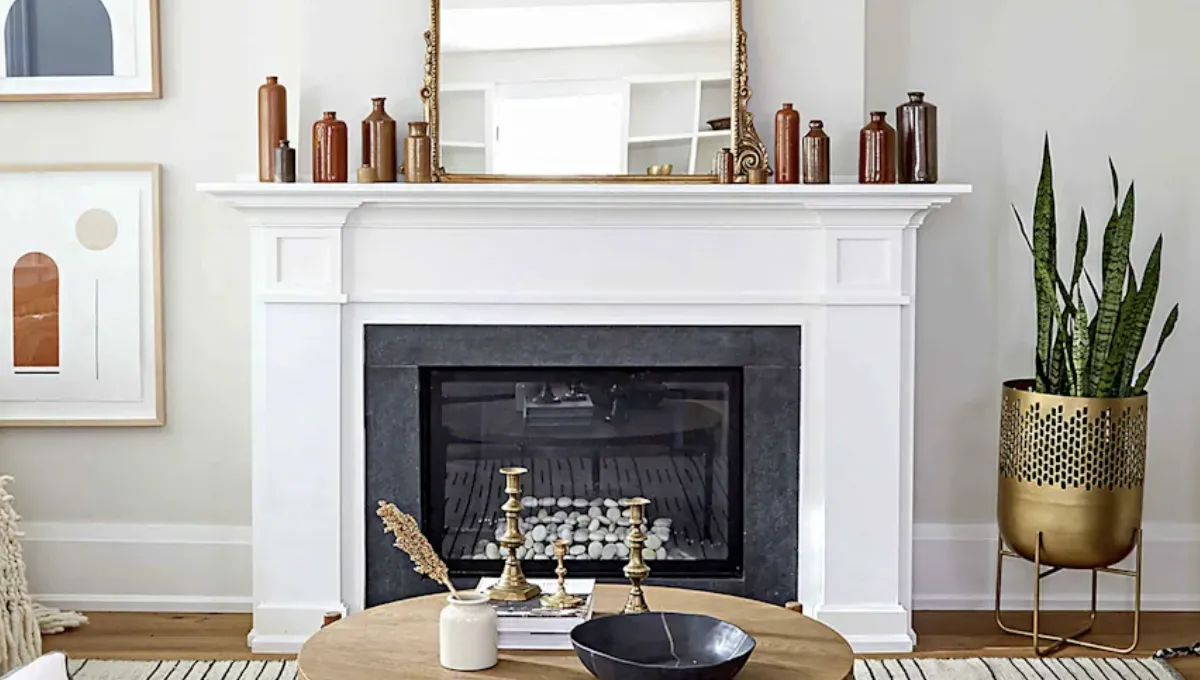
If your space doesn’t get abundant natural light, candlelight and vintage mirrors are a pairing that borders on unfair. A cluster of candles on a mantel reflected in an ornate mirror above it creates the kind of atmosphere that restaurants spend thousands trying to engineer. The flickering multiplies. The gilt frame catches the warmones. The whole arrangement feels alive in a way that overhead lighting never achieves.
Unexpected Placements That Shift a Room’s Character
Most people default to putting mirrors in bedrooms and bathrooms. Those are fine choices, but they’re expected. Romance thrives on the unexpected.
Consider a vintage mirror in the kitchen not a full wall installation, but a small ornate one propped on a shelf among cookbooks and ceramic jars. It breaks the utilitarian feeling of the space. It says someone here cares about beauty even in the most functional room of the house. That contrast between the practical and the poetic is inherently romantic.
Or think about a hallway. Hallways are transitional, often ignored. But a narrow vintage mirror hung in a dim corridor transforms the passage into something atmospheric. You catch a glimpse of yourself moving through your own home, and for a moment, the ordinary act of walking from one room to another feels cinematic.
Bathrooms deserve a specific mention, though not for the obvious reason. Rather than replacing your main bathroom mirror with a vintage one (which can present practical issues with moisture and deterioration), consider adding a small vintage hand mirror to a tray beside the sink, or hanging an ornate frame around an existing mirror as a decorative overlay. The romance comes from the layering, the sense that beauty has been considered even in a space devoted to routine.
A reading nook or window seat gains tremendous depth from a vintage mirror placed nearby. The mirror reflects the reader, the book, the light it creates a portrait of a quiet moment. There’s an intimacy to that, a sense of being witnessed by the room itself.
MixingEras Without Creating a Museum
One concern people voice about vintage mirrors is that they’ll make a space feel like a period piece. Like they’re living in a set rather than a home. This is a valid worry, but it’s easily addressed.
The key is contrast. A heavily ornate baroque mirror works beautifully in a room with clean, modern furniture because the tension between the two creates visual interest. The mirror becomes a character in the room rather than a theme. It’s the difference between a costume and an accessory one defines you, the other reveals something about you.
Pair a gilded vintage mirror with raw linen, unfinished wood, or concrete surfaces. The roughness of the surrounding materials makes the mirror’s ornamentation feel earned rather than excessive. Similarly, a simple vintage mirror with a plain wooden frame can anchor a room full of pattern and color, providing a moment of quiet amid visual abundance.
The mistake to avoid is clustering too many vintage pieces together without any contemporary counterpoint. Three antique mirrors one wall with vintage sconces and a brocade chair beneath them tips from romantic into theatrical. Unless is what you’re after in which case, commit fully and enjoy it.
Finding the Right Mirror: Patience as Part of the Process
There’s a romance to the search itself that shouldn’t be overlooked. Vintage mirrors aren’t something you order with two-day shipping and forget about. They’re found. At estate sales where you arrive early and dig through rooms that smell like someone else’s lifetime. At flea markets where a vendor has leaned six mirrors against a tent pole and you have to crouch down to see the one partially hidden behind the others. At antique shops in small towns you visited for no particular reason.
That process of discovery becomes part of the mirror’s story in your home. You remember where you found it, what the day was like, who you were with. The object carries personal narrative alongside its historical one. And a home filled with objects that hold stories is, by definition, a romantic home. It’s a home that has been lived in with attention.
When evaluating a vintage mirror, don’t shy away from wear. A perfect mirror isn’t what you’re looking for perfection is the domain of the new. Look for character. A frame with one missing rosette. Glass that’s slightly wavy. A backing that’s been repaired with brown paper and tape at some point in its life. These marks of survival make the piece feel real, and reality with all its beautiful imperfection is far more romantic than any idealized version could be.
Living With What Reflects You Back
There’s a final dimension to vintage mirrors that goes beyond aesthetics, and it’s worth sitting with. A mirror is the only piece of decor that includes you in its composition. A painting stays the same whether you’re in the room or not. A vase of flowers doesn’t change when you walk past. But a mirror shifts with every movement, every change of light, every person who enters the space.
A vintage mirror, with its softened glass and storied frame, reflects you back to yourself with a kind of gentleness. The image isn’t clinical. It’s forgiving. And choosing to suround yourself with that particular quality of reflection choosing softness over sharpness, history over newness, warmth over precision is itself a romantic act. It’s a decision about how you want to see yourself and your life.
That might be the deepest reason vintage mirrors work the way they do. They don’t just add romance to a room. They suggest that the person living there believes their daily life deserves to be seen through a romantic lens. And that belief, more than any single object, is what makes a home feel like a love letter to the life being lived inside it.