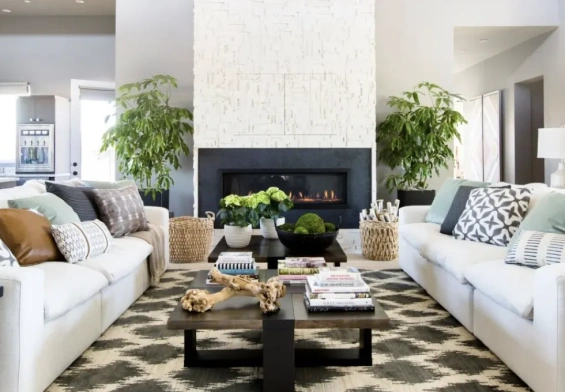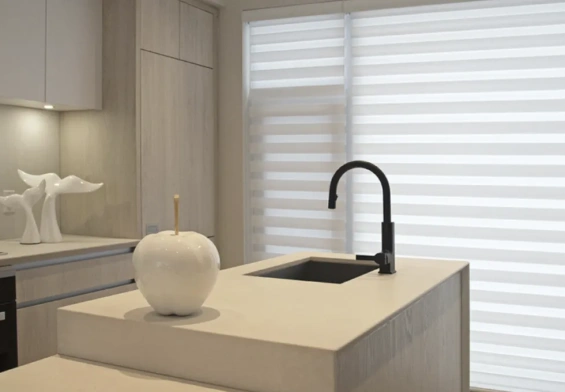

There’s a particular kind of exhaustion that comes from living inside a white box. Not the dramatic kind more like a slow, ambient fatigue. The walls are clean. The light bounces everywhere. Nothing casts a shadow. And somewhere around year three of the all-white interior, you start to wonder if you’re living in a room or a concept.
The minimalist-white aesthetic had its moment a long one, honestly. It arrived on the back of Scandinavian design philosophy, got turbocharged by Instagram, and became the default visual language of aspirational living for most of the 2010s. Bright, airy, uncluttered. The logic was sound: white makes spaces feel larger, cleaner, more open. It photographs beautifully. It signals a kind of disciplined restraint.
But restraint, held too long, starts to feel like deprivation.
The Case for Darkness
There’s a reason people feel immediately at ease in certain restaurants the ones with low ceilings, candlelight, walls the color of old wine. Darkness does something to the nervous system that brightness simply cannot. It narrows the world to what’s immediately around you. It creates enclosure, and enclosure, despite what open-plan living has told us for decades, is actually what humans crave when they want to feel safe.
Psychologists call it “cavelike comfort” the instinctive pull toward spaces that feel bounded and sheltered. A dark room doesn’t swallow you; it holds you. The walls feel closer not because they’re oppressive but because they’re present. You’re aware of them. They participate in the room rather than disappearing into the background.
This is the fundamental difference between a white room and a dark one. White walls recede. Dark walls advance. And when walls advance, a room stops being a container and starts being a companion.
What “Mody” Actually Means in Practice
The word gets thrown around a lot in design circles, sometimes to the point of meaninglessness. Moody doesn’t mean gloomy. It doesn’t mean poorly lit or depressing. A moody room is one with atmosphere a space that has a distinct emotional register, that feels like it was designed with intention rather than assembled from a neutral palette to offend no one.
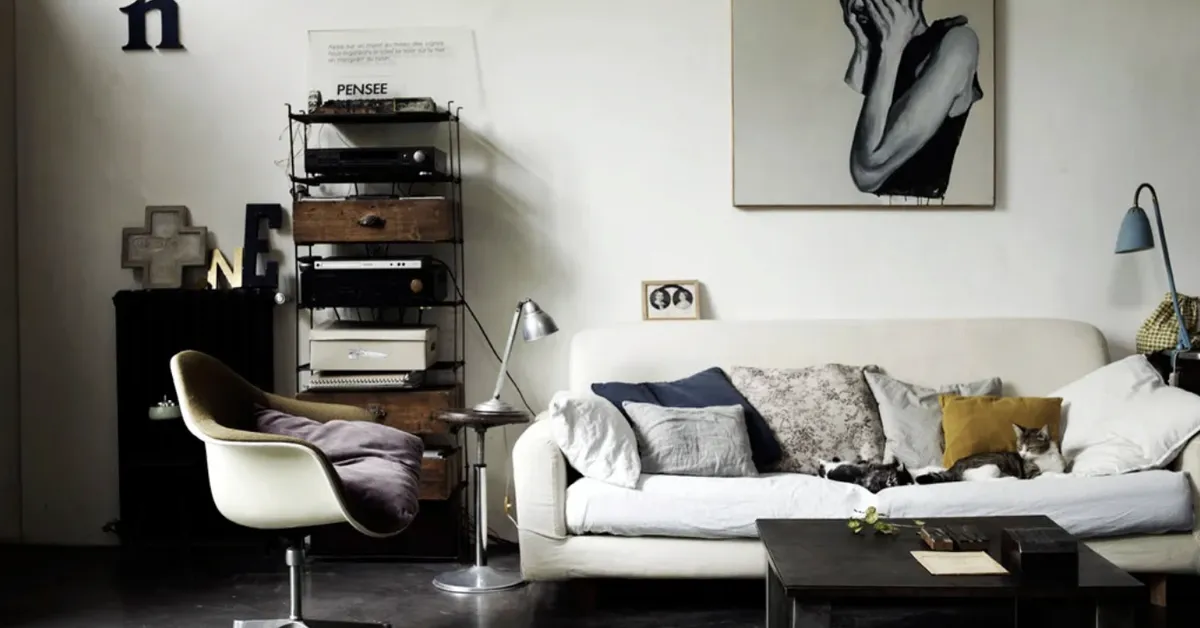
Think of a library lined with dark walnut shelves, the spines of books creating their own irregular texture. Think of a bedroom where the walls are painted in a deep, almost-black forest green, and the only light comes from a brass lamp on the nightstand. Think of a living room where the sofa is velvet not gray, not beige, but a proper midnight blue and the ceiling has been painted the same shade as the walls, so the room feels like a single continuous envelope.
These spaces share a quality that’s hard to name but immediately recognizable: they feel finished. Complete. Like someone made a decision and committed to it.
Color as Architecture
The most transformative thing you can do to a room costs about forty dollars a gallon. Paint is the cheapest form of architecture, and dark paint is its most dramatic application.
The colors that work best in mody interiors aren’t simply “dark” they have depth and complexity. Farrow & Ball’s Hague Blue reads differently at noon than it does at dusk. Benjamin Moore’s Black Forest Green shifts from almost-black in shadow to a rich, saturated emerald in direct light. These colors behave. They respond to the time of day, to the quality of light coming through the windows, to the warmth of artificial light after dark. A white wall is static. A deep-colored wall is alive.
Charcoal and near-black are having a particular moment right now, and for good reason. When a room is painted in a true dark gray or soft black something like Graphite or Off-Black the furniture and objects inside it take on a gallery-like quality. Everything pops. A simple ceramic vase becomes a sculpture. A worn leather chair becomes a statement. The darkness acts as a frame, and suddenly the room is curating itself.
For those not ready to commit to full walls, the ceiling is an underused canvas. Painting a ceiling two shades darker than the walls creates an immediate sense of intimacy without touching the walls at all. It lowers the perceived height of the room which sounds like a flaw but is actually a feature. Lower ceilings feel cozier. More human-scaled. Less like a loft, more like a den.
Texture Is the Other Half of the Equation
Dark rooms live and die by texture. In a white room, you can get away with smooth surfaces the light does the visual work, bouncing off everything and creating its own interest. In a dark room, you need the surfaces themselves to carry that weight.
Velvet is the obvious choice, and it earns its reputation. The way velvet absorbs and reflects light simultaneously that characteristic sheen that shifts as you move around it is exactly what a dark room needs. A velvet sofa in a deep jewel tone doesn’t just sit in a room; it anchors it. Same goes for velvet curtains, which have the added benefit of blocking light and sound, making a room feel genuinely sealed off from the outside world.
Beyond velvet: raw linen in dark tones, which has a roughness that reads as warmth. Aged leather, which develops its own patina over time and looks better in a dark room than almost anywhere else. Rattan and cane, which add an organic irregularity that prevents a dark room from feeling too heavy or formal. Rough plaster walls, which catch light in ways that smooth drywall never can.
The goal is layering not just of materials but of visual weight. A dark room with all smooth surfaces feels cold. A dark room with varied textures feels like it has been lived in, accumulated, built up over time. That sense of accumulation is part of what makes these spaces feel so different from the curated blankness of all-white interiors.
Lighting: The Thing Most People Get Wrong
Here’s where dark rooms go wrong most often: people paint the walls a deep color and then try to compensate with bright overhead lighting. The result is a room that feels neither dark nor bright just confused. The overhead light flattens everything, kills the shadows, and turns what could have been a moody sanctuary into a dim office.
The rule in dark rooms is to abandon overhead lighting almost entirely, or at least to treat it as a last resort rather than a default. Instead, build a lighting scheme from the floor up: table lamps, floor lamps, sconces, candles. Multiple light sources at different heights create pools of light rather than a uniform wash, and those pools of light are what give a dark room its drama.
Warm bulbs are non-negotiable. Anything above 2700K will fight the warmth of a dark room. The goal is light that looks like it’s coming from fire amber, golden, slightly imperfect. Exposed Edison bulbs work. Candlelight works. A single well-placed spotlight aimed at a piece of art or a plant works. What doesn’t work is a recessed LED grid humming away at 4000K, turning your carefully chosen Hague Blue into something that looks like a waiting room.
Brass fixtures are the natural companion to dark walls. The warmth of brass against a deep background creates a contrast that feels both luxurious and grounded not precious, just considered. Unlacquered brass, which develops a patina over time, fits particularly well in spaces that are meant to feel layered and lived-in.
The Rooms That Benefit Most
Not every room in a house needs to go dark, and not every room benefits equally from the treatment. Bedrooms are the obvious starting point the case for a dark, cocooning bedroom is almost self-evident. Sleep happens in darkness. A room that’s already dark when you close your eyes creates a continuity that a white room simply can’t offer. Deep greens, navy blues, and charcoals all work beautifully in bedrooms, especially when paired with linen bedding in natural, undyed tones.
Home offices and studies are the other natural candidates. There’s a long tradition of the dark, book-lined study the kind of room that signals serious thought, that feels removed from the rest of the house, that has its own gravity. A dark study isn’t just aesthetically pleasing; it’s functionally useful. The reduced visual noise of a dark room is genuinely conducive to concentration. Less visual stimulation means fewer distractions.
Living rooms are trickier, particularly in homes with limited natural light. But the solution isn’t to avoid darkness it’s to be strategic about it. An accent wall in a deep color, combined with lighter furniture and plenty of warm artificial light, can achieve the moody quality without making the room feel oppressive. Or go all in: commit to the dark walls, choose furniture that’s lighter in tone to create contrast, and trust that the room will feel more interesting, not less livable.
The Historical Precedent Nobody Talks About
The all-white interior is, historically speaking, an anomaly. For most of human history, interiors were dark. Medieval great halls, Victorian parlors, the richly colored rooms of the Baroque period darkness was the norm, not the exception. The shift toward white and light came with modernism, with the idea that brightness equaled hygiene, progress, rationality. White rooms were a statement about the future.
But the future, it turns out, isn’t always where you want to live. Sometimes you want to live somewhere that feels like it has a past that has absorbed something, that carries a little weight. Dark rooms have that quality. They feel inhabited in a way that white rooms rarely do.
There’s a Japanese concept, wabi-sabi, that values the beauty of imperfection and impermanence the patina of age, the irregularity of handmade things, the way a room looks after years of use rather than the day it was photographed for a magazine. Dark interiors align naturally with this sensibility. They hide nothing, but they reveal slowly. They reward time spent in them.
Which might be the real argument for the dark room, in the end. Not that it photographs well, though it does in the right light. Not that it’s on trend, though it is. But that it’s a room you actually want to stay in to sit in after dark with a lamp on and a drink in hand, feeling the walls around you like a held breath.
Some rooms are designed to impress. The best ones are designed to keep you.