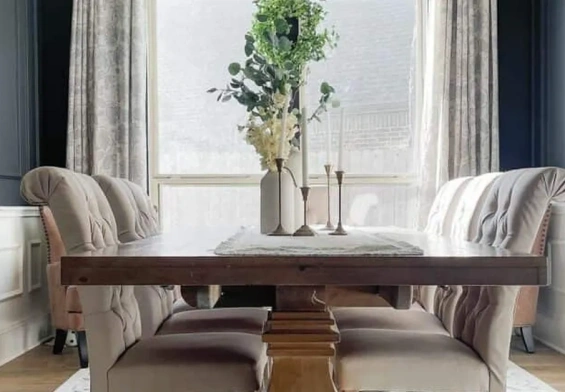

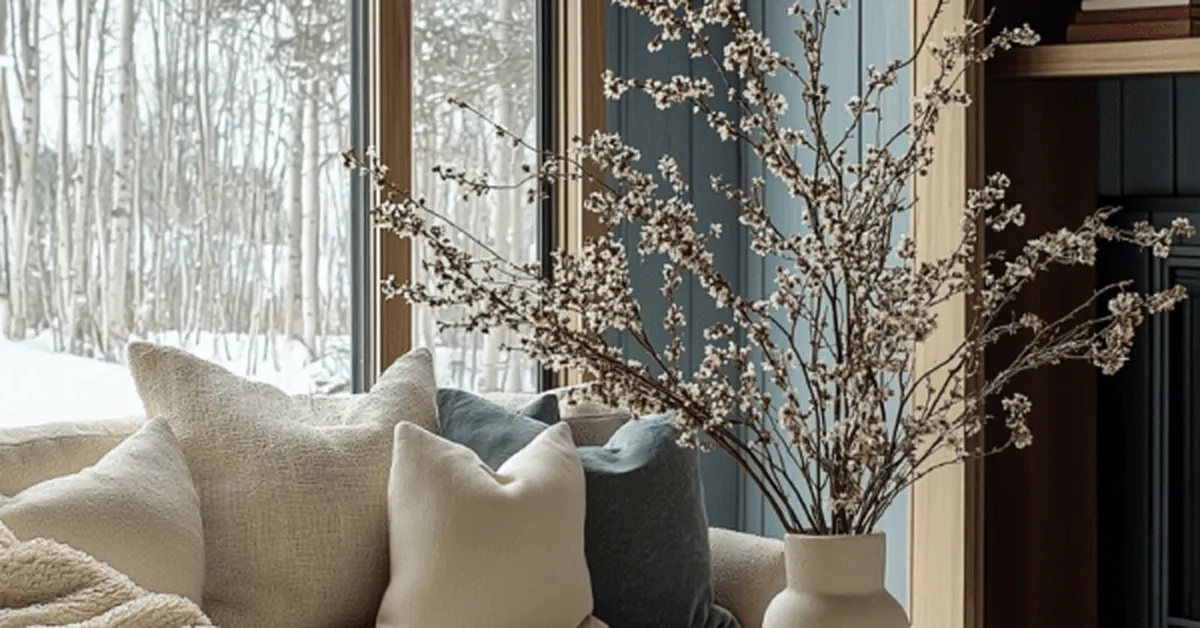
There’s a particular kind of room that stops you at the doorway. Not because it’s grand or expensive, but because something about it pulls you in makes you want to sit down, take off your shoes, stay a while. Designers call it “warmth,” but that word barely scratches the surface. What you’re actually responding to is texture. Specifically, the way multiple textures have been layered together until the room starts to feel less like a decorated space and more like a living thing.
Most people think about color first when they want a room to feel cozier. Color matters, sure. But texture is what color sits on top of. A cream-colored room can feel sterile and cold, or it can feel like the inside of a cashmere sweater and the difference has everything to do with what surfaces are carrying that color. Texture is the silent variable that most people underestimate until they walk into a room that gets it right.
Why Texture Works the Way It Does
The human eye doesn’t just see a room. It predicts how things will feel to the touch, and that prediction happens almost instantly, below the level of conscious thought. When you look at a chunky knit throw draped over a chair, your brain is already simulating the weight and softness of it. That simulation is what creates emotional warmth not the object itself, but your body’s anticipation of contact with it.
This is why texture layering works on such a deep psychological level. You’re not just decorating a room. You’re curating a set of sensory promises. The more varied and rich those promises are rough against smooth, matte against sheen, heavy against light the more emotionally complex and satisfying the space becomes. A room with only one texture, no matter how beautiful, reads as flat. It doesn’t engage the nervous system the way a layered room does.
Interior designers often talk about this in terms of “visual weight,” but it might be more accurate to call it tactile imagination. The room invites you to imagine touching it, and that invitation is what warmth actually is.
Starting with the Foundation: Floors and Walls
Layering texture isn’t something you do at the end, as a finishing touch. It starts at the very beginning, with the surfaces you might not even think of as design choices your floors and walls.
Hardwood floors are a classic foundation because they bring immediate warmth through grain variation. No two planks are identical. That subtle visual complexity does real work in a room. Concrete floors, by contrast, are monolithic and cool not inherently bad, but they require much more deliberate layering on top to compensate. If you’re working with tile or concrete, the rug you choose isn’t decorative. It’s structural to the room’s emotional atmosphere.
Walls are often treated as neutral backdrops, but they don’t have to be. Limewash paint creates a surface that shifts with the light, giving even a flat wall a kind of depth that standard paint can’t replicate. Plaster, grasscloth wallpaper, wood paneling, exposed brick each of these turns the wall itself into a texture layer rather than a blank canvas. When your walls are already doing textural work, everything you place in front of them benefits from that backdrop.
The goal at this foundation stage isn’t drama. It’s establishing a base that has enough inherent interest to support everything that comes after.
The Middle Layer: Upholstery, Rugs, and Larger Soft Goods
Once the bones of the room are set, the middle layer is where most of the heavy lifting happens. This is the layer of sofas, armchairs, area rugs, curtains the large-surface soft goods that define the room’s primary tactile personality.
A common mistake here is choosing everything in the same material family. An all-linen room, for instance, can feel lovely but slightly monotonous. The more interesting approach is to introduce contrast within the same general warmth palette. A velvet sofa paired with a jute rug creates an immediate tension between luxury and earthiness that feels genuinely sophisticated. Neither material is trying to match the other. They’re in conversation.
Curtains are consistently underused as a texture element. Heavy, floor-length drapes in a fabric like bouclé or raw silk don’t just block light they add vertical mass and softness to the room’s perimeter, which makes the space feel more enclosed and therefore more intimate. There’s a reason that rooms with bare windows, even beautifully furnished ones, can feel slightly exposed and cold.
The rug, more than almost any other element, anchors the room’s texture story. It’s the largest soft surface in most spaces, and it sets the register for everything else. A flat-weave rug reads as casual and graphic. A high-pile shag reads as indulgent and enveloping. A hand-knotted wool rug with visible knot variation reads as artisanal and grounded. Choose it not just for color, but for what it communicates about how the room should feel underfoot.
The Detail Layer: Throws, Pillows, and Objects
This is where most people start and where most people stop. Throws and pillows are the easiest texture additions, which is why they’re often the only ones. But when the foundational and middle layers are already doing their work, the detail layer becomes genuinely exciting rather than compensatory.
Think of this layer as punctuation. You’re not rewriting the sentence; you’re adding the emphasis that makes it land correctly. A linen sofa becomes more interesting with a chunky-knit throw tossed across one arm. A wooden coffee table becomes warmer with a stack of cloth-bound books and a small ceramic bowl with an irregular, handmade glaze. None of these things are expensive. All of them are doing textural work.
The mix of materials at this scale matters enormously. Ceramic next to wood next to woven textile creates a kind of material dialogue that feels curated without feeling staged. The key is avoiding too much of any one thing. Three velvet pillows on a velvet sofa disappears into itself. One velvet pillow among linen and cotton ones becomes a focal point.
Natural materials stone, clay, linen, leather, rattan tend to layer together more easily than synthetic ones because they carry inherent variation. A ceramic vase isn’t perfectly uniform. A leather cushion develops creases. A rattan basket has visible weave irregularity. These imperfections are exactly what make them feel alive in a room.
Light as the Final Variable
Texture without the right light is like music played in an empty room technically present, but missing the resonance it needs. Light is what activates texture, and the quality of light determines whether your layering reads as rich or flat.
Directional light from table lamps, floor lamps, or candlelight creates shadows in the surfaces around it. Those shadows are what make texture visible. A chunky knit throw under overhead fluorescent lighting looks almost flat. Under a warm table lamp placed at the same height, every loop and ridge casts a small shadow, and suddenly the throw looks three-dimensional and deeply inviting.
This is why rooms that rely entirely on overhead lighting so often feel cold regardless of how they’re furnished. Overhead light flattens everything it touches. Low, warm, directional light reveals the surfaces of things. It’s the difference between a room being seen and a room being felt.
Layering multiple light sources at different heights a floor lamp in the corner, a table lamp on the side table, a candle on the coffee table creates the kind of ambient complexity that makes a room feel genuinely inhabited. The light becomes part of the texture story, and the room starts to feel less like something you’re looking at and more like something you’re inside of.
That shift from observer to inhabitant is the whole point. A room with well-layered texture doesn’t announce itself. It simply makes leaving feel like a small loss.