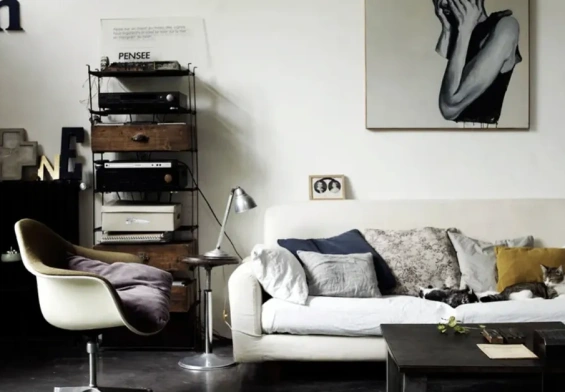


There’s a specific feeling that hits you when you walk into a well-designed boutique hotel room. The air smells faintly of something clean and warm. The bed looks like it was assembled by someone who genuinely cared. The lighting is soft without being dim. Everything has a place, and nothing is fighting for your attention. You exhale without meaning to.
That feeling isn’t accidental, and it isn’t reserved for people with unlimited renovation budgets. It’s the result of a series of deliberate, layered decisions most of which you can replicate at home without tearing down a single wall.
It Starts With Understanding What a Boutique Hotel Actually Sells
Chain hotels sell convenience. Boutique hotels sell a feeling. That distinction matters because it reframes the entire project. You’re not trying to make your bedroom look expensive. You’re trying to make it feel like a curated, intentional space one that communicates care in every detail.
The best boutique hotels succeed because they’ve edited ruthlessly. They’ve removed everything that doesn’t serve the experience and elevated the things that do. A single beautiful lamp does more work than three mediocre ones. A perfectly made bed in a sparse room reads as luxury. The same bed surrounded by clutter reads as chaos.
So before you buy anything, the first move is subtraction.
The Art of Editing Your Space
Walk into your bedroom right now and look at it like a stranger would. What’s the first thing your eye lands on? Is it the bed, or is it the pile of things on the nightstand,angle of cords behind the dresser, the mismatched frames on the wall?
Boutique hotels have a visual hierarchy. The bed is the anchor. Everything else supports it without competing. Achieving that at home means being honest about what’s actually necessary in the room versus what has simply accumulated there over time.
Clear the surfaces. Not permanently just temporarily, to see what the room looks like without the noise. Most people are surprised by how much calmer the space feels with even40% less stuff on display. From there, you can reintroduce only the things that earn their place: a single book, a small plant, a glass carafe of water on the nightstand.
The goal isn’t minimalism for its own sake. It’s intentionality. Every object in a great hotel room is there because someone decided it should be.
The Bed Is the Whole Point
If there’s one place to invest real attention and real money, it’s the bed. Not the frame the bed itself. The mattress, the linens, the layers.
Hotel beds feel different because they’re built in layers. A quality mattress topper adds that cloud-like give that makes you feel like you’re sinking into something rather than lying on top of it. Then come the sheets and this is where most people underestimate the difference material makes. High-thread-count cotton, particularly percale or sateen weave, has a weight and smoothness that cheap polyester blends simply can’t fake. You feel it the moment you slide in.
The pilow situation in boutique hotels is also worth studying. They don’t just stack two pillows and call it done. There’s usually a layered arrangement sleeping pillows in front, larger Euro shams behind, sometimes a lumbar pillow or a folded throw across the foot of the bed. It looks abundant without looking mesy because everything is the same color family or a deliberate, limited palette.
White or off-white beding is the classic hotel choice for a reason. It reads as clean, fresh, and timeless. If you want texture or color, bring it in through the throw blanket or the shams rather than the duvet cover itself. That way the bed stays visually calm while still having personality.
Iron or steam your duvet cover. This single step, which takes about ten minutes, transforms the entire look of the bed. A wrinkled duvet cover undermines everything else.
Lighting Does More Heavy Lifting Than You Think
Overhead lighting is the enemy of atmosphere. Most bedrooms rely on a single ceiling fixture that floods the room with flat, unflattering light the kind that makes everything look like a waiting room. Boutique hotels almost never use overhead lighting as the primary source in the evening. They layer it.
The goal is to have multiple light sources at different heights, all on the warmer end of the color temperature spectrum. Bedside lamps are the foundation. A floor lamp in a corner adds depth. If you have a dreser or a small desk, a table lamp there creates another warm pool of light. The room should feel like it’s glowing from within rather than being illuminated from above.
Dimer switches are one of the highest-return investments you can make in a bedroom. The ability to drop the light level in the evening signals to your brain that the day is winding down, and it transforms the mood of the space entirely. If hardwiring a dimmer feels like too much, smart bulbs with adjustable warmth and brightness are a reasonable alternative.
Candles also belong in this conversation. A single candle on a nightstand or dreser, lit in the evening, does something that no electric light can quite replicate. It’s not just the light it’s the movement, the slight warmth, the sense that someone has taken a moment to set a scene.
Scent Is the Detail Most People Forget
Walk into a great hotel and you’ll notice the smell before you notice almost anything else. It’s not perfume, exactly it’s more like the absence of bad smells combined with the presence of something subtle and pleasant. Clean linen, a hint of wood, something faintly botanical.
Your bedroom should have a signature scent, and it should be consistent. A reed diffuser is the most low-maintenance way to achieve this it works continuously without requiring you to remember to light anything. Choose something that reads as calm rather than sweet: cedarwood, eucalyptus, white tea, sandalwood. Avoid anything too floral or too food-adjacent in a bedroom.
Linen spray is another tool worth having. A few spritzes on your pillowcases and duvet cover before bed adds a layer of sensory comfort that’s genuinely underated. Lavender is the obvious choice, but there are more interesting options bergamot, vetiver, a light musk that feel more sophisticated without being overwhelming.
The underlying point is that scent is emotional. It bypasses the analytical brain and goes straight to feeling. A bedroom that smells right feels right, even before you’ve consciously registered why.
Texture and Material: The Tactile Layer
Boutique hotels understand that luxury is something you feel, not just something you see. The materials in the room the weight of the curtains, the softness of the rug underfoot, the smoothness of the nightstand surface all contribute to an overall sensory impression.
Curtains are a significant one. Thin, cheap curtains make a room feel temporary. Floor-length drapes in a heavier fabric linen, velvet, a thick cotton make a room feel considered. They don’t have to be expensive, but they do have to hang properly. Curtain rods should be mounted close to the ceiling and extend well beyond the window frame on both sides. This makes the windows look larger and the ceilings feel higher.
A rug under the bed is another detail that separates a finished room from an unfinished one. Waking up and stepping onto a soft rug rather than cold hardwood or carpet is a small pleasure that compounds over time. The rug should be large enough that you’re stepping onto it from both sides of the bed a common mistake is going too small.
Throw blankets draped over the foot of the bed or the arm of a chair add warmth and visual softness. Choose materials that actually feel good a chunky knit, a cashmere blend, a waffle-weave cotton. These are the things you reach for without thinking, and they should reward the reach.
The Nightstand as a Curated Vignette
In boutique hotels, the nightstand is never just a surface to dump things on. It’s a small, composed scene. A lamp. A glass of water. Maybe a small plant or a single flower in a bud vase. A book. Nothing more.
Replicating this at home means being selective about what lives on your nightstand permanently versus what gets cleared away. A glass carafe with a drinking glass turned upside down on top of it is a detail that reads as genuinely hotel-like and costs almost nothing. A small tray to coral the items that do belong there your phone, a lip balm, your book keeps the surface from looking scattered.
The lamp on the nightstand matters more than the lamp anywhere else in the room because it’s the last thing you see before you sleep and the first thing you reach for in the morning. It should be the right height (the shade should sit roughly at eye level when you’re sitting up in bed), and it should cast warm, soft light rather than bright, direct light.
The Finishing Touches That Signal Intention
There are a handful of small details that boutique hotels use consistently, and they work because they signal that someone thought about the experience of being in the room.
A tray on the dreser or a small console table, holding a few curated objects a candle, a small dish for jewelry, a plant creates a focal point that feels designed rather than random. Art on the walls should be hung at eye level, not floating near the ceiling where most people mistakenly put it. A full-length mirror somewhere in the room adds light and makes the space feel larger.
Fresh flowers, even a single stem in a simple vase, do something to a room that’s hard to quantify. They introduce life and impermanence a reminder that the space is being actively tended to.
And then there’s the made bed. Every morning. Not because anyone is coming to inspect it, but because walking into a made bedroom at the end of the day is a completely different experience than walking into an unmade one. The bed is the room. When it’s right, everything else falls into place around it.
The truth is, the gap between a great hotel room and a great bedroom at home is mostly a gap in attention. The materials are available to anyone. The techniques are learnable. What the best boutique hotels have figured out and what you can bring home is simply the discipline of caring about the details that most people overlook.