
There’s a particular kind of calm that settles over you when you walk into a room where everything sits close to the floor. It’s not emptiness, exactly. It’s more like the room is breathing. The ceiling feels farther away. Your shoulders drop. Something in your nervous system quietly decides that this is a safe place to be.
That feeling isn’t accidental. It’s the result of deliberate choices about scale, proportion, and the relationship between a human body and the space it inhabits. Low-profile furniture is one of the most powerful tools for achieving it, and yet it’s often misunderstood as a purely aesthetic trend rather than what it actually is: a philosophy made physical.
Why Height Changes Everything
Most Western interiors are built around furniture that lifts us up. Sofas with deep cushions and high arms. Beds that require a small climb. Dining tables that position us at a formal, upright distance from our food. There’s a logic to all of it practicality, convention, the assumption that comfort means elevation.
But elevation carries psychological weight. High furniture creates a kind of visual busyness at eye level. It divides the room into competing horizontal planes. It subtly signals activity, readiness, the posture of someone about to do something. That’s useful in an office. In a living room or bedroom, it can quietly sustain a low-grade tension you might not even notice until it’s gone.
Low-profile furniture works differently. When the tallest piece in a room sits at18 inches rather than 36, the visual field opens up. The walls seem wider. The ceiling lifts. The room stops competing with itself. And because your body is closer to the floor whether you’re seated on a platform sofa or lying on a bed frame that barely clears the ground there’s a physiological grounding effect that’s hard to replicate any other way.
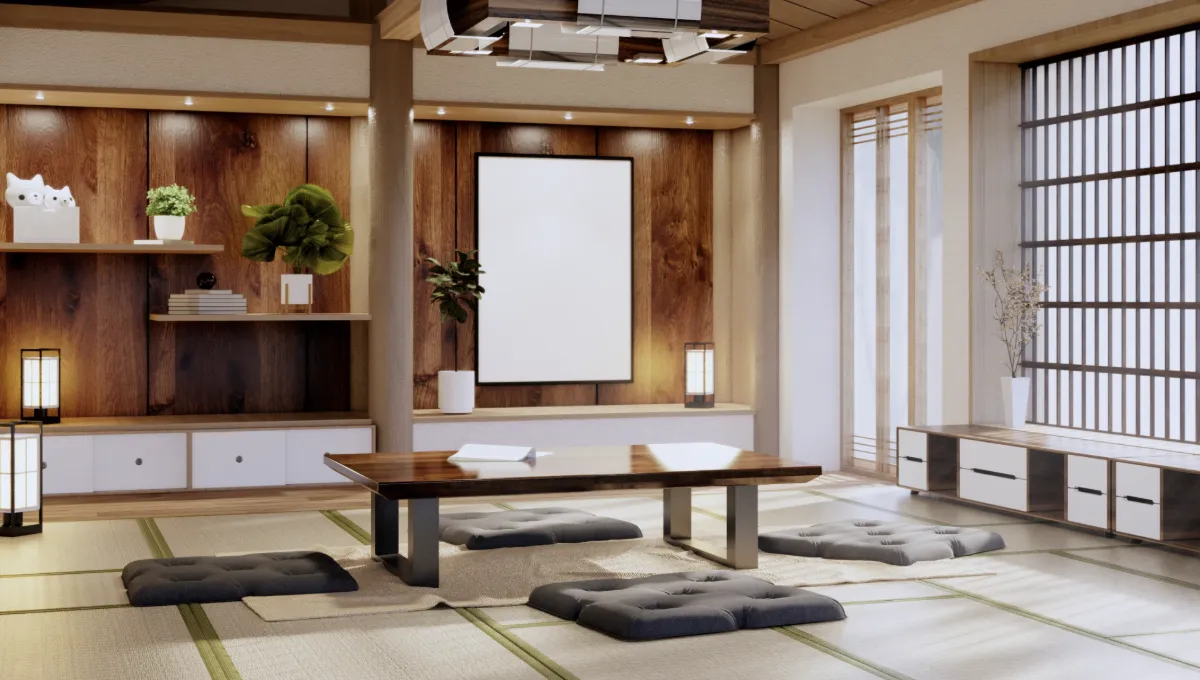
This is not a new idea. Japanese interior design has understood it for centuries. The traditional Japanese home, with its tatami mats, low chabudai tables, and futon beding laid directly on the floor, was never designed around minimalism as a style. It was designed around a way of being in a space present, unhurried, connected to the physical world at the most literal level.
Choosing Furniture That Sits Close to the Earth
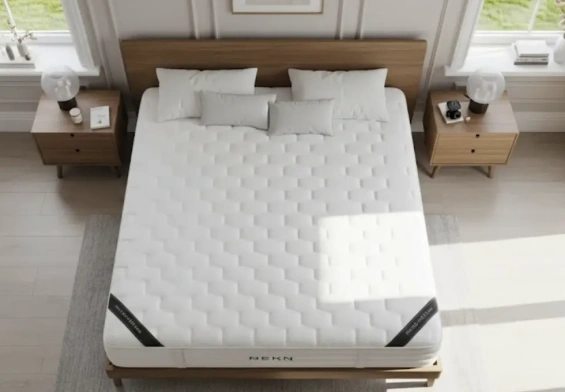
The starting point for most people is the bed, and for good reason. You spend more time in your bedroom than any other room, and the bed is its gravitational center. A platform bed with a low-slung frame ideally no more than 14 to 18 inches from floor to mattress top immediately transforms the room’s energy. The ceiling feels taller. The room feels quieter. There’s something almost meditative about lying at that height, closer to the ground, the way you might sleep in a tent or on a mat during a retreat.
In the living room, the sofa is the equivalent decision. Low-profile sofas, sometimes called floor sofas or modular lounge systems, typically sit between 12 and 18 inches off the ground. They tend to have clean, horizontal lines and minimal ornamentation. The effect is a room that feels like it’s resting rather than performing. Pair one with a low coffee table something in solid wood or stone, no more than 12 inches tall and the entire seating area becomes a kind of landscape rather than a collection of objects.
Floor cushions and zaisu chairs (the legless Japanese chairs designed for floor-level sitting) are worth considering as supplementary seating. They’re not for everyone’s knees, and that’s worth being honest about. But even one or two scattered around a room introduce a flexibility and informality that loosens the whole space.
What you want to avoid is mixing low-profile pieces with tall ones in a way that creates visual chaos. A low sofa next to a towering bookcase creates a jaring contrast that undermines the calm you’re trying to build. This doesn’t mean every piece needs to be at the same height variation is natural and necessary but the dominant furniture should share a low horizontal logic, with taller elements used sparingly and intentionally.
Negative Space Is Not Empty Space
One of the most common mistakes people make when transitioning to low-profile furniture is filling the room with more of it. The logic seems sound: if the furniture is lower, you can fit more without the room feeling crowded. But this mises the point entirely.
The zen-like quality of a low-profile room depends as much on what isn’t there as what is. Negative space the open floor, the bare wall, the unoccupied corner is doing active work. It gives the eye somewhere to rest. It creates the visual silence that makes the pieces you do have feel intentional rather than incidental.
A good rule of thumb: when you think’re done arranging, remove one more thing. Not because minimalism is a virtue in itself, but because most of us have been trained by conventional interiors to fill space reflexively. Low-profile design asks you to resist that reflex. The floor is not wasted space. A clear stretch of hardwood or tatami or natural fiberug is part of the composition.
This is where the concept of ma the Japanese notion of meaningful negative space becomes practically useful. Ma isn’t absence. It’s the pause between notes that makes music possible. In a room, it’s the breathing room between a low sofa and the wall behind it, the gap between a floor lamp and the corner it illuminates. Designing with ma in mind means treating open space as a material, not a problem to be solved.
Materials That Belong to the Earth
The furniture you choose is only part of the equation. What it’s made of matters just as much, maybe more.
Natural materials solid wood, stone, linen, wool, rattan, leather carry a sensory weight that synthetic materials can’t replicate. They age. They have grain and texture and variation. They connect the room to the physical world in a way that feels grounding rather than decorative. A low oak bed frame with a visible wood grain does something to a room that a lacquered MDF platform simply doesn’t.
For floring, natural materials are especially important in a low-profile space because you’re much closer to the floor than you would be in a conventional room. Tatami, cork, hardwood, and natural stone all reward proximity. They have warmth and texture underfoot. They make the act of sitting or lying on the floor feel like a choice rather than a compromise.
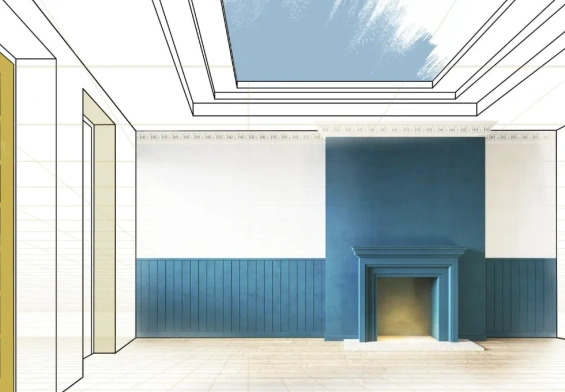
Color plays a role too, though it’s often overcomplicated. The palette of a grounded, zen-like room tends toward the earth: warm whites, soft grays, sand clay, moss, the deep brown of aged wood. These aren’t rules a room with low furniture and single deep indigo wall can be extraordinary but the instinct toward natural, muted tones is sound. Saturated colors at eye level compete for attention. Quieter tones recede and let the space breathe.
Lighting deserves its own consideration. In a low-profile room, overhead lighting often feels harsh and disconnected from where you actually are. Floor lamps, low table lamps, and candles bring light down to the level of the furniture and the people in it. The room becomes warmer, more intimate, more human in scale.
The Practice of Living Lower
There’s a lifestyle dimension to all of this that goes beyond interior design. Low-profile furniture changes how you move through a room. You sit differently. You get up differently. You’re more aware of your body, more deliberate in your movements. For some people, this is an adjustment. For others, it becomes a kind of daily practice a physical reminder to slow down, to be present, to inhabit the space you’re in rather than passing through it.
This is where the zen connection becomes more than metaphorical. Zen practice has always been interested in the relationship between posture and mental state. The way you hold your body affects the way you think and feel. Sitting closer to the ground, in a room that doesn’t rush you upward, creates a different quality of attention. It’s subtle, and it’s real.
There are practical considerations worth acknowledging. Low furniture isn’t ideal for everyone people with mobility issues, joint pain, or certain physical conditions may find floor-level living genuinely difficult. The goal isn’t to impose a single way of being in a room. It’s to understand what low-profile design offers and make intentional choices about how much of it serves your life.
For those who can embrace it, even partially, the rewards are tangible. A bedroom with a low platform bed and clear floor space becomes a room you actually want to sleep in. A living room with a floor sofa and a low table becomes a room where conversations last longer, where people settle in rather than perching. The room stops being a backdrop and starts being an environment something you’re inside of, not just moving through.
There’s a line from the Tao Te Ching that feels relevant here, though it was never written about furniture: “To the mind that is still, the whole universe surrenders.” The room you build around yourself is a kind of argument you’re making to your own nervous system. Low-profile furniture is one way of making that argument quietly, persistently, every time you walk through the door.