
There’s a version of minimalism that feels like punishment. You’ve seen it the all-white room with a single chair, a bare concrete floor, maybe one sculptural object placed with surgical precision on a shelf. It looks like a magazine spread. It does not look like somewhere you’d want to spend a Sunday afternoon.
That version of minimalism has done a lot of damage to the concept’s reputation. People hear “minimalist” and picture cold, austere, slightly hostile spaces that seem designed more for photography than for living. And so they overcorrect, filling their homes with things they don’t love because at least it feels warm in there.
But the tension between minimalism and warmth is largely a false one. The spaces that feel most genuinely welcoming the ones where you sink into a chair and immediately exhale are often the ones with the least visual noise. The trick isn’t choosing between simplicity and comfort. It’s understanding what actually creates warmth in the first place.
The Myth of the Cold Minimalist Room
Coldness in a space rarely comes from having fewer things. It comes from the wrong things, or from materials and light that don’t invite the body to relax. A room packed with furniture can feel just as sterile as an empty one if everything in it is hard-edged, synthetic, and uniformly lit.
What we’re really responding to when we call a space “cold” is an absence of sensory softness. Our nervous systems are wired to read certainues natural materials, layered light, organic shapes, the suggestion of human presence as safe and comfortable. When those cues are missing, the brain registers something closer to a waiting room than a home, regardless of how much stuff is in it.
Minimalism, done thoughtfully, doesn’t strip those cues away. It strips away everything else, leaving them more visible, more felt. A single wool throw on a clean sofa reads warmer than the same throw buried under four decorative pillows and a stack of books. The warmth isn’t diluted by competition.
Texture Is the Secret Language of Warmth
If there’s one principle that separates a cold minimalist space from a warm one, it’s texture. When you reduce the number of objects in a room, each surface carries more weight. A smooth, matte linen sofa in a spare room feels entirely different from a glossy synthetic one, even if they’re the same color and shape.
Natural materials do something that manufactured ones can’t quite replicate. Wood grain, woven fibers, raw stone, aged leather these surfaces have visual depth that catches light differently depending on the time of day and the angle you’re looking from. They feel alive in a way that laminate and plastic don’t. In a minimalist space, that aliveness becomes the whole atmosphere.
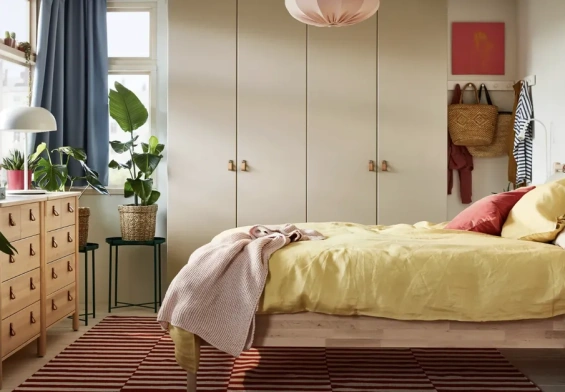
Layering textures is where the real warmth comes from. A jute rug under a linen sofa next to a wooden side table none of those things are visually loud, but together they create a tactile richness that makes the room feel inhabited and considered. The eye moves across the surfaces and finds something interesting at each stop, even if the overall composition stays quiet.
This is also why so many minimalist spaces that feel cold are the ones that went all-in on a single material. An entirely concrete room, or a space where every surface is smooth and white, removes that layering. There’s nowhere for the eye to rest, and paradoxically, that restlessness reads as discomfort.
Light Does More Work Than You Think
Lighting is probably the most underestimated element in any interior, but in a minimalist space it becomes almost everything. When there’s less furniture and fewer objects to absorb and diffuse light, the quality of that light becomes the dominant sensory experience of the room.
Overhead lighting especially the flat, even kind that comes from a single ceiling fixture is the enemy of warmth. It eliminates shadow, and shadow is what gives a room dimension and intimacy. Think about the difference between a restaurant lit with fluorescents and one lit with candles. The food is the same. The room might even be the same size. But one feels like a place you want to linger, and the other doesn’t.
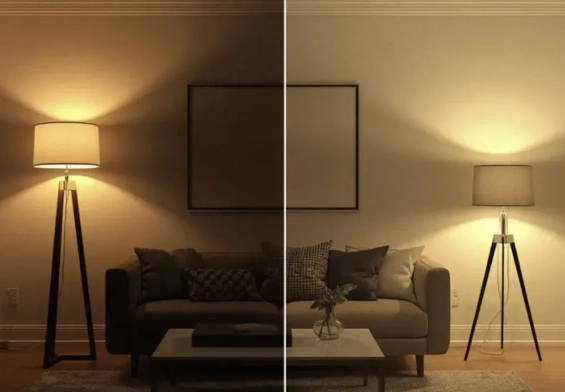
In a minimalist space, the goal is layered light at multiple heights. A floor lamp in the corner, a table lamp on a low surface, maybe a pendant over a reading chair these create pools of warmth rather than a uniform wash. The areas between the light sources fall into gentle shadow, and that contrast is what makes a room feel cozy rather than clinical.
Warm-toned bulbs (somewhere in the 2700K to 3000K range) make an enormous difference too. Cool white light reads as functional and alert. Warm light reads as evening, as rest, as home. In a room with minimal decoration, you’re not going to get warmth from a gallery wall or a collection of objects. You have to get it from the light itself.
The Human Touch in Spare Spaces
One of the more interesting challenges of minimalist design is figuring out how to make a space feel lived-in without clutering it. There’s a version of minimalism that’s so controlled, so perfectly arranged, that it feels like no one actually exists there. Every object looks like it was placed by a stylist and hasn’t been touched since.
Real warmth comes from evidence of a human life. Not mess, necessarily but presence. A book left open on a side table. A coffee mug that belongs to someone. A plant that’s slightly imperfect, leaning toward the window. These small signs of habitation are what make a space feel welcoming rather than performative.
The key in a minimalist context is being intentional about which signs of life you allow. A single meaningful object something with a story, something that reflects who you actually are does more for a room’s warmth than a dozen generic decorative items. A worn leather journal on a desk, a piece of pottery made by someone you know, a photograph that means something specific to you. These things carry emotional weight that fills a room in way that mass-produced decor simply can’t.
There’s also something to be said for imperfection. Minimalism doesn’t have to mean pristine. A slightly rumpled throw, a candle that’s been burned down a few inches, a wooden bowl with a small crack that’s been repaired these imperfections are what make a space feel real. They suggest that someone lives here, that the space is used and loved rather than preserved.
Color, Carefully
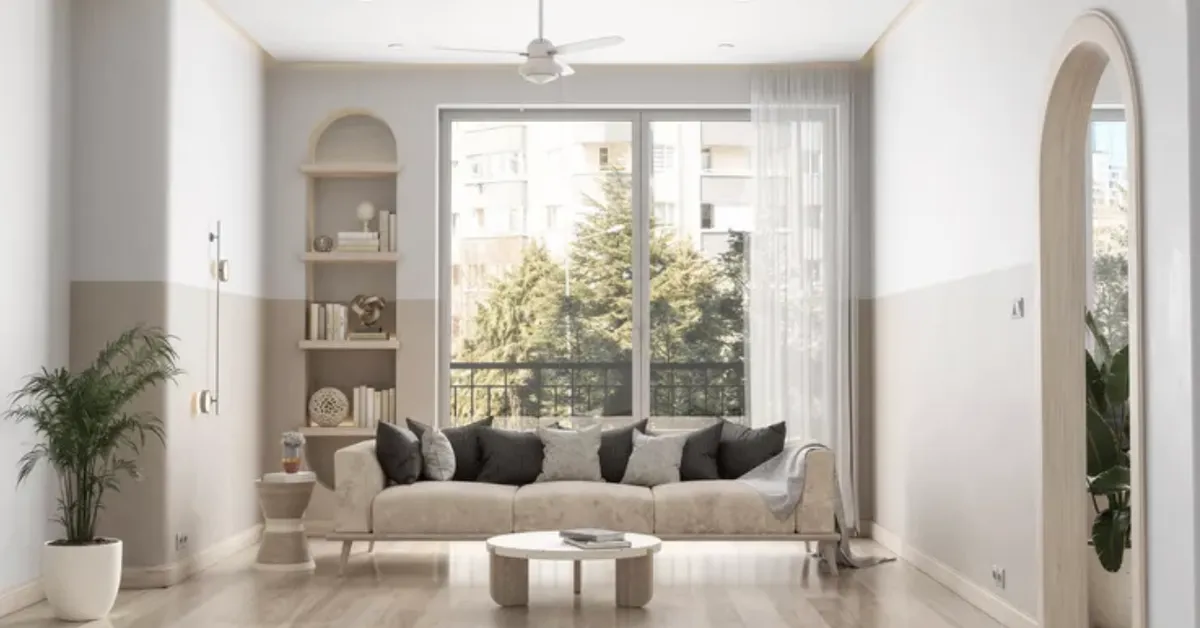
The assumption that minimalist spaces have to be white or gray is one worth questioning. Those palettes can work beautifully, but they require a lot of skill to keep from feeling cold. A more forgiving approach is to build around warm neutrals creamy whites, soft taupes, warm beiges, teracotta, dusty sage, muted ochre.
These colors have enough warmth in their undertones that they do some of the heavy lifting even before you add texture or light. A room painted in a warm off-white feels fundamentally different from one painted in a cool, blue-toned white, even if both read as “neutral” in a paint chip.
The other thing warm colors do in a minimalist space is create a sense of enclosure without adding visual clutter. A deep, earthy wall color makes a room feel like it wraps around you. It creates intimacy through color rather than through objects, which is exactly what you want when you’re working with fewer things.
Accent colors in a minimalist space should be used sparingly but deliberately. One warm teracotta cushion, a single rust-colored ceramic, a throw in a deep olive these small doses of color become focal points in a spare room, and they carry a lot of emotional weight precisely because they’re not competing with much else.
When Less Space Means More Presence
There’s a concept in Japanese aesthetics called ma roughly translated as “negative space” or “the pause between things.” It’s the idea that emptiness isn’t absence; it’s a presence of its own. The space between objects is part of the composition, not just the background.
This is maybe the deepest argument for why minimalist spaces can feel so profoundly welcoming when they’re done right. When a room isn’t crowded, you can actually feel the space itself. The air in the room becomes part of the experience. There’s room to breathe, room for your attention to settle, room for quiet.
That quality of spaciousness real spaciousness, not just a big square footage is something that a lot of people are genuinely hungry for. We live in an era of relentless stimulation, and a room that asks nothing of you, that doesn’t demand your attention in a dozen directions at once, can feel like an exhale.
The warmth in that kind of space isn’t decorative. It’s structural. It comes from the feeling that you’re allowed to be still here, that the room isn’t competing with you for attention. A single candle on a clean surface, a chair positioned to face the window, a rug that defines the sitting area without overwhelming it these choices create an environment that holds you without crowding you.
That’s the version of minimalism worth pursuing. Not the cold, performative kind that looks good in photographs but feels like no one’s home. The kind where every object earns its place, where the materials speak quietly but clearly, where the light is warm and the space itself feels like a gift.