
There’s a specific moment that happens every evening, somewhere between the last hour of daylight and the full arrival of night, when a room stops being a functional space and becomes something else entirely. The furniture hasn’t moved. The walls are the same color they were at noon. But the feeling is completely different heavier, softer, more intimate. Most people chalk this up to tiredness or the natural rhythm of the day. The real explanation is simpler and more controllable than that: it’s the light.
Lighting after dark is one of the most underestimated tools in interior design, and it’s one of the few things you can change in under ten minutes that will genuinely transform how a room feels. Not just how it looks how it feels. That distinction matters.
The Psychology Behind Why Light Hits Different at Night
During the day, your brain is calibrated to sunlight. Natural light is bright, diffuse, and comes from above it signals alertness, productivity, the business of being awake. When that light disappears and you flip on a single overhead fixture to compensate, you’re essentially asking your nervous system to pretend it’s still noon. The result is a room that feels harsh, flat, and vaguely exhausting without you being able to explain why.
Human beings evolved around fire. For most of our history, the only light available after dark was warm, low and flickering positioned at eye level or below, never overhead. That’s not a romantic detail. It’s a neurological one. Warm, low-level light in the evening signals safety and rest to the brain in a way that cool overhead light simply doesn’t. This is why a room lit by a single floor lamp in the corner can feel more inviting than the same room floded with recessed ceiling lights, even if the floor lamp is technically putting out less total illumination.
Understanding this isn’t about following a design trend. It’s about working with your own biology.
Color Temperature Is Everything
If you’ve ever stood in a lighting storearing at two bulbs that look identical in the package but produce completely different results in your home, you’ve already encountered the concept of color temperature. It’s measured in Kelvins, and the range matters enormously once the sun goes down.
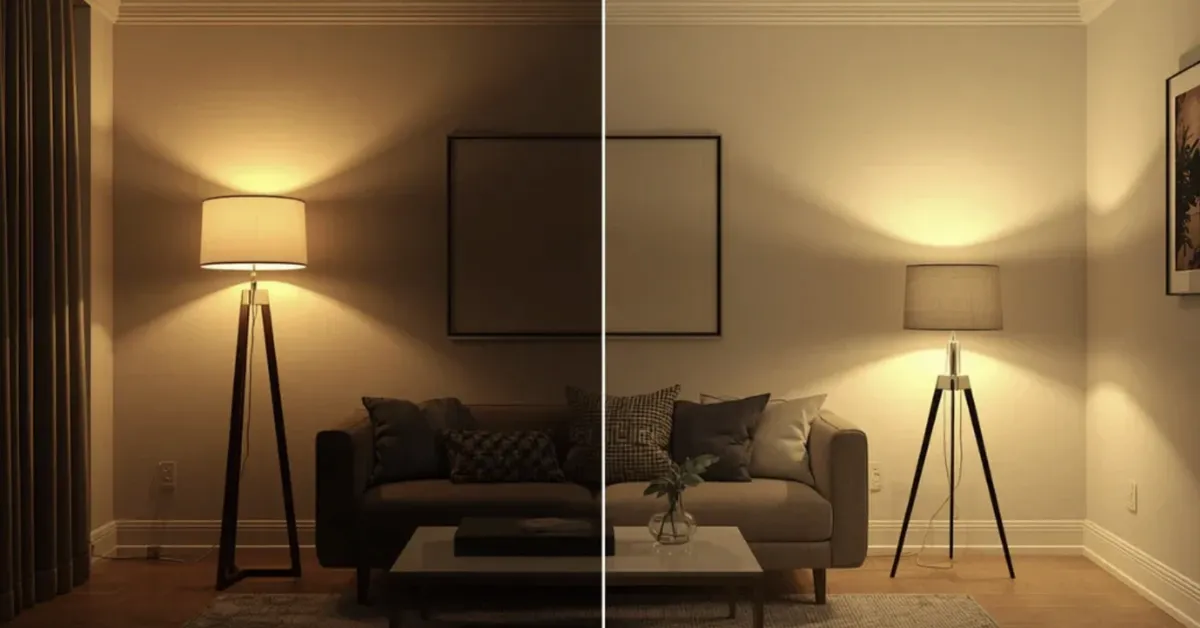
Bulbs in the 5000–6500K range produce a cool, bluish-white light that mimics daylight. They’re excellent for task-heavy spaces a home office, a workshop, a bathroom where you’re applying makeup. After dark in a living room or bedroom, they’re brutal. That cool light suppresses melatonin production and keeps your brain in a state of alertness that fights against the natural wind-down your body is trying to do.
Bulbs in the 2700–3000K range produce a warm, amber-toned light. This is the range that makes a room feel like a place you want to stay. It’s the color of candlelight, of old incandescent bulbs, of the kind of light that makes people look good and feel relaxed. For most living spaces after dark, this is the sweet spot.
There’s also a middle range around 3500–4000K that works well in kitchens and dining areas where you want warmth without sacrificing visibility. The point is that swapping a single cool bulb for a warm one can change the entire emotional register of a room without touching anything else.
The Art of Layering Light
One overhead light is almost never the answer. This is the single most common lighting mistake in residential spaces, and it’s easy to understand why it happens overhead fixtures are built into the architecture, they’re convenient, and they feel like the obvious solution. But a single source of light, no matter how warm the bulb, creates a flat, shadowless environment that reads as institutional rather than residential.
Layering light means using multiple sources at different heights and intensities to create depth. Think of it in three categories: ambient light, which fills the room with general illumination; accent light, which draws attention to specific objects or areas; and task light, which serves a functional purpose like reading or cooking.
In a living room after dark, this might look like a floor lamp in one corner providing ambient warmth, a table lamp on a side table adding a second pool of light at a lower level, and a small spotlight or picture light drawing attention to a piece of art on the wall. None of these sources is doing all the work. Together, they create a room that has dimension areas of brightness and shadow that make the space feel alive rather than evenly lit.
The shadow is as important as the light. A room with no shadows feels sterile. A room with intentional shadows feels curated.
Where You Put the Light Matters More Than You Think
Height and direction are variables that most people never consciously consider, and they’re responsible for a significant portion of why some rooms feel good and others don’t.
Light that comes from above and points downward is the default in most homes, and it’s also the least flatering and least atmospheric option available. Overhead light flattens faces, creates harsh shadows under eyes and noses, and gives a room the same quality of illumination as a parking garage. It’s functional It’s rarely beautiful.
Light that comes from below a lamp on a low table, a candle on the floor, an LED strip tucked under a shelf creates a completely different effect. It throws light upward onto walls and ceilings, which bounce it back into the room as a soft, diffuse glow. It creates drama without being dramatic. It makes ceilings feel higher and walls feel warmer.
Light that comes from the side, at roughly eye level when seated, is the most flattering and most intimate option. A table lamp positioned at the right height next to a sofa doesn’t just illuminate the space it creates a zone, a small pocket of warmth that makes whoever is sitting there feel like they’re in exactly the right place.
Placing a lamp behind a piece of furniture rather than in front of it is a trick that interior designers use constantly and homeowners almost never think to try. A floor lamp tucked behind a sofa, with the light directed upward toward the wall, creates a halo effect that makes the whole room feel softer. It’s the kind of thing that guests notice without being able to identify they just know the room feels good.
The Underated Power of Dimmers and Candles
A dimer switch is one of the cheapest and most impactful upgrades you can make to a room. The ability to dial down the intensity of a light source not just turn it on or off gives you control over the mood of a space in real time. The same overhead fixture that feels harsh at full brightness becomes genuinely pleasant at thirty percent. The same lamp that’s perfect for reading becomes too bright for watching a film.
Dimmers work best with warm-toned bulbs. A cool daylight bulb dimed down doesn’t become warm it just becomes a dimer version of the same cool light. The color temperature stays the same. This is why the combination of warm bulbs and dimmable fixtures is so effective: you’re controlling both the intensity and the quality of the light simultaneously.
Candles occupy a category of their own. There’s a reason they’ve never been replaced despite centuries of better technology the quality of candlelight is genuinely irreproducible. The slight flicker, the warmth of the flame, the way it casts moving shadows on the walls. It’s not just atmospheric in a vague sense. The light from a candle is around 1800K, warmer than almost any electric bulb on the market, and the movement of the flame engages the eye in a way that static light sources don’t.
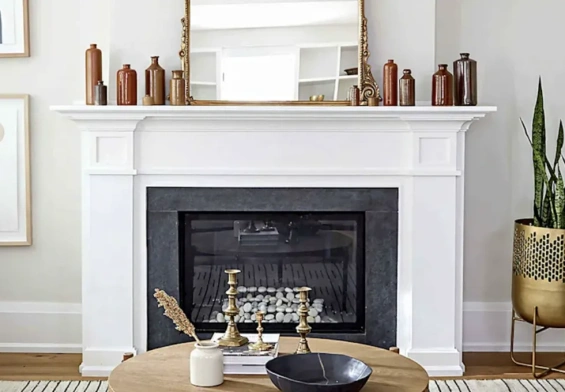
A cluster of candles on a coffee table or a mantelpiece, combined with a single low lamp in the corner, can make an ordinary living room feel like somewhere you’d pay to spend an evening. The investment is a box of matches and a few dollars’ worth of candles.
LED strip lights deserve a mention here, not because they’re inherently sophisticated, but because they’re genuinely versatile when used with restraint. Tucked under a bed frame, behind a television, or along the underside of a floating shelf, they add a layer of ambient glow that fills in the dark corners of a room without competing with the main light sources. The key word is restraint a strip light that’s visible is usually a strip light that’s doing too much.
Reading a Room by Its Light
Walk into any space that feels immediately comfortable a good restaurant, a well-designed hotel lobby, a friend’s apartment that always seems to have the right atmosphere and pay attention to the lighting before you pay attention to anything else. You’ll almost always find the same things: multiple sources, warm color temperatures, light positioned at or below eye level, and a deliberate absence of harsh overhead illumination.
These aren’t expensive choices. A floor lamp from a thrift store with a warm bulb will outperform a designer ceiling fixture with a cool one. A candle on a windowsill does more for the atmosphere of a room than most people realize. The decisions that matter most in lighting are about placement, temperature, and layering not budget.
There’s something worth sitting with in all of this. The way a room feels after dark is, to a surprising degree, a choice. Not a permanent one, not an expensive one just a choice about where you put the light and what kind of light you choose to put there. Most people live for years in rooms that feel slightly off in the evenings without ever identifying why. The ceiling light is on. The room is technically illuminated. But something is missing.
What’s missing is usually warmth, and warmth, it turns out, is something you can buy for the price of a light bulb.