

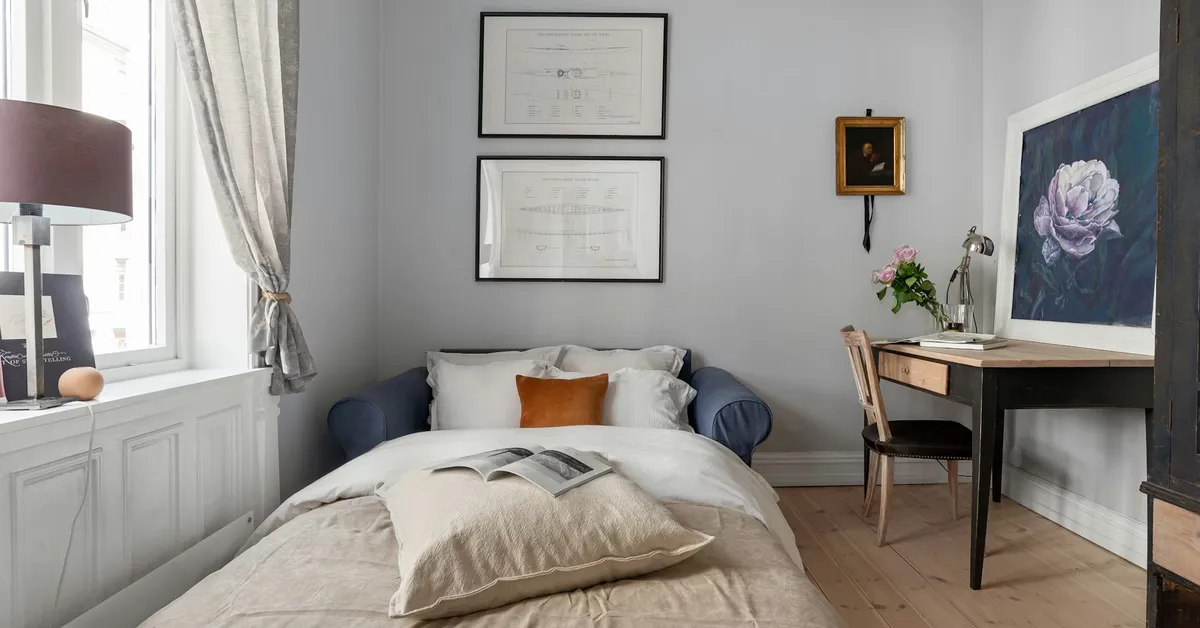
There’s a particular kind of exhaustion that comes from living in a small apartment. Not the tired-body kind, but the mental fatigue of constantly negotiating space moving the chair so you can open the closet, stacking things on the bed because the floor is already spoken for, apologizing to guests for the chaos before they’ve even taken off their shoes. It’s a daily negotiation, and most people lose.
The standard advice is always the same: declutter, go minimal, embrace the void. And while that’s not wrong, it misses something important. The problem isn’t usually that people own too much. It’s that what they own doesn’t do enough. One object, one function that’s the design logic of a house with four bedrooms and a mudroom. In 400 square feet, that math simply doesn’t work.
What actually works is different. It’s about finding pieces that carry their weight not just physically, but functionally. Objects that earn their square footage by doing two, three, sometimes four things well. Not gimmicks. Not the kind of “convertible” furniture that technically transforms but practically takes twenty minutes and mild frustration to operate. The real thing.
The Bed Is the Room. Treat It That Way.
In most small apartments, the bed occupies somewhere between a quarter and a third of the total floor space. That’s not a problem it’s an opportunity that most people completely ignore.
A standard bed frame with nothing underneath it is, functionally, dead space. Lift it up, and you’ve created the equivalent of a small closet. Bed frames with built-in drawers the kind that slide out from either side can hold everything from off-season clothing to extra linens to the stuff you don’t need weekly but can’t throw away. Some platform beds go further, incorporating hydraulic storage that lifts the entire mattress to reveal a cavernous compartment below. It sounds dramatic until you realize you’ve just recovered 30 square feet of usable storage without adding a single piece of furniture.
The headboard is another missed opportunity. A headboard with integrated shelving replaces the need for bedside tables entirely. You get surface space for a lamp, a book, a glass of water and often additional cubbies or cabinets behind it. In a room where every foot matters, eliminating two nightstands while gaining more storage than they ever offered is a genuine win.
The bed, in other words, shouldn’t just be where you sleep. It should be where half your storage lives.
Tables That Refuse to Be Just Tables
The dining table is one of the most space-inefficient objects in small apartment living. It demands a fixed footprint, requires chairs that need to go somewhere, and gets used honestly for maybe an hour a day. The rest of the time, it just sits there, taking up room it hasn’t earned.
The extendable dining table solves part of this. Folded down, it’s barely there. Extended, it seats six. But the more interesting evolution is the table that doubles as something else entirely. There are console tables that expand into full dining surfaces, coffee tables that rise and extend to desk height, and kitchen islands on wheels that serve as prep space, dining surface, and storage unit simultaneously.
The desk question is where things get genuinely creative. In apartments without a dedicated office, the desk either takes over the living room or doesn’t exist and neither is a good answer. A wall-mounted fold-down desk solves this cleanly. When you’re working, it’s a proper surface. When you’re done, it folds flat against the wall and disappears. Pair it with a wall-mounted shelf above it, and you have a functional home office that occupies zero floor space when not in active use.
There’s a psychological dimension to this, too. When your workspace can physically vanish at the end of the day, it becomes easier to mentally leave work behind. That’s not nothing, especially for people working from home in apartments where the “office” is also the bedroom or the living room.
Seating That Solves More Than One Problem
Sofas in small spaces create a particular dilemma. You need somewhere to sit. You also need somewhere for guests to sleep. You also need storage. A regular sofa handles one of those three things.
A well-designed sofa bed handles all three but the key word is “well-designed.” The cheap pull-out sofa bed, the one with the bar that digs into your back and the mattress that feels like a folded yoga mat, is not the answer. It exists, it’s everywhere, and it should be avoided. The newer generation of sofa beds particularly those using memory foam or modular sectional systems are different. The sleeping surface is genuinely comfortable, the conversion mechanism is simple, and in sofa configuration they look and feel like actual furniture.
Ottoman storage is a smaller but equally useful piece of this puzzle. An ottoman that opens up to reveal interior storage can hold blankets, magazines, board games, or whatever category of object has no obvious home. It functions as a coffee table, extra seating when you have guests, a footrest, and a storage unit four functions in one object that takes up the same space as a standard coffee table.
Bench seating at the foot of the bed follows the same logic. A storage bench there provides a place to sit while putting on shoes, a surface to lay out tomorrow’s clothes, and a chest for extra pillows or off-season items all without requiring any additional floor space.
The Kitchen: Vertical Thinking and Modular Logic
Small apartment kitchens operate under constraints that can feel almost punitive. Limited counter space, minimal cabinet depth, nowhere to put anything. The instinct is to try to cram more in more organizers, more racks, more hooks. That approach usually makes things worse.
The more useful shift is vertical. A magnetic knife strip on the wall removes the knife block from the counter. A pegboard above the prep area holds pots, pans, utensils, and small tools without consuming any surface space. Stackable containers that use the full height of a cabinet shelf rather than leaving dead air above shorter items can double the effective storage of a single shelf. None of this is revolutionary. But the cumulative effect of applying this logic consistently across a small kitchen is significant.
The rolling kitchen cart deserves special mention. In apartments where the kitchen has no island, a cart on wheels fills that gap providing extra prep surface, storage below, and the flexibility to be moved wherever it’s most useful. Hosting dinner? Roll it out. Cooking alone? Push it against the wall. It adapts to the situation rather than demanding the situation adapt to it.
What You’re Really Choosing
Living well in a small apartment isn’t about sacrifice. It’s about selectivity choosing objects that are genuinely intelligent about space rather than objects that merely look good in a showroom. The difference between a piece of furniture that does one thing and one that does three isn’t just functional. It changes the feeling of the space. Rooms that feel chaotic usually aren’t overfull so much as under-optimized. The right pieces don’t just solve storage problems. They create breathing room.
There’s something almost philosophical about it. When every object in your space has to justify its presence has to do more than simply exist you end up surrounded by things that were chosen deliberately, not just accumulated. That’s a different relationship with your environment than most people have, even people with far more space to spare.
The apartment doesn’t get bigger. But the way you live in it can change entirely.