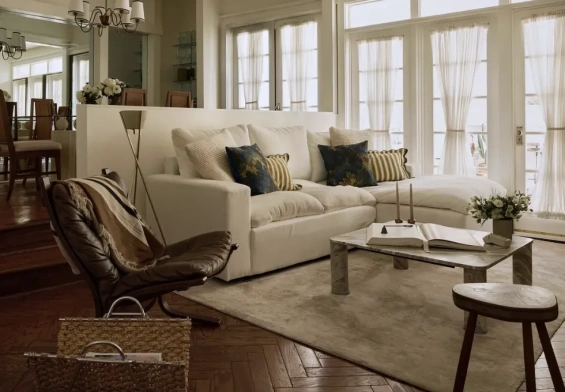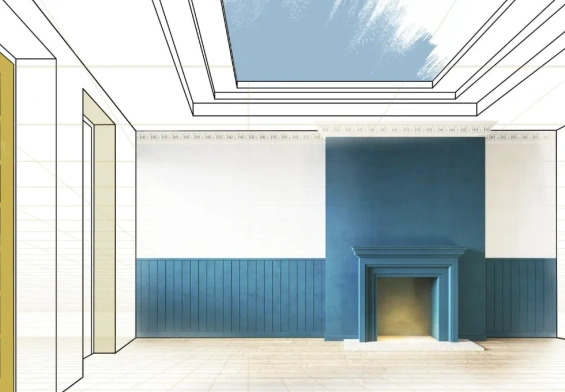

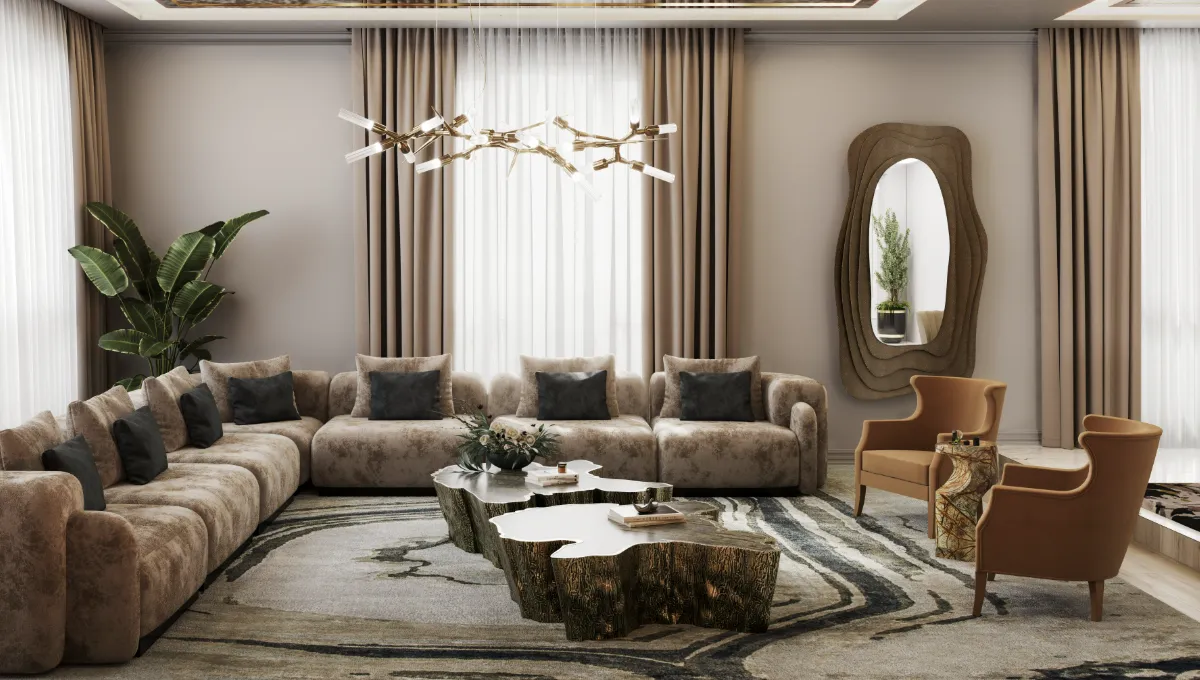
There’s a particular feeling that washes over you the moment you step into a well-designed hotel room. The lighting is warm but deliberate. The bed looks like it was made by someone who genuinely cares about geometry. Every surface is clear, every texture intentional. You exhale. Something loosens in your chest. And then, inevitably, you think: why doesn’t my house feel like this?
That question, once a fleting vacation thought, has become the driving philosophy behind one of the most pervasive shifts in residential design over the past decade. Designers, architects, and homeowners have begun borrowing heavily from the hospitality playbook, transforming private residences into spaces that echo the curated calm of a boutique hotel. The industry has a name for it now: hotelization.
But this isn’t simply about buying expensive sheets or installing a rain showerhead. The trend runs deeper than surface aesthetics. It reflects a fundamental rethinking of what a home is supposed to do for the people who live in it.
Where the Impulse Comes From
The roots of hotelization stretch back further than most people realize. For decades, the dominant philosophy of home design in America centered on accumulation. More stuff, more rooms, more square footage. The McMansion era of the late 1990s and early 2000s epitomized this: cavernous great rooms filled with oversized furniture, kitchens stocked with gadgets used once a year, garages doubling as storage units for things no one could bring themselves to discard.
Then came the cultural correction. Marie Kondo. The minimalism movement. Tiny house television. A generation raised on Instagram began to see their living spaces not as warehouses but as experiences. And where do people consistently have their most elevated spatial experiences? Hotels.
The pandemic accelerated everything. Locked inside homes that suddenly had to function as offices, schools, gyms, and sanctuaries, millions of people confronted an uncomfortable truth: their spaces weren’t designed for well-being. They were designed for storage and routine. The contrast with the last hotel stay they remembered became unbearable. People wanted that feeling back, permanently.
More Than Aesthetics: The Principles at Work
What makes a hotel room feel so different from a typical bedroom? It’s tempting to point to the obvious: the plush bedding, the absence of clutter, the mody lighting. But designers working in this space will tell you the real magic is structural.
Hotels operate on a principle of radical intentionality. Every object in the room earns its place. The nightstand isn’t just a surface; it’s positioned at the exact height for a glass of water and a phone. The closet isn’t a dumping ground; it’s a system. Lighting exists in layers, ambient and task and accent, each controlled independently so the mood shifts with the hour.
This intentionality translates into residential design through several channels. Concealed storage has become almost an obsession. Flush cabinetry with touch-latch doors. Built-in wardrobes that eliminate the need for freestanding dressers. Kitchen appliances hidden behind panel-ready facades. The goal is visual quiet, a room that doesn’t demand anything from you when you walk into it.
Bathrooms have arguably seen the most dramatic transformation. The hotel bathroom, with its frameless glass shower enclosures, floating vanities, heated floors, and carefully chosen fixtures, has become the template for residential renovations at every price point. Walk into any bathroom showroom today and you’ll find displays that look indistinguishable from a Four Seasons suite. Freestanding soaking tubs positioned as sculptural centerpieces. Backlit mirrors. Niches carved into shower walls for products, eliminating the visual chaos of bottles lined along tub edge.
Bedrooms, too, have shifted. The hotel bed, with its layered white linens and symmetrical pilow arrangement, has become so culturally dominant that entire direct-to-consumer mattress and beding companies have built their brands around replicating it. But beyond the bed itself, the hotelized bedroom strips away everything extraneous. No television perched on a dreser clutered with receipts and loose change. No exercise equipment lurking in the corner. The room becomes singular in purpose: rest.
The Role of Sensory Design
One dimension of hotelization that often goes undiscussed is its engagement with senses beyond sight. Hotels have long understood that atmosphere is multi-sensory. The signature scent pumped through a lobby. The specific sound absorption of carpeted hallways. The weight of a door as it closes behind you, that satisfying thud that signals separation from the outside world.
Homeowners pursuing the hotelized aesthetic have begun paying attention to these subtleties. Acoustic panels disguised as art. Solid-core doors replacing hollow ones. Diffusers programed to release scent at intervals. Sound systems integrated invisibly into ceilings. Even the temperature of lighting has become a point of obsession, with tunable LED systems that shift from cool daylight tones in the morning to warm amber in the evening, mimicking the circadian-aware lighting found in high-end hospitality properties.
Touch matters too. The trend toward natural materials, stone countertops with a honed rather than polished finish, linen curtains, wood with visible grain, reflects a desire for tactile richness. Hotels learned long ago that guests register quality through their fingertips as much as their eyes. A heavy faucet handle. A thick towel. A drawer that glides shut with hydraulic smoothness. These micro-moments of sensory pleasure accumulate into an overall impression of care, and homeowners want that accumulation happening in their own spaces.
The Tension Between Comfort and Life
There’s a critique worth acknowledging. A hotel room is, by definition, a space without history. No one lives there. No child has drawn on its walls. No dog has scratched its floors. Its perfection is possible precisely because it exists outside the mess of actual life.
Pursuing that aesthetic in a home where people cook, argue, raise children, and age can create a strange tension. Some designers have noted a backlash among clients who invested heavily in hotelized interiors only to find them exhausting to maintain, or worse, emotionally sterile. A home that looks like a hotel lobby can feel like one too: impressive but impersonal. Beautiful but not quite yours.
The most successful applications of hotelization seem to navigate this tension by being selective. Rather than converting an entire home into a showpiece, many homeowners focus the hotel treatment on specific zones, the primary bedroom and bathroom, a reading nook, an entryway, while allowing family spaces like kitchens and playrooms to remain looser, more lived-in, more forgiving.
There’s also a growing sophistication in how designers interpret the trend. The goal isn’t to replicate a hotel. It’s to extract the underlying principles, intentionality, sensory awareness, visual calm, and apply them in ways that still leave room for personality. A hotelized home doesn’t have to be neutral and anonymous. It can be colorful, eclectic, even maximalist, as long as every choice feels deliberate rather than accidental.
The Economics of Feeling
It’s impossible to discuss hotelization without acknowledging its commercial ecosystem. The trend has spawned entire product categories. Hotel-grade mattresses sold direct to consumers. Towel companies advertising GSM counts that once only procurement managers cared about. Lighting designers offering residential consultation packages modeled on hospitality projects. Even real estate developers have caught on, marketing new condominiums and apartment buildings with hotel-style amenities: concierge desks, curated lobbies, roftop lounges designed by the same firms that outfit luxury resorts.
This commercialization raises a question about accessibility. Much of what makes a hotel feel luxurious is simply expensive: natural stone, custom millwork, professional-grade fixtures. The democratization of the trend through affordable retailers has helped, but there remains a gap between the aspiration and the reality for many households. A $40 duvet cover from a fast-fashion home brand may photograph like a hotel bed, but it won’t feel like one after six washes.
Still, the deeper principles of hotelization, editing possessions, layering light, prioritizing sensory experience, cost nothing beyond attention. A bedroom cleared of clutter, with a single lamp casting warm light and fresh sheets pulled tight, achieves something close to the hotel feeling without a renovation budget. The trend, at its best, is less about spending and more about seeing your own space with fresh eyes.
What It Says About Us
Perhaps the most interesting thing about hotelization is what it reveals about our relationship with domesticity itself. For generations, the home was understood as a project, something you filled and maintained and expanded over a lifetime. Hotelization suggests a different framework: the home as a service. A space that performs for you rather than demands from you. A place you check into at the end of each day, where someone, even if that someone is your past self who designed it thoughtfully, has already anticipated your needs.
Whether that shift represents progress or loss depends on your perspective. There’s something undeniably appealing about a home that feels restful by design rather than by accident. There’s also something worth mourning in the move away from homes that bear the visible marks of the lives lived inside them, the scuffed baseboards, the overstuffed bookshelves, the kitchen drawer that sticks because it’s been opened ten thousand times.
Maybe the answer isn’t choosing one over the other. Maybe it’s recognizing that the hotel feeling we chase is really just a longing for intention, for spaces that reflect thought rather than default. And that longing doesn’t require a renovation. It requires a decision about what your home is for, and the willingness to let everything else go.