
There’s a moment in almost every design project residential or commercial, modest or ambitious when you stand at a crossroads that feels deceptively simple. Stone or wood? It sounds like a material question. It isn’t. It’s a question about identity, about what you want a space to say when no one is speaking.
Both materials carry centuries of human meaning. Neither is neutral. And the decision you make at this fork shapes not just the aesthetics of a room, but its emotional register, its maintenance demands, its relationship to the surrounding environment, and ultimately, how it ages alongside the people who live or work inside it.
The Weight of Stone
Stone doesn’t ask for your attention. It commands it.
Walk into a room anchored by natural stone whether it’s a honed marble countertop, a slate floor, or a rough-cut limestone fireplace surround and something in you quiets. There’s a geological authority to stone that no manufactured material has successfully replicated. It exists on a timescale that dwarfs human experience, and that fact registers somewhere beneath conscious thought.
From a purely functional standpoint, stone is among the most durable materials available for interior and exterior use. It resists moisture, fire, and heavy impact in ways that wood simply cannot. In high-traffic commercial environments, polished granite floors have outlasted multiple rounds of renovation around them. In kitchens, quartzite and soapstone surfaces endure decades of use that would leave softer materials scarred and stained.
But durability is only half the story. Stone is also unforgiving in ways that matter to designers and homeowners alike. It’s cold underfoot literally. Thermal mass means stone absorbs and holds temperature, which is a genuine asset in passive solar design but a daily discomfort in a cold climate bathroom at six in the morning. It’s heavy, requiring structural consideration before installation. And it’s expensive, both in material cost and labor, because cutting and setting stone demands skilled hands and patience.
There’s also the question of character. Natural stone is never uniform. Two slabs of the same quarry can look startlingly different, and that variation is either a feature or a flaw depending on your design philosophy. For those who prize precision and repetition, stone’s inherent unpredictability is a source of anxiety. For those who understand that a space should feel discovered rather than manufactured, it’s the whole point.
Wood and the Intelligence of Impermanence
Wood operates on a different emotional frequency entirely.
Where stone imposes, wood invites. There’s something about the grain of timber the way it records the life of the tree in visible rings and knots and color shifts that reads as fundamentally human. We evolved alongside forests. Our earliest shelters were built from them. The warmth that wood brings to a space isn’t just visual; it’s almost ancestral.
Acoustically, wood is superior to stone in most residential applications. Hard surfaces like marble and concrete create reverb and echo; wood absorbs and softens sound, making a room feel inhabited rather than institutional. This is why recording studios, concert halls, and fine dining restaurants so often feature exposed wood ceilings or paneling not purely for aesthetics, but because the material changes how sound behaves in space.
Wood is also a designer’s most flexible material. It can be stained, painted, oiled, bleached, carved, bent, layered, and reclaimed. A single species white oak, for instance can read as rustic farmhouse in wide-plank flooring, as mid-century modern in tapered furniture legs, and as contemporary minimalism in flat-panel cabinetry. Stone offers variety across species, but it cannot be transformed the way wood can.
The honest counterargument, though, is that wood requires ongoing relationship. It breathes, expanding and contracting with humidity. It scratches. It dents. In bathrooms and wet areas, unsealed wood warps and rots. Termites exist. Fires spread through timber in ways they don’t through granite. Maintenance isn’t optional it’s the cost of keeping wood beautiful over time, and some owners are simply unwilling or unable to pay that cost consistently.
There’s a certain philosophy embedded in choosing wood, then. It asks you to accept impermanence. The patina that develops on a well-used hardwood floor tells a story of children running, of furniture moved, of years accumulated. Some people find that beautiful. Others find it unsettling. Neither reaction is wrong.
When the Real Question Isn’t Either/Or
The most interesting design decisions rarely come down to a binary choice, and this one is no exception.
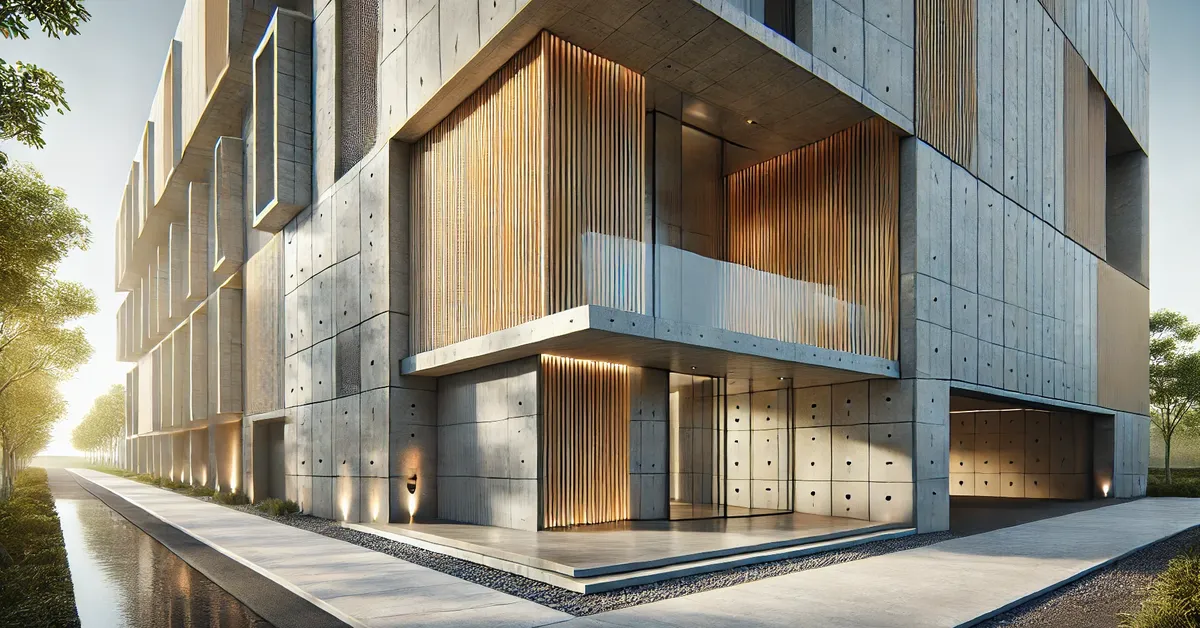
Some of the most compelling contemporary interiors use stone and wood in deliberate tension with each other not as compromise, but as conversation. A kitchen where raw concrete countertops meet warm walnut cabinetry. A bathroom where a teak vanity floats against a wall of book-matched marble. A living room where white oak floors ground a fireplace built from stacked schist. In each case, the contrast between the materials does something neither could accomplish alone: it creates visual and textural dialogue that keeps the eye moving and the mind engaged.
This approach requires restraint, though. The temptation when combining materials is to do too much to layer stone floors with stone countertops with wood paneling with wood furniture until everything cancels everything else out. The most successful mixed-material spaces tend to establish a clear dominant material and let the secondary one function as punctuation rather than prose.
Climate and geography also deserve more weight in this conversation than they typically receive. A mountain cabin in Vermont has different material logic than a beachfront house in coastal Georgia. The cabin wants the thermal mass and visual weight of stone paired with the warmth and acoustic softness of timber the classic combination for good reason. The beach house, contending with humidity, salt air, and the desire for lightness, might reach toward ipe wood decking and travertine tile, materials that handle their specific environment with more grace than alternatives would.
Regional vernacular matters too. Using locally quarried stone in a home situated in a stone-rich landscape creates a sense of belonging, of the building having grown from its site rather than been dropped onto it. The same logic applies to timber: a Pacific Northwest home clad in cedar feels rooted in a way that the same home clad in imported marble simply doesn’t.
Longevity, Legacy, and What You’re Actually Deciding
Here’s the deeper truth beneath the material debate: the choice between stone and wood is ultimately a choice about what kind of relationship you want with your space over time.
Stone says permanence. It says: this was here before you and will be here after. It asks very little of you emotionally it simply endures. For people who find comfort in constancy, in materials that don’t change or demand attention, stone offers a particular kind of peace.
Wood says presence. It says: I am alive in a way stone is not, and I will show you the years. It rewards care and attention with growing beauty, but it also shows neglect honestly. For people who want their environment to feel inhabited, layered, and organic, wood offers something stone cannot manufacture.
Neither answer is correct. But one of them is more honest about who you are and how you actually live.
The designers and homeowners who get this decision right aren’t necessarily the ones with the largest budgets or the most refined taste. They’re the ones who paused long enough to ask not just “which looks better?” but “which fits the life I’m actually living?” and then had the courage to answer truthfully.
That’s a harder question than it sounds. But it’s the one worth asking.