
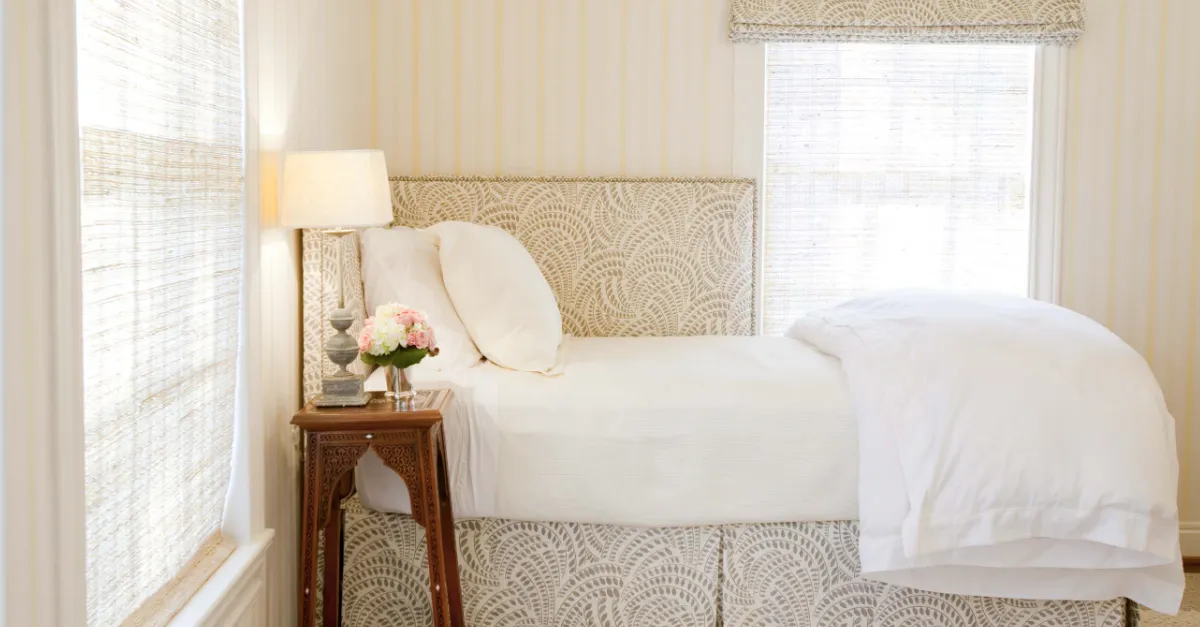
You know the one. It sits there every morning when you wake up, and every night before you close your eyes. Maybe it has a single forgotten book on the floor, or a phone charger coiled like a sleeping snake, or absolutely nothing at all just a triangle of carpet or hardwood that the rest of the room seems to have agreed to ignore. That corner next to your bed is one of the most overlooked pieces of real estate in any home, and the way you treat it says more about how you live than you might expect.
Most people don’t think about it consciously. The bed gets positioned, the nightstand goes beside it, the dreser finds its wall, and then there it is. A leftover. A remainder. The corner that didn’t get invited to the party.
But corners are interesting spaces. They’re enclosed on two sides, which gives them a natural sense of shelter. Psychologically, humans have always been drawn to corners think of how children instinctively build forts in them, how cats curl up in them, how the best seat in a restaurant is always the one with your back to the wall. That corner next to your bed isn’t dead space. It’s potential energy, waiting.
The Dumping Ground Problem
Before talking about what to put there, it’s worth being honest about what usually ends up there. Laundry that didn’t quite make it to the hamper. A gym bag from three weeks ago. A stack of books you swear you’ll read. A lamp you bought and never assembled. The corner becomes a catch-all precisely because it lacks a defined purpose and spaces without purpose tend to absorb chaos.
There’s a concept in interior design called “function follows form,” but in bedrooms, the opposite tends to be true. When a space has no assigned function, it defaults to storage for whatever you’re avoiding. The corner becomes a physical manifestation of procrastination. Giving it a clear identity even a simple one breaks that cycle almost immediately.
The Reading Nook That Actually Gets Used
One of the most satisfying transformations for a bedroom corner is turning it into a reading nook, but the key word there is “actually.” A lot of people set up a chair in a corner, add a lamp, maybe a small side table, and then never sit in it because the bed is right there and the bed is more comfortable. So the chair becomes a second dumping ground, just elevated.
The trick is specificity. A reading nook works when it’s designed around a ritual, not just an aesthetic. That means thinking about the light source a floor lamp with a warm, directional bulb positioned over your shoulder, not a harsh overhead glow. It means choosing a chair that’s comfortable for reading specifically, which is different from comfortable for lounging. A chair with a slightly higher back and good lumbar support keeps you upright enough to stay awake through chapter. A deep, sink-into-it armchair is where books go to die at page forty.
Add a small basket or low shelf within arm’s reach for your current reads, a coaster for your tea or water, and suddenly the corner has a gravitational pull of its own. You’ll find yourself drifting toward it on weekend mornings without even deciding to.
Plants and the Case for Living Things
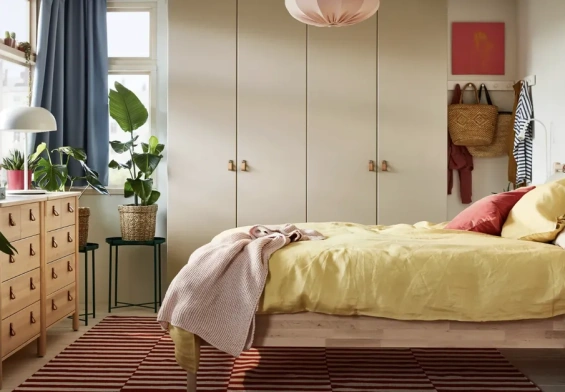
If furniture feels like too much of a commitment, plants are the most forgiving way to give a corner life. A tall floor plant a fidle leaf fig, a monstera, a snake plant if the light is low fills vertical space in a way that feels organic rather than forced. It doesn’t demand anything from you except occasional water and little attention.
There’s also something genuinely useful about having a plant near where you sleep. Beyond the well-documented air quality benefits (modest, but real), plants introduce a kind of biological rhythm into a room that tends to be static. They grow They lean toward light. They change In a bedroom that can sometimes feel like a sealed environment, that small evidence of life has a grounding effect that’s hard to quantify but easy to feel.
A corner with a single large plant and a simple woven basket at its base can look more intentional than a corner with three pieces of furniture competing for attention. Sometimes restraint is the design choice.
Lighting as Architecture
Here’s something most people don’t consider: a floor lamp placed in a corner doesn’t just illuminate the corner. It changes the entire room. Light bounced off two walls simultaneously creates a soft, diffused glow that makes a bedroom feel warmer and more dimensional than overhead lighting ever could. A corner lamp is one of the cheapest ways to make a room feel designed.
Arc floor lamps work particularly well here the arm extends out over the bed or a nearby chair, making the lamp functional rather than purely decorative. Torchiere-style lamps that direct light upward create a completely different mood, almost theatrical, good for evenings when you want the room to feel like a retreat rather than a workspace.
The point is that a lamp alone, positioned thoughtfully in that corner, can be the entire solution. You don’t need to fill the corner with objects. You need to activate it with light.
Small Furniture, Big Decisions
For corners with more square footage, a small piece of furniture can anchor the space and give it genuine utility. A few options worth considering seriously:
A low bench or storage ottoman does double duty it provides seating for putting on shoes, a surface for folding laundry before it gets put away, and if it opens up, hidden storage for extra blankets or seasonal items. It’s one of those pieces that earns its keep quietly.
A petite vanity or writing desk, if the corner is large enough, can transform a bedroom into a space that supports more than just sleep. There’s something about having a dedicated surface for getting ready or writing by hand that changes how you use your mornings. It creates a ritual anchor a place where specific kind of thinking happens. The desk doesn’t need to be large. A narrow console table with a mirror above it can serve the same function in half the footprint.
A small accent chair without a side table is underated. Just the chair, nothing else. It becomes a place to sit while you talk on the phone, a place to drape tomorrow’s outfit, a place to exist in your bedroom without being in bed. That distinction matters more than it sounds.
When the Answer Is Nothing
There’s a version of this conversation that doesn’t get talked about enough: sometimes the right thing to do with that corner is leave it alone.
Negative space in a room isn’t emptiness it’s breathing room. Bedrooms that feel genuinely restful tend to have areas where the eye can rest, where there’s no object demanding attention or suggesting a task. If your bedroom is already busy, if the walls are full and the surfaces are occupied and the floor has furniture on most of it, that empty corner might be doing more work than you realize. It’s the pause in the sentence.
This is especially true in smaller bedrooms, where every addition competes with every other addition. A corner that stays open can make a room feel larger, calmer, more like a place where your nervous system can actually downshift. The instinct to fill every space is worth questioning. Not every corner needs a solution.
The Meditation Corner That Doesn’t Feel Precious
For people who have any kind of morning or evening practice meditation, stretching, breathwork, even just five minutes of sitting quietly a dedicated corner for that practice is worth more than its square footage suggests. The research on habit formation is pretty consistent on this point: location cues matter. When a specific spot in your home becomes associated with a specific practice, showing up to that spot lowers the activation energy for the practice itself.
This doesn’t require a cushion and a singing bowl and a string of prayer flags. A single meditation cushion or a folded blanket on the floor, maybe a small candle on a low surface nearby, is enough. The corner becomes a signal. Over time, walking past it in the morning starts to feel like a gentle reminder rather than an obligation.
What makes this work in a bedroom specifically is proximity to the beginning and end of the day. The corner is there when you wake up and there when you go to sleep. It’s harder to ignore than a yoga mat rolled up in a closet.
Thinking About the Corner Differently
The real question behind all of this isn’t “what furniture should I buy” or “what plant survives low light.” It’s about what kind of mornings and evenings you want to have, and whether the physical space you inhabit is set up to support that or quietly working against it.
Rooms shape behavior. Not in a deterministic way, not in a way that overides willpower or circumstance, but in the way that a well-organized kitchen makes you more likely to cook, or a clutered desk makes it harder to think. The corner next to your bed is the last thing you see before sleep and often the first thing you register when you wake. What it holds or doesn’t hold is part of the texture of your days.
That might sound like a lot of weight to put on a triangle of floor space. But most of the things that shape how we feel at home are exactly that small.