
There’s a particular kind of frustration that comes with renting. You move into a space that’s technically yours you pay for it, you sleep in it, you cook in it but the moment you reach for a drill or start eyeing that wall with paint samples, reality sets in. The lease says no. The landlord says no. The deposit you’d very much like back says no.
The dining area tends to absorb the worst of this frustration. It’s often an afterthought in rental layouts a corner squeezed between the kitchen and the living room, lit by a single overhead fixture that flatters no one and nothing. And yet, the dining table is where life actually happens. Meals, conversations, late-night work sessions, birthday cakes with too many candles. It deserves more than beige walls and a builder-grade light fixture you can’t touch.
The good news is that “rental-friendly” no longer means “settling.” Over the past decade, the design world has quietly shifted toward solutions that are temporary by installation but permanent in impact. Here are five of them not as a checklist, but as a way of rethinking what’s actually possible within four walls you don’t own.
Swap the Light Fixture Without Touching the Wiring
Lighting is the single most transformative element in any room, and it’s also the one renters assume is completely off-limits. That assumption is worth questioning.
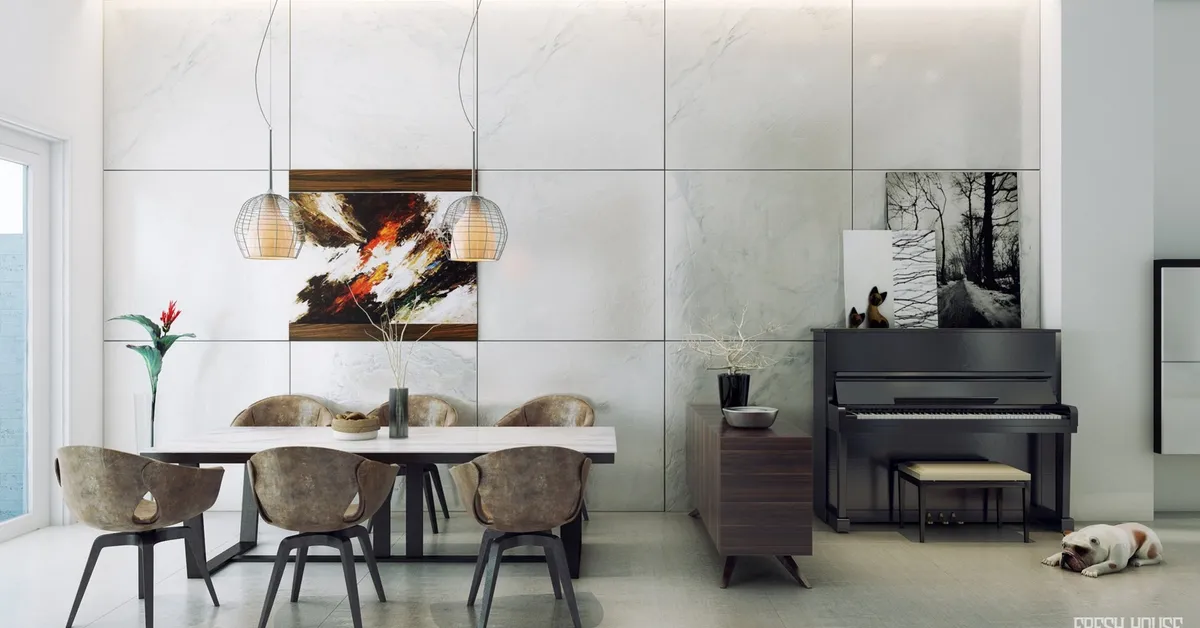
Plug-in pendant lights have evolved dramatically. What used to look like a workaround now looks intentional sculptural even. You hang the pendant from a ceiling hook (the kind that requires nothing more than a small adhesive anchor or a single screw into a stud), run the cord along the ceiling or wall in a way that reads as deliberate, and plug it into a standard outlet. The original fixture stays untouched. You’re not rewiring anything. You’re just layering.
The effect on a dining area is immediate. A pendant positioned low over the table creates intimacy. It defines the space as its own zone rather than a continuation of the kitchen. And because you’re choosing the bulb, you can finally have warm light the kind that makes food look good and faces look better. When you move out, you take the pendant with you, patch the hook hole with a dab of spackle, and the landlord never knows what they missed.
Use a Rug to Build the Room From the Ground Up
Most rental dining areas have one of two floor situations: cold tile or generic laminate. Neither invites you to linger. A rug changes that not just visually, but physically. There’s a reason people stay longer at tables that feel anchored.
The key is sizing. A rug that’s too small makes the chairs look like they’re teetering on a postage stamp. The standard guidance is to go large enough that all chair legs remain on the rug even when pulled out typically 8×10 feet for a standard four-to-six person table. This is the step most people skip because large rugs feel like a commitment. They are. They’re also the step that separates a dining area that looks designed from one that looks assembled.
Material matters more here than in other rooms. Dining areas see spills, crumbs, dragged chairs. A flatweave or low-pile rug in a pattern that can absorb visual chaos a vintage-style print, a subtle geometric will age better than something plush and light-colored. The rug goes with you when you leave. The floor underneath stays exactly as you found it.
Rethink the Walls With Temporary Wallpaper or Large-Scale Art
A single accent wall can reframe an entire room. The problem, historically, was that creating one meant paint or permanent wallpaper both lease violations in most buildings. Peel-and-stick wallpaper changed the equation.
The category has matured considerably. Early versions had a tendency to bubble, peel at the edges, or leave residue. The better products now from brands that have refined the adhesive chemistry go up cleanly, come down cleanly, and in between, look genuinely indistinguishable from traditional wallpaper. A bold botanical print or a deep-toned linen texture on the wall behind your dining table creates a backdrop that makes the whole space feel considered.
If wallpaper still feels like too much of a commitment, large-scale art does similar work. Not a gallery wall of small frames one oversized piece, hung with damage-free strips, positioned so the center lands roughly at seated eye level. The scale matters. A 24×36 print reads as décor. A 48×60 print reads as architecture. It changes the perceived proportions of the room, makes the ceiling feel higher, and gives the dining area a focal point it probably never had.
Replace or Dress the Table Itself
The table that comes with a furnished rental is almost always the same table: four legs, a surface, no personality. Even in unfurnished spaces, the table people buy quickly and cheaply to fill the gap tends to be functional at best. It becomes invisible through familiarity, which is a polite way of saying it stops contributing anything to the room.
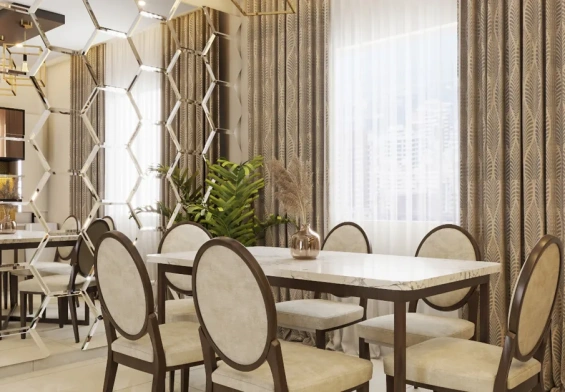
There are two directions here. If you own your table and it’s simply underwhelming, consider what’s actually wrong with it. A scratched surface can be covered with a cut piece of marble-contact paper the kind that’s repositionable and looks surprisingly convincing in photographs and in person. Chair cushions in a fabric that ties to the rest of the room’s palette can make a mismatched set feel intentional. A table runner isn’t just for holidays; a linen one left out daily adds texture without effort.
If you’re working with a furnished rental and can’t change the table at all, work around it. A tray in the center with a small plant, a candle, and a ceramic bowl creates a still-life that draws the eye before it lands on the table itself. You’re essentially art-directing the surface so that what people notice is what you’ve chosen, not what came with the apartment.
Add a Sideboard or Console to Give the Room a Second Anchor
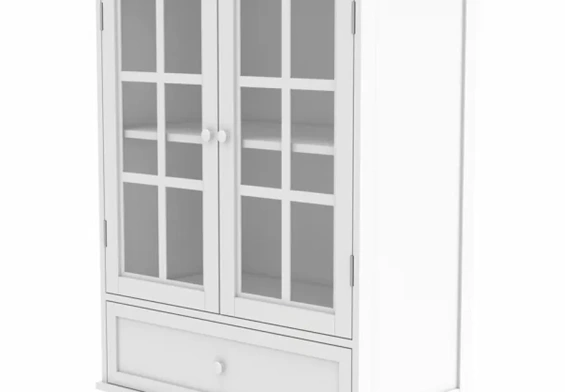
Dining areas in rentals almost never have storage. There’s the table, the chairs, and then nothing. No buffet, no credenza, no place to put the wine or the extra napkins or the serving dishes that don’t fit in the kitchen cabinets. The room feels unfinished because it is unfinished. A single piece of furniture can solve this.
A low sideboard or console table against the wall opposite or adjacent to the dining table does several things at once. It provides storage. It gives you a surface for a lamp, which adds a second light source and immediately makes the room feel warmer and more layered. And it gives the dining area a sense of bilateral weight the table on one side, the sideboard on the other that makes the space feel like a room rather than a table floating in a void.
This is also where you can express something personal. Stack cookbooks. Display a piece of pottery you bought at a market somewhere. Put up a small mirror above it to bounce light and add depth. The sideboard becomes a portrait of how you actually live, which is the thing rentals almost never allow for and the thing that makes a space feel like yours.
The dining area is where you return, day after day, to do the ordinary things that turn out to be the meaningful ones. It’s worth the effort to make it feel like it was designed for you even if, technically, it wasn’t, and even if, eventually, you’ll have to leave it exactly as you found it.