
Biophilic Design: Bringing the Outdoors in for Better Mental Health
We Were Never Meant to Live Like This
Somewhere between the fluorescent office ceiling and the sealed apartment window, something in us quietly breaks. Not dramatically no single moment you can point to. Just a slow, creeping flatness. A tiredness that sleep doesn’t fix. A restlessness that screens can’t soothe. Modern life has become extraordinarily efficient at one particular thing: cutting us off from the natural world. And we are paying for it in ways that don’t always show up on medical charts.
The average American now spends roughly 90 percent of their life indoors. Think about that number for a moment. Ninety percent. Our ancestors spent the majority of their waking hours under open sky, surrounded by moving water, shifting light, the smell of soil after rain. Evolution shaped our nervous systems around that world not around drop ceilings, climate control, and the blue glow of monitors. The mismatch is real, and it is measurable.
This is where biophilic design enters not as an aesthetic trend or an Instagram-worthy interior style, but as a genuine attempt to reconcile the built environment with the biological needs we’ve been ignoring.
What Biophilic Design Actually Means
The word itself comes from biophilia, a term popularized by biologist E.O. Wilson in 1984. His argument was elegant in its simplicity: humans have an innate, evolutionary affinity for other living systems. We are drawn to nature not because it’s pretty, but because our survival once depended on reading it the rustling of leaves that signaled wind direction, the quality of light that told us the time of day, the presence of water that meant life was possible here.
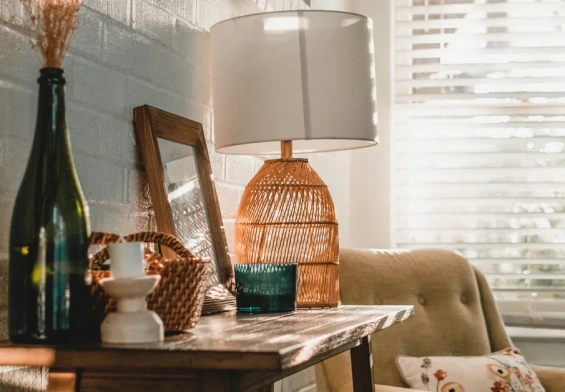
Biophilic design takes that instinct seriously. At its core, it’s the practice of integrating natural elements, patterns, and processes into the spaces where people live and work. But it goes considerably deeper than placing a potted succulent on a windowsill. Researchers in this field identify three broad categories of experience: direct contact with nature (plants, water, animals, sunlight), indirect references to nature (natural materials, organic shapes, imagery of landscapes), and what they call “space and place conditions” the way a room is arranged to mimic the spatial qualities that made natural environments feel safe or stimulating to early humans.
A high ceiling that opens upward like a forest canopy. A window positioned to catch the arc of afternoon light. A wall finished in rough stone rather than smooth drywall. These aren’t arbitrary design choices. They’re translations of something ancient into something contemporary.
The Science Behind the Calm
The mental health case for biophilic design has been building for decades, and it’s more robust than many people realize. In the early 1980s, environmental psychologist Roger Ulrich conducted a now-famous study at a Pennsylvania hospital. Patients recovering from surgery were assigned to rooms with either a window overlooking a brick wall or a window overlooking a small stand of trees. Those with the nature view recovered faster, required less pain medication, and reported better moods. The difference wasn’t marginal. It was striking enough that Ulrich spent the next thirty years trying to understand why.
Part of the answer lies in stress physiology. When humans encounter natural environments even representations of them the autonomic nervous system tends to shift. Cortisol levels drop. Heart rate slows. The prefrontal cortex, the part of the brain responsible for rumination and anxious future-planning, quiets down. Nature, it turns out, doesn’t just feel calming. It produces measurable biological changes that mirror what we’d expect from rest, safety, and recovery.
More recent research has extended this into the domain of cognitive function. A 2015 study published in the Proceedings of the National Academy of Sciences found that participants who walked through a natural environment showed reduced activity in the subgenual prefrontal cortex a region associated with repetitive negative thinking, the kind that characterizes depression and anxiety. Those who walked through an urban environment showed no such change. The city, for all its stimulation, gave the brain no real rest. Nature did.
Inside the Home: Where It Matters Most
The workplace gets most of the attention in biophilic design conversations corporations love the productivity angle but the home environment may matter more for mental health. It’s where we decompress, sleep, argue, grieve, and try to reconstitute ourselves after the demands of the day. If that space is sensory-dead, it costs us.
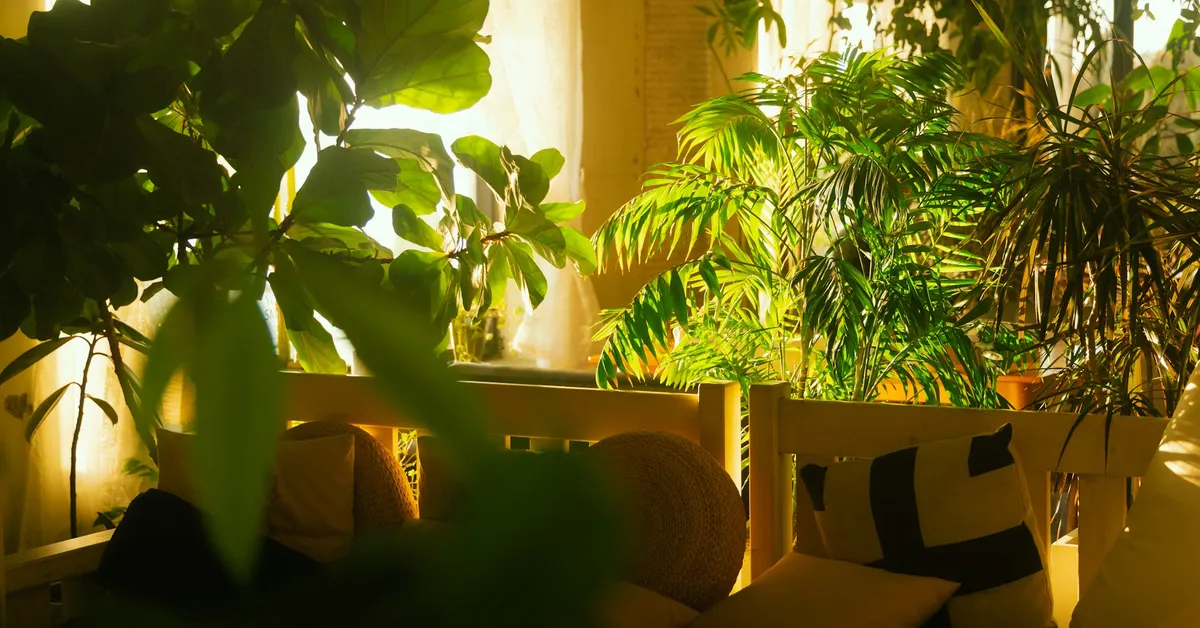
Living plants are the most obvious intervention, and the research supports their impact beyond mere aesthetics. Studies have shown that indoor plants can reduce psychological stress, lower blood pressure, and improve self-reported mood. There’s something about tending to a living thing the rhythm of watering, the satisfaction of new growth that activates a kind of attentive calm that screens fundamentally cannot replicate. Even for people who insist they kill everything they touch, low-maintenance species like pothos, snake plants, or ZZ plants offer a remarkably forgiving entry point.
Natural light is arguably more important. The human circadian system is calibrated by light specifically, by the quality and quantity of daylight across the arc of a day. Artificial lighting, even good artificial lighting, doesn’t fully substitute. Positioning furniture to maximize exposure to windows, removing heavy drapes that block morning light, or adding a skylight to a chronically dim room can have effects on mood and sleep quality that are difficult to achieve any other way. There’s a reason Seasonal Affective Disorder spikes in winter months when daylight contracts our biology is genuinely light-hungry.
Water is another element that designers increasingly take seriously. The sound of moving water a small indoor fountain, even a simple tabletop feature has been shown to reduce perceived stress and mask the irritating acoustic texture of urban environments. It’s not accidental that so many people find rain sounds soothing. That response is wired in.
Beyond Decoration: The Deeper Principle
What makes biophilic design philosophically interesting is that it refuses to accept the built environment as neutral. Every space you inhabit is doing something to you shaping your mood, your attention, your capacity for calm or anxiety. Most of the spaces we’ve built in the last century were designed around function and economy, with mental health as an afterthought, if it appeared at all. Biophilic design insists on reversing that priority.
This matters especially for people who don’t have access to parks, trails, or green urban spaces a disparity that falls heavily along economic lines. Research consistently shows that lower-income urban neighborhoods have less tree canopy, fewer green spaces, and higher rates of stress-related illness. Biophilic principles applied to public housing, community centers, and schools could address some of that gap. A classroom with living walls and ample daylight isn’t a luxury. It’s infrastructure for learning and wellbeing.
Critics sometimes dismiss biophilic design as a boutique concern something for people with the money and space to install living walls and reclaimed wood floors. That critique has real teeth when applied to high-end architectural projects. But the underlying principles scale. A window kept clean and unobstructed. A single thriving plant on a kitchen counter. A walk taken through a park rather than a parking lot. These aren’t expensive. They’re choices, informed by an understanding of what our nervous systems actually need.
What We’re Really Reaching For
There’s a particular quality of attention that nature seems to restore something researchers call “soft fascination,” the kind of effortless, undirected awareness that a moving stream or a swaying tree canopy can hold without demanding anything back. It’s the opposite of the sharp, voluntary focus that modern work requires hour after hour. The mind needs both modes, and the modern environment has almost entirely optimized for one of them.
Biophilic design, at its best, is an attempt to build the other one back in. To create spaces that give the mind permission to wander, to rest, to notice something small and beautiful without any particular purpose. A patch of afternoon sun on a wooden floor. The particular green of a plant catching window light in January. The sound of rain against glass when you’re already inside and warm.
These moments don’t solve anything, exactly. But they remind the nervous system that it is not, in fact, under threat. And in a world that has become increasingly skilled at manufacturing urgency, that reminder turns out to be one of the most necessary things a room can offer.