
There’s a particular kind of afternoon that feels almost cinematic the light going amber, a breze moving through hanging plants, the soft give of a cushioned chair beneath you, and the sense that you’ve somehow landed in a space that belongs entirely to you. That feeling doesn’t happen by accident. It’s designed, even when it looks effortless. And nowhere is that paradox more alive than in the boho-chic porch.
The porch is one of the most underestimated spaces in a home. It sits at the threshold between the private and the public, between shelter and open air. Most people treat it as an afterthought a place to leave shoes, maybe a chair or two. But when you lean into the boho-chic aesthetic, the porch becomes something else entirely: a living room that breathes, a sanctuary that doesn’t take itself too seriously, a place where beauty and comfort are the same thing.
What Boho-Chic Actually Means (and What It Doesn’t)
Before you start shopping, it helps to understand what you’re actually going for. Boho-chic is not a checklist. It’s not “buy a macramé wall hanging and call it done.” The aesthetic draws from bohemian roots the idea that beauty comes from lived experience, from travel, from collecting things that carry meaning and filters it through a modern sensibility that values comfort and visual harmony.
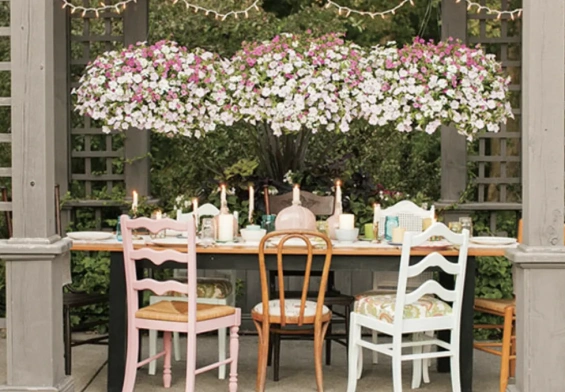
What that means in practice is layering. It means mixing materials that shouldn’t work together but somehow do: rattan next to velvet, raw wood next to embroidered cotton, teracotta next to brass. It means color palettes that feel warm and earthy dusty rose, burnt sienna, sage green, warm cream without ever feeling sterile or overly coordinated. And it means resisting the urge to make everything match.
The trap most people fall into is buying a “boho set” a curated collection of items that all come from the same place, all share the same finish, all feel like they were designed to be together. That’s the opposite of what you want. Boho-chic lives in the tension between things that were never meant to meet.
Start with the Bones: Furniture That Earns Its Place
The furniture you choose sets the entire tone, so it’s worth thinking carefully before you commit. For a porch, the goal is pieces that feel relaxed without being slopy furniture that invites you to stay longer than you planned.
Rattan and wicker are natural starting points. A rattan loveseat or a pair of wicker chairs brings that organic, handcrafted quality that’s central to the boho aesthetic. If you can find vintage pieces at an estate sale, a thrift store, a Facebook Marketplace listing from someone clearing out a grandmother’s sunroom even better. The slight imperfections, the patina of age, the sense that the piece has a history: that’s exactly what you’re after.
A hanging chair or a swing is worth considering if your porch structure can support it. There’s something about the gentle movement, the slight suspension from the ground, that makes a space feel more dreamlike. Pair it with a small side table something low, maybe a wooden spool or a hammered metal tray on legs and you’ve created a corner that feels genuinely inviting.
What you want to avoid is anything too rigid or too formal. Glass-topped tables, matching sets in uniform finishes, anything that looks like it belongs in a hotel lobby these things work against the warmth you’re building.
The Power of Textiles: Where Comfort Becomes Visual
If furniture is the skeleton of the space, textiles are the skin. And in boho-chic design, you can never really have too many of them.
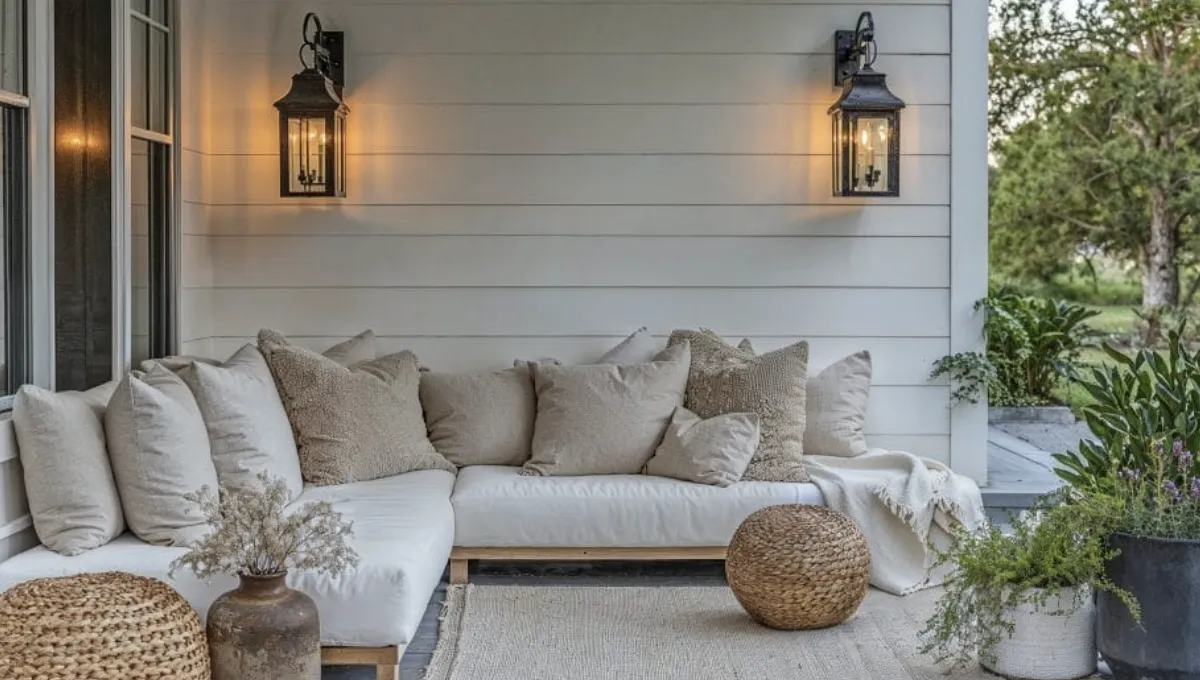
Throw pillows are the most obvious tool, and they work best when you stop trying to coordinate them perfectly. Mix patterns a geometric print next to a floral, a solid beside a stripe and vary the sizes. Lumbar pillows, oversized square pillows, small round ones: the variety creates a sense of abundance that feels genuinely cozy rather than staged.
Outdoor rugs are one of the most transformative investments you can make for a porch. A good rug something with a kilim pattern, a faded Persian-inspired print, or a simple jute weave anchors the space and makes it feel like a room rather than a transitional zone. It also softens the visual hardness of concrete or wood decking in a way that nothing else quite replicates.
Blankets draped over chair arms or folded over the back of a loveseat serve a dual purpose: they’re genuinely useful on cooler evenings, and they add texture and color in a way that feels casual and lived-in. Chunky knit throws, lightweight cotton blankets with fringe, woven wraps in warm tones any of these work. The key is that they look like they were placed there because someone actually uses them, not because a stylist arranged them for a photo shoot.
Plants: The Element That Makes Everything Feel Alive
A boho-chic porch without plants is like a sentence without a verb. Plants are not decoration in this context they’re structural. They bring movement, they bring life, they soften hard edges, and they create that layered, slightly wild quality that’s essential to the aesthetic.
Think vertically as much as horizontally. Hanging planters at different heights macramé hangers are perfect here, and they’re easy to make or find affordably create a sense of depth and dimension. Trailing plants like pothos, string of pearls, or ivy spill downward in a way that feels lush and organic. Taller plants in floor pots, like a fidle-leaf fig or a bird of paradise, anchor corners and add drama.
Teracotta pots are your best friend. They’re inexpensive, they age beautifully, and their warm reddish-brown tone works with almost every boho color palette. Mix sizes, cluster them in odd numbers, and don’t worry about keeping them perfectly arranged. A little asymetry is part of the charm.
If you’re working with a covered porch that gets limited light, lean toward shade-tolerant plants: ferns, peace lilies, snake plants, philodendrons. The goal is abundance, not perfection a porch that feels like it’s being gently reclaimed by nature.
Lighting That Changes Everything After Dark
Daytime and evening are two completely different experiences on a porch, and the right lighting is what makes the evening version magical.
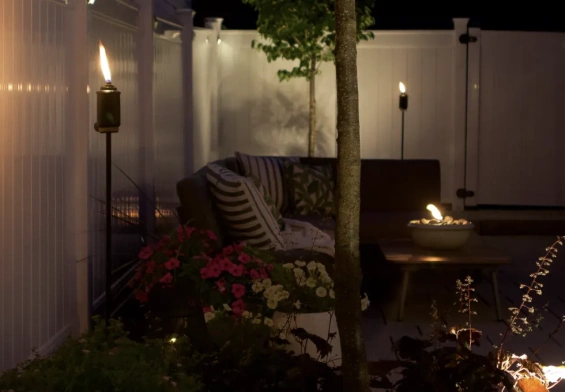
String lights are the most reliable tool in this category, and they’ve earned their reputation. Warm-toned Edison bulbs strung across the ceiling or draped along railings create an instant softness that transforms the space. The key is to avoid cool white or blue-toned bulbs they read as clinical and harsh, which is the opposite of what you want. Warm amber light is what makes people linger.
Lanterns are another layer worth adding. Morocan-style lanterns with intricate metalwork, simple glass hurricane lanterns with pilar candles, or even battery-operated candles in woven holders these create pools of warm light at lower levels, which adds intimacy and dimension. A mix of heights matters here too: some light overhead, some at table level, some near the floor.
Solar-powered options have gotten genuinely good in recent years, which makes them worth considering for areas where running an extension cord is inconvenient. The warm-toned solar string lights available now hold their charge well and produce light that’s indistinguishable from pluged-in versions.
The Collected Details: What Makes It Yours
This is where boho-chic diverges most sharply from other design aesthetics, and where most people either get it exactly right or miss the point entirely.
The details that make a boho-chic porch feel authentic are the ones that couldn’t have been bought as a set. A ceramic pot you picked up at a farmers market. A vintage mirror with a slightly tarnished frame leaning against the wall. A stack of books on a side table. A wind chime made from driftwood and shells. A small statue or figurine that means something to you. These objects don’t need to be expensive or rare they need to feel chosen, not assigned.
Macramé wall hangings, woven baskets used as planters or storage, dream catchers, beaded curtains in a doorway these are all legitimate tools, but they work best when they’re mixed with things that are more personal. The goal is a space that tells a story, even if that story is just “I like beautiful things and I’ve been paying attention.”
One practical note: outdoor spaces require some consideration for weather. Look for textiles rated for outdoor use, or be prepared to bring cushions and throws inside when rain is coming. Rattan and wicker hold up well in covered porches but can deteriorate in direct, sustained exposure to moisture. The aesthetic doesn’t require you to sacrifice durability it just requires you to be thoughtful about what goes where.
Putting It Together Without Overthinking It
The honest truth about creating a boho-chic porch is that the process matters as much as the result. This is not an aesthetic that rewards a single weekend shopping trip followed by a careful arrangement. It rewards accumulation adding things slowly, living with what you have, noticing what’s missing and what’s working.
Start with the furniture and therug, because those are the hardest things to change later. Then add plants, because they take time to grow into the space. Then layer in textiles and lighting. Then let the details arrive gradually, the way they would if you were actually living a life that collected beautiful things.
The porches that feel most genuinely cozy and alive are the ones where you can tell someone actually sits there. Where the cushions are slightly worn. Where the plants have grown past their original shape. Where there’s a half-read book on the side table and a candle that’s been burned down to the middle.
That’s the thing about the boho-chic aesthetic at its best it’s not really about design at all. It’s about making a place where you actually want to be. The rest follows naturally.