
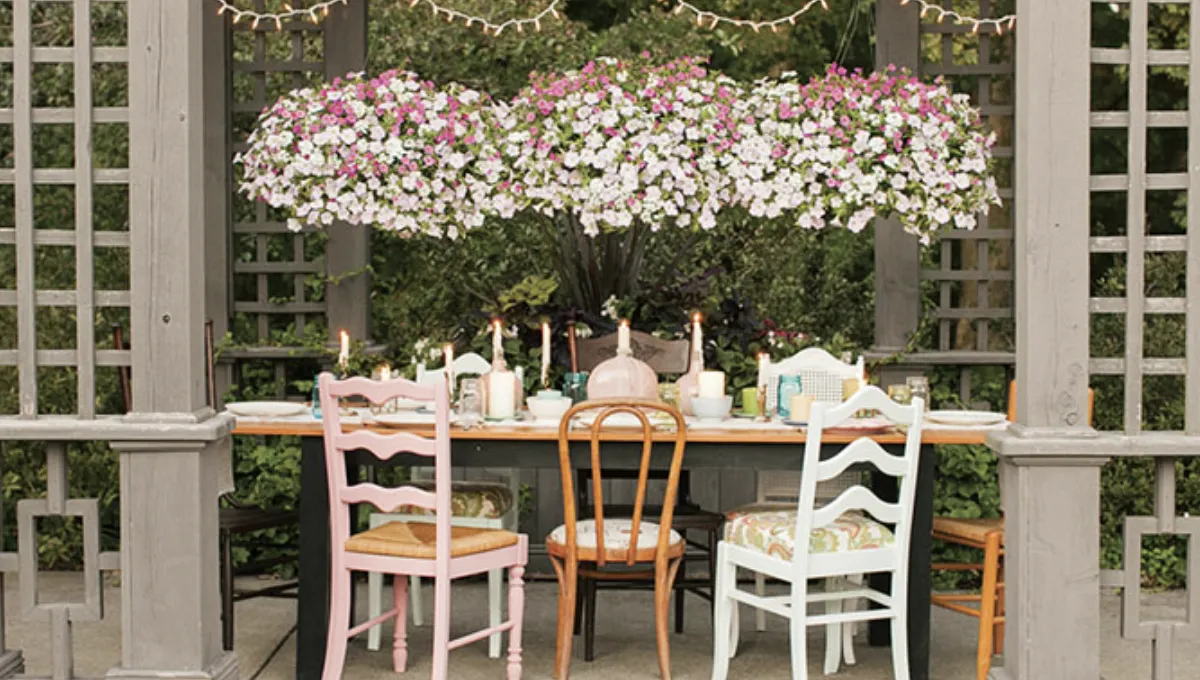
There’s a particular kind of outdoor space that stops you mid-scroll. A patio with mismatched chairs that somehow feel intentional. A front porch where a weathered ceramic pot sits next to a lantern that clearly came from somewhere other than a big-box store. You can’t always name what makes it work, but you know it when you see it.
Then there’s the other kind the yard that looks like a storage unit exploded. Plastic chairs in three different colors, a cracked birdbath, a wind chime that’s seen better decades. Also thrifted, probably. The difference between the two isn’t budget. It’s judgment.
Thrifting for outdoor decor is one of the most rewarding things you can do for your exterior spaces, but it requires a different set of instincts than shopping for indoor pieces. The outdoors is unforgiving weather, scale, and context all conspire to expose bad decisions faster than any living room ever would.
Start With a Color Anchor, Not a Wishlist
Most people walk into a thrift store with a vague idea of what they want “something for the patio” and walk out with a collection of things that don’t speak to each other. The fix isn’t to be more specific about objects. It’s to be more specific about color.
Pick two or three colors that will anchor your outdoor space. Maybe it’s terracotta, cream, and black. Maybe it’s sage green, rust, and natural wood tones. Write them on your phone. When you’re standing in front of a shelf of mismatched ceramics or a rack of outdoor cushions, that list is your filter. If something doesn’t fit the palette, it doesn’t come home no matter how interesting it is on its own.
This sounds restrictive, but it’s actually liberating. It removes the decision fatigue and gives you a framework that makes even disparate thrifted pieces look curated rather than collected.
Condition Is Non-Negotiable, Style Is Flexible
Here’s the thing about outdoor decor: style can be changed. Color can be changed. Even texture can be changed with the right prep and paint. What cannot be changed or at least, not easily is structural integrity.
A wrought iron bistro table with peeling paint? That’s a Saturday afternoon project. A wrought iron bistro table with a wobbly leg and rust eating through the metal? That’s a liability. A ceramic planter with a hairline crack will not survive a freeze-thaw cycle. A wooden bench with soft, punky wood at the joints will collapse under weight.
Train yourself to check for these things before you fall in love with a piece. Run your hand along joints. Press gently on wood to test for softness. Look at the underside of things. Flip cushions over. The surface condition of a thrifted piece is almost irrelevant it’s the bones that matter.
What Actually Thrifts Well Outdoors
Not everything belongs outside, and not everything thrifts equally well for exterior use. Some categories are almost always worth picking up when you find them in good condition.
Ceramic and terracotta planters are the holy grail of outdoor thrifting. They’re heavy, they’re durable, and they develop a patina over time that makes them look more expensive, not less. A collection of mismatched teracotta pots in varying sizes, grouped together, looks like something from a Tuscan courtyard. The same pots scattered randomly look like a garage sale.
Metal lanterns and candleholders translate beautifully outdoors. Even if they’re a little tarnished or have some surface rust, a coat of spray paint in matte black or bronze makes them look intentional. They add height and warmth to a space in a way that plastic alternatives never quite manage.
Solid wood furniture benches, side tables, Adirondack chairs is worth the effort if the structure is sound. Sand it down, seal it properly, and you have a piece that will outlast anything from a discount patio set. The key word is solid. Particleboard and MDF have no business being outside.
Concrete and stone pieces garden statues, stepping stones, birdbaths are almost impossible to ruin. They’re meant to weather. A mossy concrete urn that looks neglected in a thrift store looks intentional and romantic in a garden bed.
The Pieces That Will Betray You
Plastic furniture is almost always a trap. It’s lightweight, it fades unevenly, and it carries a visual cheapness that no amount of styling can fully overcome. There are exceptions some vintage resin pieces have a solidity and design quality that modern plastic lacks but as a general rule, if it’s hollow and it flexes when you press on it, leave it.
Fabric items require serious scrutiny. Outdoor cushions from a thrift store might look fine on the shelf, but check for mildew smell, check for foam that’s compressed and won’t spring back, check for fabric that’s already UV-faded to that particular washed-out gray. Outdoor fabric is expensive for a reason it’s engineered to resist moisture and UV degradation. Once it’s compromised, no amount of washing brings it back.
Anything with a lot of small parts or moving pieces wind chimes with missing elements, string lights with broken sockets, decorative fountains tends to be more trouble than it’s worth unless you can verify everything functions before you buy.
Paint Is Your Most Powerful Tool
If there’s one skill that separates a thrifter who creates beautiful outdoor spaces from one who creates cluttered ones, it’s knowing how to use spray paint. Not in a slap-it-on-and-hope-for-the-best way, but with intention.
A coat of matte black unifies a collection of mismatched metal pieces into a cohesive set. Chalk paint in a single color can make three different ceramic pots look like they were purchased together. A whitewashed finish on a thrifted bench can shift it from dated to coastal-casual in an afternoon.
The rules are simple: clean the surface thoroughly, use a primer appropriate for the material, and choose a finish formulated for outdoor use. Rust-Oleum makes spray paints specifically designed for outdoor metal. Chalk paint needs a sealer outdoors. These aren’t optional steps they’re what separates a transformation from a temporary fix that pels by October.
Scale and Proportion Outdoors Are Different
One of the most common mistakes in outdoor decorating thrifted or not is underscaling. What looks substantial in a thrift store can look tiny and lost in an outdoor space. A small ceramic pot that would be charming on a windowsill disappears against a fence. A side table that seems perfectly sized indoors looks like a dollhouse piece next to a full-sized outdoor sofa.
When you’re thrifting for outdoor use, think bigger than you think you need to. A large ceramic urn, even if it’s not perfect, commands presence. A cluster of medium-sized planters reads better than a scattering of small ones. Outdoor spaces have a way of swallowing things whole.
Height matters too. Flat, low arrangements get lost. Look for pieces that add vertical interest tall planters, lanterns on stands, trellises, wall-mounted pieces. These are often overlooked at thrift stores because they’re awkward to display on shelves, which means they’re frequently underpriced.
The Art of Mixing Thrifted With New
The goal isn’t to furnish your entire outdoor space from thrift stores. The goal is to create a space that looks considered, where every piece earns its place. Sometimes that means anchoring the space with one or two new, quality pieces and filling in around them with thrifted finds.
A new outdoor rug in a strong pattern or color can tie together a collection of thrifted furniture that might otherwise look random. New throw pillows in a cohesive fabric can elevate a thrifted bench or chair. A new string of quality outdoor lights can make the whole space feel intentional in a way that no amount of thrifted accessories can replicate on their own.
Think of the new pieces as the grammar of the space they set the rules. The thrifted pieces are the vocabulary they give it personality and depth.
Curation Is the Whole Game
The outdoor spaces that look effortlessly stylish, the ones that make you stop and stare, are almost never the result of buying everything at once from the same place. They’re built over time, piece by piece, by someone who knows what they’re looking for and has the patience to wait for it.
Thrifting rewards that patience. It rewards the person who walks past a hundred mediocre finds to pick up the one piece that’s exactly right. It rewards the person who can see past surface grime to the good bones underneath, and who knows the difference between a piece that needs work and a piece that’s simply worn out.
The line between a thrifted outdoor space that looks curated and one that looks like a yard sale isn’t really about money or luck. It’s about restraint. It’s about being willing to leave things behind. It’s about understanding that an outdoor space with five well-chosen pieces will always outperform one with twenty indifferent ones.
The best thrifters aren’t the ones who find the most. They’re the ones who know when to stop.