
There’s a particular kind of outdoor space that stops you mid-step. Not because it’s expensive, not because it’s sprawling, but because it feels considered. Every surface seems to belong. The rough and the smooth coexist without apology. That quality that sense of intentional depth almost always comes down to texture.
Layering textures outdoors is one of those design principles that sounds deceptively simple until you’re standing in a garden center holding a jute rug in one hand and a teak side table in the other, wondering if they’ll fight each other or find common ground. The answer, almost always, is that they will if you understand the logic underneath the aesthetic.
Why Outdoor Texture Layering Is Different from Indoors
Inside a home, texture operates in a controlled environment. Light is predictable. Scale is fixed. The elements don’t interfere. Outdoors, you’re working with a living canvas that shifts with the seasons, the hour of day, and the weather. Morning light rakes across a woven rattan chair differently than afternoon sun does. A linen throw that looks effortlessly casual on a dry summer evening turns limp and heavy after a night of humidity.
This means outdoor texture layering requires a different kind of thinking. You’re not just curating surfaces you’re curating how those surfaces behave over time, under pressure, in real conditions. The materials need to earn their place not just visually but physically.
That’s actually the first thing most design guides skip over: durability isn’t separate from aesthetics. It’s part of it. A beautiful outdoor rug that pills and fades after one season doesn’t just look bad it disrupts the entire layered composition you built around it. So when we talk about texture, we’re always talking about texture that lasts.
Start with the Ground Beneath You
Every layered outdoor space begins at the floor. This is your foundation texture, and it sets the tonal register for everything above it.
Concrete pavers have a cool, industrial flatness that reads as a neutral base they don’t compete, which makes them ideal for layering more expressive textures on top. Irregular flagstone, by contrast, already carries visual weight. Its natural variation in color and surface means you’ll want to balance it with smoother, quieter elements rather than pile on more complexity.
Gravel is underrated. A fine pea gravel or decomposed granite underfoot creates a soft, matte texture that absorbs light rather than reflecting it, giving the whole space a quieter, more grounded feel. Pair it with heavy wooden furniture and you get something that feels almost Japanese in its restraint.
Decking whether natural hardwood or composite introduces linearity. Those parallel lines create a directional pull that can either anchor a space or make it feel narrow, depending on how you orient them. Running boards perpendicular to the house tends to draw the eye outward, which opens the space up before you’ve added a single piece of furniture.
The point isn’t to choose the “right” ground material in isolation. It’s to choose one that gives you room to build.
The Middle Layer: Furniture as Texture
Furniture is where most people think the design work happens, and they’re not wrong but they’re also not entirely right. The mistake is treating furniture as the destination rather than the middle of a journey.
Teak and eucalyptus have a warm, tight grain that reads as refined even when left unfinished. Over time, they silver into a driftwood gray that adds a whole new textural dimension without any intervention on your part. Wrought iron is dense and matte, with a visual weight that anchors a space. Wicker and rattan are open and airy, their woven structure creating shadow patterns that shift throughout the day.
What you’re looking for in this layer is contrast with your foundation. If your ground is smooth and flat polished concrete, for instance furniture with visible grain or weave will create the tension that makes a space feel alive. If your ground is already complex, like irregular stone, furniture with cleaner lines and smoother surfaces will give the eye somewhere to rest.
One thing worth noting: the height of your furniture affects how texture reads. Low seating brings texture closer to the ground plane, which can make a space feel more intimate and cohesive. Higher pieces bar stools, tall planters, a standing fire table create vertical texture, which draws the eye upward and makes the space feel taller and more dynamic.
Soft Goods: Where the Layering Gets Personal
This is the layer most people either overdo or underdo. Cushions, throws, outdoor rugs, and pillows are where a space stops looking like a showroom and starts looking like somewhere a person actually lives.
The key principle here is contrast of hand meaning the tactile quality of the material. If your furniture is smooth and hard, introduce something with give: a chunky-knit outdoor throw, a pillow in a nubby linen-look fabric, a rug with a low pile that still has visible texture. If your furniture is already woven or textured, go softer and flatter with your soft goods to avoid visual noise.
Outdoor rugs deserve more credit than they typically get. A well-chosen rug does three things at once: it defines the seating zone, it introduces a new texture underfoot, and it creates a visual anchor that ties the furniture grouping together. The material matters enormously here. Polypropylene rugs have come a long way the best ones now mimic the look of natural fiber without the maintenance headaches. A flatweave in a warm neutral reads as casual and relaxed. A low-pile geometric adds structure without formality.
Throws are the most forgiving element in the outdoor texture stack. They can be moved, swapped, layered over each other. A cotton-blend throw draped over the arm of a teak chair introduces softness against hardness, warmth against cool grain. In cooler months, layering two throws of different weights one lighter, one heavier creates that effortlessly lived-in quality that’s almost impossible to fake.
Plants as Textural Architecture
Here’s where outdoor layering diverges most sharply from interior design: you have access to living texture. And most people use it too timidly.
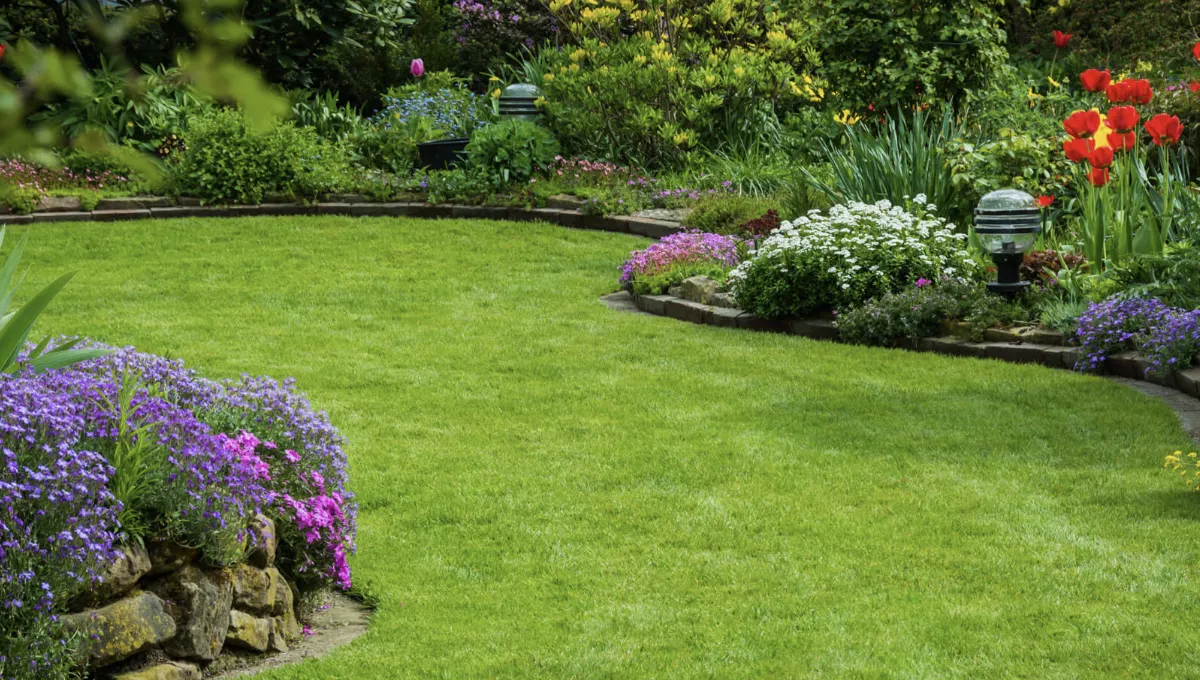
Plants aren’t just decoration. They’re structural elements with their own surface qualities. The broad, waxy leaves of a bird of paradise create a bold, graphic texture that reads from across the yard. Ornamental grasses move in the wind, introducing kinetic texture something no fabric or stone can replicate. Succulents cluster into geometric rosettes that feel almost sculptural. Moss, when used intentionally on a stone wall or between pavers, adds a softness that blurs the line between built and natural.
The most effective approach is to think of plants in terms of leaf scale and surface quality, not just color or height. Large, smooth leaves contrast beautifully with fine, feathery foliage. Glossy surfaces catch light differently than matte ones. A single large-leafed tropical plant next to a cluster of fine-textured ornamental grass creates a textural dialogue that no amount of cushions can replicate.
Planters themselves are part of this equation. A rough terracotta pot against a smooth concrete wall. A glazed ceramic planter on a weathered wood deck. The container and the plant together form a textural unit, and that unit needs to be considered in relation to everything around it.
The Discipline of Restraint
There’s a version of texture layering that goes wrong, and it looks like a catalog exploded in your backyard. Too many competing surfaces, too many patterns, too many materials fighting for attention. The space feels busy rather than rich.
The difference between a layered space and a cluttered one usually comes down to a single principle: let one texture dominate, and let the others support it.
If your dominant texture is the rough-hewn stone of a feature wall, everything else should be quieter. Smooth furniture, simple soft goods, plants with clean lines. The stone gets to be the star. If your dominant texture is a bold woven rug, the furniture around it should be relatively simple clean-lined teak or powder-coated metal so the rug can hold the floor without competition.
This doesn’t mean everything needs to match. It means everything needs to know its role. Some elements lead. Others follow. The spaces that feel most designed are the ones where that hierarchy is clear, even if you can’t immediately articulate why.
Light Changes Everything
No discussion of outdoor texture is complete without acknowledging what light does to it. Texture is, in a very literal sense, the play of light and shadow across a surface. A smooth surface reflects light evenly and reads as flat. A rough or woven surface catches light at different angles, creating micro-shadows that give it visual depth.
This means the same outdoor space can feel completely different at different times of day. The rattan chair that looks warm and golden in late afternoon light might look flat and dull under midday sun. The rough stone wall that seems almost two-dimensional at noon comes alive at dusk when low-angle light rakes across its surface.
Designing with this in mind means thinking about where your primary light sources are both natural and artificial. String lights hung overhead wash everything in warm, diffused light that softens hard textures and makes soft ones glow. A directional spotlight aimed at a textured wall creates drama. Candles at table height create intimacy, their flickering light animating every surface within reach.
The outdoor spaces that feel truly designed aren’t just composed for how they look in photographs. They’re composed for how they feel at 7pm on a Tuesday, when the light is low and the air has cooled and someone is sitting in that woven chair with a drink in their hand, not thinking about texture at all just feeling, without quite knowing why, that they don’t want to be anywhere else.