

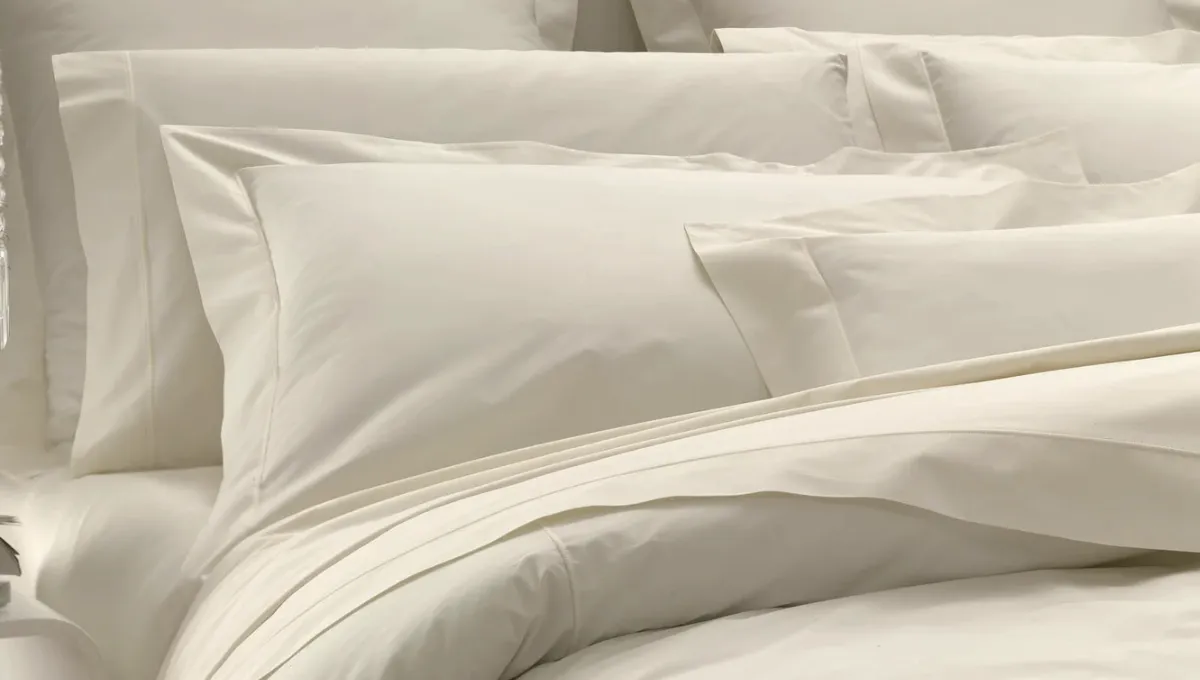
There’s a particular kind of envy that hits when you slide into a hotel bed in Milan or Florence that cool, almost weightless sensation of sheets that feel like they were made specifically for your body. Italian linen has a reputation that borders on mythology. Brands like Frette and Pratesi charge hundreds, sometimes thousands, of dollars for a single set. And yet, the gap between what those sheets actually are and what a $40 set from a big-box store can become is smaller than most people think. It’s not entirely about the fabric. It’s about understanding what luxury bedding actually does and then reverse-engineering it on a budget.
The Thread Count Lie You’ve Been Sold
Walk into any linen department and you’ll see thread count plastered across every package like it’s the only number that matters. 400. 600. 1000. The implication is clear: higher is better. But this is one of the most persistent myths in home goods marketing.
Thread count refers to the number of threads woven into one square inch of fabric. Beyond around 400, manufacturers start using multi-ply threads essentially twisting two or threeinner threads together and counting each strand separately. The result is a denser, heavier sheet that often feels stiff and traps heat. Real Italian linen, by contrast, tends to hover between 200 and 300 thread count. What makes it feel extraordinary isn’t density it’s the quality of the individual fibers and the looseness of the weave.
When shopping on a budget, look for percale weave over sateen. Percale has a one-over-one-under construction that creates a crisp, matte finish with natural breathability. It’s the weave used in most European luxury linens. Sateen, with its silky sheen, looks impressive on the shelf but pills faster and tends to feel clammy in warmer months. A 200-thread-count percale cotton sheet, washed correctly, will outlast and outperform a 600-thread-count sateen every time.
The Wash Cycle Is Where the Magic Happens
New cheap sheets feel cheap for a reason: they’re stiff with sizing a chemical starch applied during manufacturing to make them look crisp and full on store shelves. That cardboard-like texture isn’t the fabric’s true character. It’s a costume.
Before you ever sleep on a new set, wash it twice. The first wash strips the sizing. The second wash begins the softening process. Use a gentle detergent, cold water, and skip the fabric softener entirely. This sounds counterintuitive, but fabric softener coats fibers with a waxy residue that initially feels soft but gradually degrades the fabric and reduces breathability. Over time, it makes sheets feel greasy rather than smooth.
What actually softens cotton is friction and heat in moderation. A medium-heat dryer cycle with two or three clean tennis balls or wool dryer balls creates mechanical agitation that loosens the weave and flufs the fibers. After five or six washes, even a modest cotton sheet begins to develop that broken-in softness that Italian linen is famous for. The Italians didn’t invent magic fabric. They just understood that good linen improves with age and washing.
For an accelerated version of this process, add half a cup of white vinegar to the rinse cycle. Vinegar is mildly acidic and dissolves mineral buildup from hard water, which is one of the main reasons sheets feel scratchy over time. It also acts as a natural fabric softener without the residue. Your sheets won’t smell like a salad the scent disappears completely in the dryer.
Ironing Is Not Optional (But It Doesn’t Have to Be Painful)
This is the step most people skip, and it’s the single biggest visual difference between a bed that looks expensive and one that doesn’t. Wrinkled sheets, no matter how soft they feel, read as cheap. Smooth, lightly pressed sheets read as intentional and refined.
You don’t need to iron everything. Focus on the top sheet, the pillowcases, and the duvet cover specifically the top third that folds back and faces the room. Iron these while they’re still slightly damp from the dryer. A steam iron on a cotton setting takes about four minutes per pillowcase. The result is a surface that catches light evenly and has that quiet, composed look you see in high-end hotel photography.
If ironing feels like too much, a handheld garment steamer is a faster alternative. Run it over the made bed after tucking everything in. It won’t give you the same crisp finish as an iron, but it removes the worst wrinkles in under two minutes and makes a significant difference.
Layering Like a European Hotel
Italian luxury bedding rarely relies on a single statement piece. The look is built through layering multiple textures and weights that create visual depth and sense of considered abundance. You can replicate this without spending much.
Start with a fitted sheet and a flat sheet in the same color family. White or warm ivory is the classic choice because it photographs well, reads as clean, and allows other elements to stand out. Then add a lightweight cotton blanket or waffle-weave throw folded at the foot of the bed. This creates a visual anchor and adds a layer of texture that breaks up the flatness of a single duvet.
The duvet itself should be slightly oversized for your mattress. A queen duvet on a full bed, or a king duvet on a queen, creates that generous, cascading drape that makes hotel beds look so inviting. Cheap duvets often look flat because they’re under-filled. If yours lacksoft, run it through the dryer withyer balls for twenty minutes before making the bed it redistributes the fill and restores volume.
The Pilow Arrangement Nobody Talks About
Pillows are where budget beds most visibly betray themselves. Two flat, mishapen pillows propped against a headboard look sad regardless of what’s covering them. The fix is partly about quantity and partly about structure.
Use more pillows than you think you need. A standard queen bed benefits from four sleeping pillows (two person) plus two Euro shams behind them. Euro shams are the large square pillows that create a backdrop they’re common in European hotel styling and immediately elevate the visual weight of a bed. You can find Euro pilow inserts cheaply; the covers are what matter aesthetically.
Keep the inserts firm and full. A pilow that’s lost its shape should be replaced or supplemented with an insert one size up from the cover. The goal is pillows that hold their form when stacked, not ones that slump sideways like they’ve given up.
Scent and the Sensory Illusion
Luxury bedding isn’t just a visual or tactile experience it’s olfactory. High-end Italian linen brands often have a signature scent, something clean and faintly botanical that you notice the moment you pull back the covers. This is easier to replicate than it sounds.
A linen spray made with distilled water, a small amount of witch hazel, and a few drops of lavender or bergamot essential oil costs almost nothing to make and lasts for weeks. Mist it lightly over your made bed from about eighteen inches away. Don’t saturate the goal is a whisper of scent, not a perfume counter. This single detail changes the entire sensory experience of getting into bed and is something most people never think to do.
Alternatively, store your clean sheets with a sachet of dried lavender or cedar. The scent transfers subtly during storage and lingers without being overwhelming.
Color and Pattern Restraint
One of the quieter reasons Italian linen looks expensive is what it doesn’t do. It doesn’t shout. The palette is almost always neutral white, ecru, pale grey, dusty blue. Patterns, when they appear, are subtle: a thin stripe, a tone-on-tone texture, a simple embroidered border.
Cheap beding often tries to compensate for its quality with visual noise bold prints, high-contrast patterns, synthetic sheen. Resist this. When shopping on a budget, choose the most boring option on the shelf. Solid white percale cotton will always look more expensive than a printed microfiber set at twice the price. Restraint is the aesthetic signature of luxury, and it costs nothing.
The bed you sleep in shapes the quality of your rest in ways that go beyond comfort. There’s something about lying down in a space that feels considered where the sheets are smooth, the layers are balanced, and the scent is clean that signals to your nervous system that this is a place worth slowing down in. You don’t need to spend a thousand dollars to create that feeling. You need to understand what the feeling is actually made of.