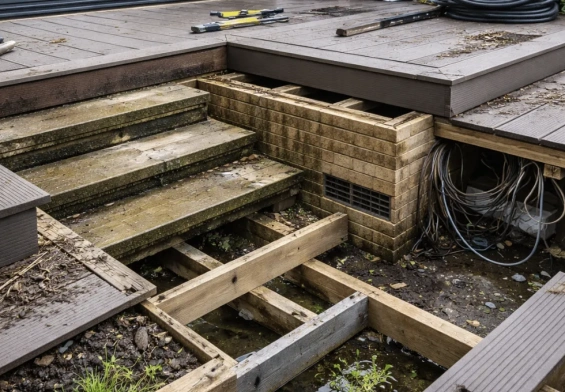


There’s a particular kind of frustration that comes with a shaded porch. You built it or inherited it for exactly the right reasons: relief from the afternoon sun, a cool place to drink coffee in the morning, somewhere the dog can nap without overheating. And then, usually sometime in late spring or after a stretch of rainy weeks, you notice it. A gray-green smear along the baseboard. A black bloom spreading across the corner of the ceiling. That faintly musty smell that hits you before you even open the screen door.
Mold and mildew on a shaded porch aren’t just cosmetic problems. Left alone, they degrade wood, stain concrete, eat through grout, and eventually make the space genuinely unpleasant to use. The shade that makes your porch livable in July is also the reason moisture lingers there long after it’s evaporated everywhere else. Understanding that tension between comfort and vulnerability is where prevention actually begins.
Why Shade Creates the Perfect Conditions
Mold is not complicated. It needs three things: moisture, organic material to feed on, and temperatures above roughly 40°F. Sunlight is one of nature’s most effective mold deterents because UV rays break down spores and, more practically, because direct sun dries surfaces fast. A shaded porch denies you that natural reset.
After rain, a sun-exposed deck might dry completely within an hour or two. A shaded porch can stay damp for the better part of a day sometimes longer if there’s no wind. That extended moisture window is all mold needs. Spores, which are present in virtually every outdoor environment, land on your porch constantly. Most of the time they don’t take hold. But give them a damp surface and a few days of warmth, and the math shifts in their favor.
Mildew which is technically a surface-level form of mold, usually white or gray and powdery tends to show up first. It’s easier to clean and less structurally damaging, but it’s a reliable early warning sign that conditions on your porch are favorable for something worse.
Airflow Is the Variable Most People Ignore
Walk out to your porch and stand still for a moment. Is there a breeze? Does air move through the space, or does it feel stagnant? Stagnant air is almost as problematic as standing water when it comes to mold prevention. Moving air accelerates evaporation, disrupts the humid microclimate thatold thrives in, and keeps surface temperatures slightly higher all of which work against fungal growth.
If your porch is enclosed or semi-enclosed, a ceiling fan makes a meaningful difference. Not just for comfort, but as a genuine moisture management tool. Run it even when you’re not out there, especially after rain or on humid mornings. The goal isn’t to create a wind tunnel it’s to keep air cycling rather than sitting.
For open porches where a ceiling fan isn’t practical, think about what’s blocking natural airflow. Dense plantings right up against the railing, lattice panels with no gaps, furniture pushed flush against walls all of these can create dead zones where moisture accumulates. Sometimes the fix is as simple as pulling a planter a few feet away from the structure or leaving a gap between furniture and the wall.
The Surface Beneath Your Feet
Porch floring takes the most abuse. It’s where water pools, where organic debris collects, and where mold typically establishes its first real foothold. The material matters, but so does how it’s maintained.
Wood decking especially older, untreated wood is highly susceptible. The grain provides texture for spores to grip, and wood is literally food for mold. If you have a wood porch floor, a penetrating sealant applied every one to two years is not optional; it’s the difference between a surface that sheds moisture and one that absorbs it. Look for sealants with mildewcide additives. They’re widely available and add meaningful protection without changing the look of the wood.
Composite decking is more resistant but not immune. The surface can still harbor mold in the groves between boards, particularly if debris accumulates there. A stiff brush and a diluted cleaning solution a couple of times a season keeps those channels clear.
Concrete and tile porches have their own vulnerabilities. Concrete is porous, and unsealed concrete wicks moisture from below as well as above. A concrete sealer the kind used for driveways and patios dramatically reduces this. Tile grout is the weak point on tiled surfaces; it’s porous, often textured, and sits in the low spots where water collects. Grout sealer is inexpensive and worth applying annually.
Cleaning as Prevention, Not Reaction
Most people clean their porch when they see mold. The more effective approach is cleaning on a schedule that prevents mold from establishing in the first place.
A diluted solution of white vinegar and water roughly one part vinegar to three parts water is effective against mildew and safe for most porch surfaces. It’s not as aggressive as bleach, which means it won’t damage wood finishes or discolor grout, and it’s genuinely antifungal rather than just cosmetically cleaning the surface. Spray it on, let it sit for ten minutes, scrub with a brush, and rinse. Done monthly during warm, humid months, this routine interrupts the mold cycle before it gets started.
For more established growth, a solution of one cup of bleach per gallon of water is more effective, but use it carefully on wood it can lighten finishes and, over time, degrade the wood fibers. On concrete, brick, and tile, it’s excellent.
Leaf litter, dirt, and organic debris are worth sweping off the porch floor more often than feels necessary. Decomposing leaves are essentially a mold buffet. They hold moisture, provide nutrients, and create the kind of dark, damp microenvironment where spores thrive. A quick sweep every few days during fall, and after any significant wind event, removes the food source before it becomes a problem.
Plants, Furniture, and the Things You Bring Onto the Porch
Potted plants are a complicated subject. They add life to a porch and are worth keeping, but they contribute meaningfully to moisture levels. Overwatered pots, saucers that collect standing water, and soil that stays perpetually damp all raise the humidity in the immediate area. Water plants in the morning so excess moisture has time to evaporate. Empty saucers after watering. Consider elevating pots slightly off the floor to allow air circulation underneath.
Outdoor rugs are one of the most common mold vectors on porches, and they’re almost never treated as such. A rug that gets rained on and sits flat against the floor traps moisture underneath for days. If you use outdoor rugs and they do make a porch feel more finished and comfortable lift them periodically to let the floor beneath dry out. After heavy rain, prop them up against the railing to dry on both sides. Rugs made from polypropylene dry faster than natural fiber options and are worth the trade-off in mold-prone environments.
Cushions and upholstered furniture deserve the same attention. Outdoor fabrics have improved dramatically, and most modern patio cushions are made with quick-dry foam and mold-resistant fabric. But “resistant” is not “immune.” Store cushions inside or in a deck box when rain is expected, and stand them on edge rather than laying them flat when they do get wet. Flat cushions trap moisture against the furniture frame, which is often wood or metal with crevices where mold can hide.
Managing Water at the Source
Guters and drainage are worth examining if mold keeps returning despite your best efforts. A clogged gutter above the porch can cause water to sheet off the roof edge and onto the porch floor rather than channeling away from the structure. Guters that drain toward the porch foundation keep the soil and the air above it wetter than they should be.
Check that the porch floor has adequate slope to drain water away from the house. Most properly built porches have a slight pitch built in, but settling over time can create low spots where water pools. These are worth addressing with a leveling compound or, in more serious cases, with a contractor.
If your porch is enclosed and you notice condensation on windows or walls, that’s a sign that interior humidity is high enough to cause problems. A small dehumidifier, run during humid months, can make a significant difference in enclosed spaces.
When Prevention Becomes Remediation
There’s a point where mold on a porch stops being a maintenance issue and becomes a structural one. If you’re seeing black mold penetrating deep into wood grain, if the wood feels soft or spongy underfoot, or if mold keeps returning within days of cleaning those are signs that the problem has moved beyond surface treatment.
Soft or spongy wood means rot has set in, which is a different problem from mold even though the two often travel together. Roted boards need to be replaced, not just cleaned. Trying to seal over roted wood traps moisture inside and accelerates the decay.
For persistent mold on structural elements posts, beams, the underside of the roof a professional assessment is worth the cost. Not because the cleaning itself is necessarily complicated, but because someone with experience can identify whether the mold is symptomatic of a larger moisture intrusion problem: a roof leak, inadequate flashing, or drainage issues that no amount of vinegar spray will solve.
A shaded porch is worth protecting. The work of keeping it clean and dry is genuinely modest compared to the cost of replacing decking or dealing with structural damage and compared to the slow loss of a space that, on a good evening, is one of the better places to be.