
The Room That Refused to Be One Thing
There’s a particular kind of tension that lives in open-plan homes the kitchen wants to be a workspace, the dining area wants to feel like a sanctuary, and yet they share the same air, the same light, the same square footage. For decades, the answer was simple: put up a wall. Define the boundary. Keep the mess on one side and the elegance on the other. But somewhere along the way, we stopped building walls and started asking a harder question what if the separation could be implied rather than imposed?
That question has quietly transformed how interior designers, architects, and everyday homeowners think about space. Zoning without walls isn’t a compromise. Done well, it’s actually more sophisticated than the alternative. It requires you to understand how people move, where their eyes naturally land, and how subtle shifts in material, light, or level can signal a change in purpose without saying a single word.
Why the Wall Fell Out of Favor
The open-plan kitchen-dining layout became popular for reasons that still hold up. Natural light travels further. Conversations don’t get swallowed by plaster. Parents can keep an eye on children while cooking. Dinner parties stop feeling like a relay race between two separate rooms. The logic was sound, and the lifestyle appeal was undeniable.
But removing walls created a new problem nobody fully anticipated: visual chaos. Without some form of zoning, a kitchen-dining combo can feel like one large, ambiguous room where nothing quite belongs anywhere. The dining table looks like it’s floating in the middle of a cooking zone. The kitchen island bleeds into the eating area. Guests aren’t sure where to sit, and hosts aren’t sure where the kitchen ends.
This is the problem that thoughtful zoning solves not by rebuilding walls, but by using the design elements already at your disposal.
The Rug as a Quiet Architect
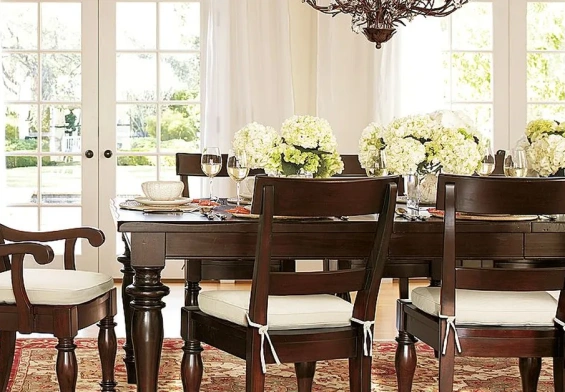
Of all the tools available for soft zoning, the area rug is probably the most underestimated. Place a large rug beneath a dining table and something almost magical happens: the table stops floating and starts belonging. The rug draws an invisible circle around the dining zone, telling every person who enters the room that this is a place to sit, to eat, to linger.
The key is scale. A rug that’s too small looks apologetic it tucks under the table legs and disappears when chairs are pulled out. The general rule is that all chair legs should remain on the rug even when pushed back from the table. That generous sizing is what creates the sense of a room-within-a-room.
Texture matters as much as size. In a kitchen-dining combo, the kitchen floor is typically hard tile, stone, polished concrete, hardwood. A dining rug in a contrasting texture, whether it’s a flatweave jute, a low-pile wool, or even a vintage Persian, creates a tactile shift that reinforces the visual one. Your feet know where they are before your eyes catch up.
Lighting Does More Heavy Lifting Than People Realize
The ceiling is where many zoning decisions get made, even if homeowners don’t consciously realize it. A pendant light or chandelier hung directly above a dining table does something architecturally powerful it anchors the space. It says: this is the center. Everything else orbits around it.
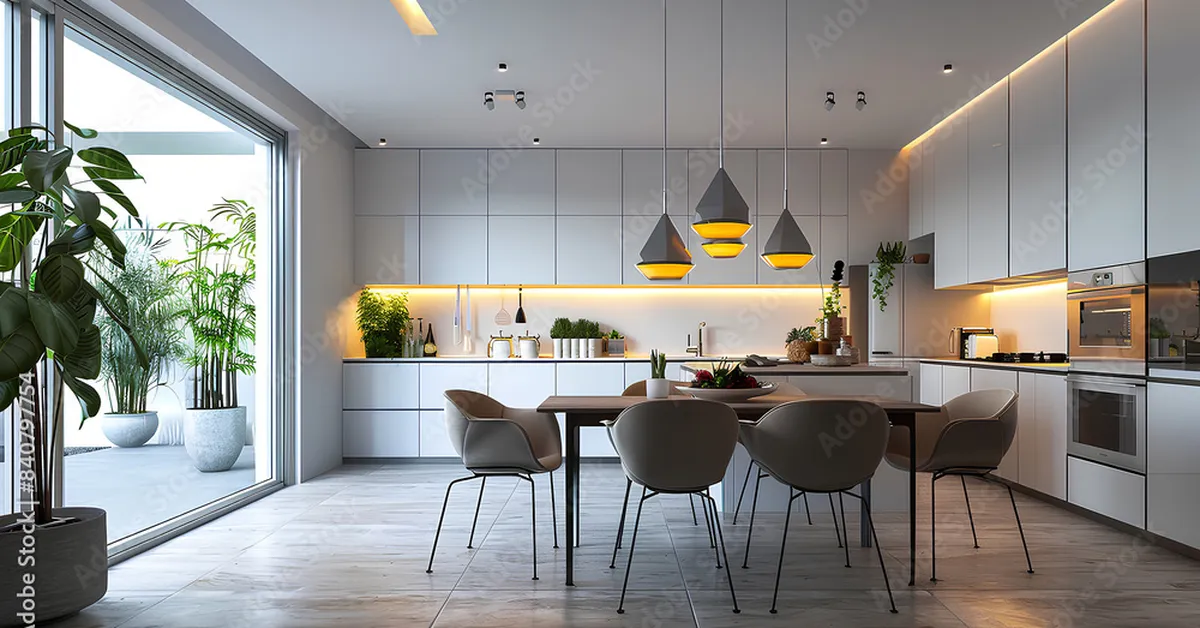
In kitchen-dining combos, this matters enormously. The kitchen typically has recessed lighting, under-cabinet strips, or task lighting positioned for function. The dining area, by contrast, benefits from a single focal fixture that creates warmth and draws people inward. That contrast in lighting types ambient and task versus intimate and atmospheric does more to separate the two zones than most people expect.
Dimmer switches amplify this effect. When the kitchen lights drop and the dining pendant glows warm over the table, the room doesn’t just look different. It feels different. The cooking chapter of the evening ends, and the eating chapter begins. No wall required.
Changes in Level and Material
Some of the most elegant kitchen-dining separations happen underfoot. A subtle change in flooring material say, matte stone tile in the kitchen transitioning to warm oak planks in the dining area communicates a shift in zone without any vertical interruption. You cross a threshold without stepping through a doorway.
In homes with the budget and structural flexibility, a raised or sunken dining area takes this further. Even a single step up or down creates a sense of arrival. The dining zone becomes a destination rather than an extension of the kitchen floor. It’s a move borrowed from restaurant design, where the best tables always feel slightly removed from the flow of service elevated, set apart, worth sitting down for.
For those working with existing construction and fixed floors, a change in ceiling treatment achieves a similar effect. A coffered ceiling, a dropped section, or even a painted ceiling panel above the dining zone creates a visual canopy. The eye reads it as a separate room even when the walls say otherwise.
The Island as a Soft Divider
Kitchen islands have become the default solution to so many open-plan problems, and for good reason they work. But their role in zoning is often misunderstood. People think of an island as a cooking tool, a prep surface, a place to perch with a coffee. What it also does, quietly and effectively, is mark the edge of the kitchen.
Position an island perpendicular to the dining area and it becomes a soft wall one you can see over, reach across, and have a conversation through, but one that nonetheless signals where the kitchen ends. Add bar stools on the dining-facing side and you’ve created a secondary eating zone that acts as a buffer between the two spaces, a casual middle ground where breakfast happens and wine gets poured before dinner is served.
The island works best as a divider when it runs parallel to the traffic flow meaning people can walk around it naturally without it feeling like an obstacle. A waterfall countertop that drops to floor level on the dining side adds visual weight and reinforces the boundary without adding height.
Color, Cabinetry, and the Psychology of Belonging
Paint is perhaps the cheapest and most overlooked zoning tool. A dining area painted in a slightly warmer or deeper tone than the kitchen even within the same color family creates a psychological shift. The dining zone feels cozier, more enclosed, more intentional. The kitchen, typically brighter and more neutral, reads as functional. The difference doesn’t need to be dramatic. Even a subtle shift from a cool white to a warm cream can do the work.
Cabinetry placement reinforces this. When kitchen cabinetry stops at a natural break point rather than wrapping around into the dining area it creates a visual terminus. The eye follows the cabinetry, recognizes where it ends, and understands that what lies beyond belongs to a different purpose.
Some designers take this further by introducing a built-in element at the dining perimeter a banquette with storage beneath, a sideboard built into a half-wall, a bookshelf that doubles as a room divider. These pieces aren’t walls, but they carry some of the same spatial authority. They say: this is where one thing ends and another begins.
Living With the Ambiguity
Here’s what nobody tells you about zoning without walls: it’s never fully resolved. The kitchen-dining combo is inherently a hybrid space, and the best versions of it embrace that rather than fight it. The goal isn’t to trick the eye into thinking there are walls where there aren’t any. The goal is to create enough clarity that each zone can do its job cooking, eating, gathering without one constantly undermining the other.
The most successful open-plan homes tend to be ones where the owners have made peace with a certain fluidity. The dining table gets used for homework and bill-paying and late-night conversations that have nothing to do with food. The kitchen island becomes a gathering point during parties. The zones blur at the edges and that’s fine, because the center of each one holds.
What the rug, the light, the flooring, the island, and the paint are really doing is giving each zone a center of gravity a place to return to, a place that feels like itself. The walls were never really the point. The point was always belonging.