

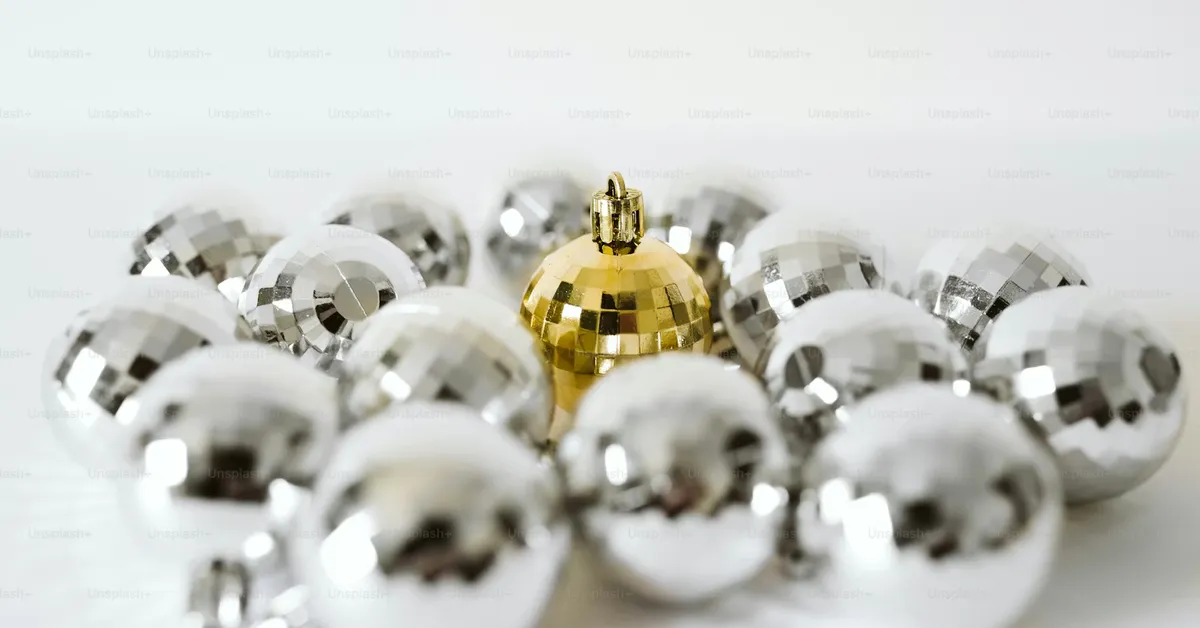
There’s a rule that lived in jewelry boxes and interior design magazines for decades, passed down like folk wisdom: gold and silver don’t mix. Keep them separate. Wear one or the other. Choose a finish and commit. It had the weight of something authoritative, even though nobody could quite explain where it came from or why it mattered so much.
That rule is dead now. Or at least, it should be.
The more interesting question isn’t whether you can mix gold and silver you obviously can, and people do it every day with results ranging from effortlessly chic to genuinely stunning. The real question is what it actually takes to pull it off. Because there’s a difference between breaking a rule with intention and just ignoring it entirely. One produces something that feels considered. The other produces visual noise.
Where the Rule Came From
To understand why mixing metals felt taboo for so long, you have to go back to an era when “matchy-matchy” was the highest compliment a room or an outfit could receive. Mid-century design culture both in fashion and interiors prized coordination above almost everything else. Your belt matched your shoes. Your curtain rods matched your cabinet hardware. Cohesion was the goal, and cohesion was interpreted as sameness.
Gold and silver were placed in opposition to each other. Warm versus cool. Formal versus casual. Old money versus something newer and more modern. Mixing them felt like a category error, like serving red wine in a white wine glass. Technically fine, but somehow wrong.
What changed wasn’t the metals themselves. What changed was our collective appetite for rigidity. Somewhere in the early 2000s, designers first in fashion, then in interiors started treating contrast as a tool rather than a mistake. Mixing metals became a way to signal that you understood design well enough to break its own rules.
The Physics of Visual Harmony
Here’s something that doesn’t get said enough: gold and silver are not actually opposites. They’re neutrals. Both are achromatic in the sense that neither competes with color the way a saturated hue would. Put a cobalt blue next to a burnt orange and you get tension. Put gold next to silver and you get something far more negotiable.
The tension between them is real, but it’s subtle a difference in warmth rather than a clash of competing energies. Gold pulls warm. Silver pulls cool. In design terms, that’s not a problem. That’s a conversation.
What creates harmony when mixing metals is the same thing that creates harmony in any visual composition: intention, repetition, and proportion. You need at least one of the metals to appear more than once so the eye reads it as a pattern rather than an accident. You need a sense of which metal is leading and which is supporting. And you need some other element in the space or the outfit a texture, a color, a material that bridges the two.
Bare concrete does this beautifully in interiors. So does aged wood, linen, leather, and anything with a matte surface. These materials don’t belong to either the warm or cool camp, which means they can hold gold and silver together without taking sides.
What Actually Goes Wrong
When mixed metals fail, it’s rarely because of the metals themselves. It’s almost always a proportion problem or a context problem.
Proportion: when gold and silver appear in roughly equal amounts, the eye doesn’t know where to land. There’s no hierarchy, no resting point. The result feels restless. The fix is simple let one metal dominate, roughly 70 to 80 percent, and let the other play a supporting role. This isn’t a rigid formula, but it’s a useful starting point. A room with brass pendant lights, brass cabinet pulls, and a single silver-framed mirror feels collected. The same room with equal amounts of both feels unresolved.
Context: some environments demand more restraint than others. A minimalist space with clean lines and a limited color palette can feel destabilized by too much metallic variety. A maximalist space rich with pattern, layered textiles, collected objects can absorb a much wider range of metallic tones without breaking a sweat. The metals don’t change. The room’s capacity to hold them does.
There’s also the question of finish. Polished gold and polished silver together can feel cold and clinical, like the inside of a watch. But introduce a brushed or matte version of either metal and the whole thing softens. Texture does the work that color sometimes can’t.
Rose Gold Changed Everything
It’s worth pausing on rose gold, because its rise over the past fifteen years essentially forced the conversation about mixed metals into the mainstream. Rose gold sits between yellow gold and silver warmer than silver, softer than traditional gold, with a pinkish blush that reads as both romantic and contemporary. When it appeared everywhere from iPhone cases to engagement rings to kitchen faucets, people who had never thought about mixing metals suddenly were doing it without realizing it.
A rose gold watch paired with a silver bracelet. A rose gold pendant layered over a yellow gold chain. These combinations became so common that they normalized the broader idea: metals can coexist. The spectrum between warm and cool isn’t a wall. It’s a gradient, and you can stand anywhere on it.
Rose gold also introduced something important conceptually the idea that metals themselves can be hybrid. If a single metal can contain multitudes, then surely two different metals can find common ground.
Layering in Practice
In jewelry, the easiest entry point for mixing metals is layering necklaces of different lengths. The variation in length creates enough visual separation that the eye processes each piece individually before taking in the whole. A delicate yellow gold chain worn with a longer sterling silver pendant doesn’t feel chaotic it feels intentional, because the lengths give each piece its own space.
Stacking rings on different fingers allows for even more freedom. The hand itself provides the unifying context. Gold on the index finger, silver on the ring finger, a mixed-metal band on the pinky the hand reads as a composition, not a contradiction.
In interiors, the most confident mixed-metal rooms tend to have one dominant metal that anchors the space often in the largest or most visible fixtures and a secondary metal that appears in smaller, more decorative elements. Aged brass light fixtures with chrome bathroom accessories. Matte black hardware (which reads as a neutral metal) paired with warm gold accents in picture frames and decorative objects. The key is that neither metal looks like it wandered in from a different room.
The Confidence Variable
There’s something that design guides rarely admit: a significant part of what makes mixed metals work is the confidence of the person wearing or arranging them. Two people can put together nearly identical combinations and one will look deliberate while the other looks uncertain. The difference is often in everything surrounding the metals how the rest of the outfit is styled, how the room is arranged, whether the overall composition feels like it came from a clear point of view.
This isn’t mystical. It’s just that confidence in design tends to produce cleaner decisions. Fewer competing elements. More willingness to commit to a choice and let it breathe. When you’re unsure about mixing metals, the instinct is often to compensate by adding more more layers, more pieces, more variety when the actual solution is usually subtraction.
The metals themselves are generous. Gold and silver have been sharing space in jewelry, architecture, and decorative arts for centuries. Byzantine mosaics combined them. Medieval reliquaries used both. The idea that they can’t coexist is a remarkably recent invention, and a fairly arbitrary one.
What they ask of you is just a little clarity about what you’re trying to say and enough restraint to let them say it.