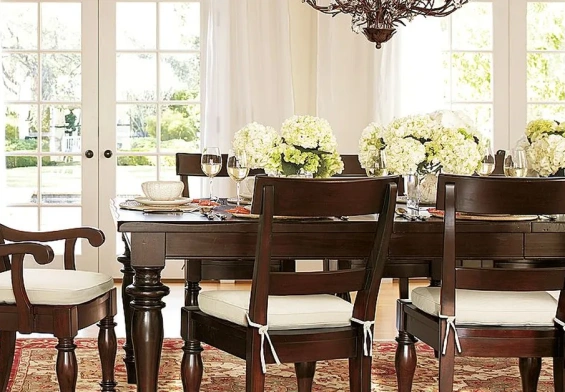

There’s a particular kind of morning that stays with you the kind where the coffee is exactly right, the light comes in at a low angle through a window, and you’re sitting somewhere that feels like it was made just for you. Not a grand dining room with a chandelier overhead and six chairs nobody uses. Just a corner. A small, intentional corner that says: this is where the day begins.
The dining room, as a concept, has been quietly dying for decades. In older homes, it was a room of ceremony Sunday roasts, holiday gatherings, the good china. But in the way most of us actually live now, that room either doesn’t exist or gets repurposed as a home office, a junk repository, or a second living room with a folding table. And that’s fine. What people genuinely miss isn’t the formality. It’s the ritual. The designated place to sit down with food and pause before the day swallows them whole.
A breakfast nook fills that gap without asking for square footage you don’t have. It asks only for intention.
The Bay Window You’ve Been Ignoring
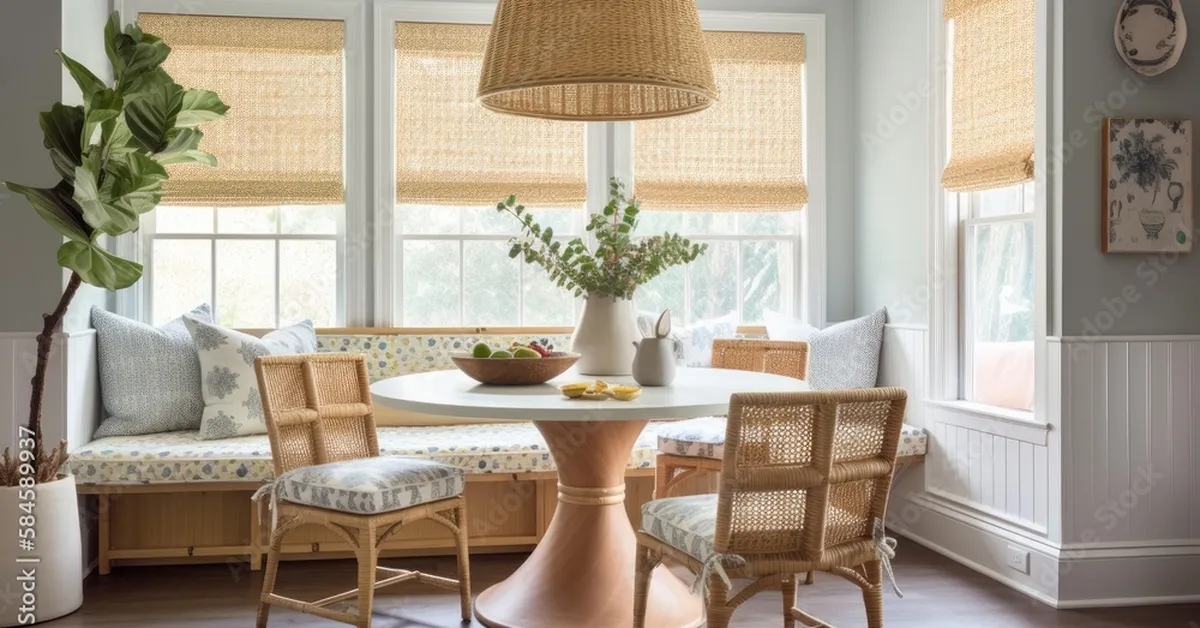
If your home has a bay window in a bedroom, a living room, even a hallway alcove you may already have a breakfast nook waiting to be acknowledged. Bay windows create a natural pocket of space that juts outward from the wall, and that geometry is practically begging for a built-in bench with storage underneath and a small table floating at the center.
The appeal isn’t just aesthetic. Bay windows tend to collect morning light in a way flat walls never do. Sitting inside one feels slightly removed from the rest of the room, like a ship’s prow cutting gently ahead. You’re still inside, but the light treats you differently.
The build doesn’t have to be elaborate. A simple platform bench even one constructed from plywood with a hinged lid for storage painted to match the trim and topped with a cushion in a fabric that can handle coffee spills, is enough. Add a bistro table and two mismatched chairs if a bench feels like too much commitment. The window does most of the work.
The Kitchen Corner That’s Just Dead Space
Walk into almost any kitchen and look at the corners. Not the cabinetry corners those are already spoken for, usually poorly, by a lazy Susan nobody rotates. Look at the room corners, the places where two walls meet and nothing happens. In galley kitchens, there’s often a tail end of wall near the entrance. In L-shaped kitchens, the inner elbow of the L frequently goes unused.
This is where a banquette earns its reputation. A built-in banquette two upholstered benches forming an L or U shape around a fixed table can occupy a space as small as five feet by five feet and seat four people comfortably, six in a pinch. The math works because people sit closer on benches than on chairs. There’s no chair leg to pull out, no shuffle backward. You slide in.
What makes a banquette feel like a nook rather than a booth at a diner is the layering. A cushion with some thickness. A table that’s the right height not too high, not so low you’re hunching. A pendant light directly overhead so the space has its own atmosphere rather than borrowing fluorescence from the rest of the kitchen. Small details, but they’re the ones that make you want to linger rather than eat and leave.
Borrowing from the Living Room’s Edge
Open-plan layouts created a particular problem: everything flows into everything else, which sounds liberating until you realize there’s nowhere that feels like anywhere specific. The kitchen bleeds into the dining area bleeds into the living room, and the result is a large, shapeless space that doesn’t quite know what it wants to be.
One fix is to carve the breakfast nook directly out of the living room’s perimeter not by walling anything off, but by using furniture and light to define a zone. A round pedestal table pushed against a wall, flanked by two chairs with upholstered backs, anchored by a small rug underneath, and lit by a sconce mounted at eye level: that’s a nook. It’s not built-in. It’s not permanent. But it reads as its own space because you’ve given it enough visual weight to hold its ground.
The round table matters more than people expect. Rectangular tables push against walls and feel like they’re waiting for a longer version of themselves. A round table against a wall feels complete it’s not missing its other half. And because there are no corners, two people can sit at it without either one feeling like they’ve been assigned the bad seat.
The Underused Bedroom Corner
This one surprises people, but it works especially in homes where the bedroom is large enough to hold more than just sleeping furniture. A small table and two chairs tucked into a bedroom corner creates something genuinely private. Not a breakfast nook in the communal sense, but a morning retreat for two that doesn’t require leaving the room.
In practice, this means a small café table something in the 24-inch diameter range and chairs that are light enough to move but comfortable enough to sit in for twenty minutes with a book. The key is keeping it separate from the sleeping area visually. A different rug, a floor lamp nearby, a small tray or shelf for the things that belong to the ritual: a French press, a couple of mugs, a book or two. The bedroom corner becomes a room within a room.
There’s something slightly indulgent about this setup, which is exactly the point. A breakfast nook in a bedroom says that mornings belong to you before they belong to anything else.
The Hallway Nobody Thought to Use
Wide hallways the kind found in older craftsman homes, colonial revivals, or any house built before the square-footage obsession took hold are frequently the most overlooked real estate in a home. They’re treated as transitional spaces, places you move through rather than places you stay. But a hallway with three feet of clear width and a window at one end is a breakfast nook in disguise.
A narrow console table pushed against one wall, two counter-height stools on one side, a pendant or plug-in hanging light overhead: the hallway becomes a spot. It’s not for lingering over a three-course meal. It’s for the quick cup of coffee before school, the ten-minute breakfast before work, the morning check-in between two people who love each other and are about to scatter in different directions. Those moments don’t need much space. They need a place.
What makes a hallway nook work is committing to it not treating it like a temporary arrangement you’ll replace once you figure out the real solution. Hang something on the wall above the table. Put a small plant nearby. Let it be a place.
The dining room was never really about the room. It was about the pause the moment of sitting down together, or alone, and acknowledging that eating is worth doing deliberately. A breakfast nook, wherever you find the space to put one, carries that same idea forward in a smaller, more honest form. You don’t need a room. You need a corner that knows what it’s for.