
There’s a particular kind of frustration that comes with a small bedroom. You stand in the doorway, look at the bed taking up most of the floor, and feel the walls quietly closing in. It’s not just about square footage it’s about how a cramped space affects your mood, your sleep, and the way you start and end every single day.
The good news is that spatial perception is surprisingly malleable. What your brain registers as “small” or “large” has less to do with actual measurements and more to do with light, proportion, visual flow, and the subtle psychology of clutter. A 150-square-foot room can feel like a sanctuary or a storage unit the difference is almost entirely in the decisions you make.
The Light Equation: Natural and Artificial
Nothing opens up a room faster than light. This sounds obvious, but most people underestimate how aggressively they’re blocking it. Heavy curtains that puddle on the floor, furniture pushed against windows, dark walls that absorb rather than reflect these are the quiet culprits.
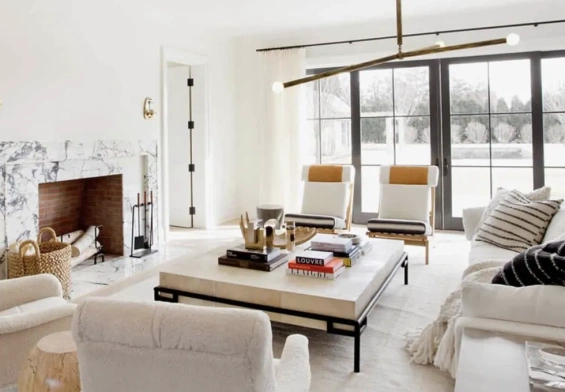
Start with the windows. If privacy isn’t a concern, ditch the curtains entirely and let the glass breathe. If you need coverage, switch to sheer linen panels in white or warm ivory. Hang the rod as close to the ceiling as possible and let the fabric fall all the way to the floor this vertical line tricks the eye into reading the ceiling as higher than it actually is.
Artificial lighting matters just as much after dark. A single overhead fixture in a small room creates flat, shadowless light that makes everything feel compressed. Layer your sources instead: a warm bedside lamp, a small floor lamp in a corner, maybe a strip of LED lighting tucked behind the headboard. The goal is to create depth through contrast pools of light and shadow make a room feel dimensional rather than boxed in.
Color temperature is worth obsessing over. Bulbs in the 2700K–3000K range cast a warm, amber glow that feels expansive and calm. Anything cooler than 4000K tends to feel clinical and, paradoxically, more confining.
Color and Surface: The Psychology of Pale
The conventional wisdom says paint everything white. That’s not wrong, but it’s incomplete. A flat, stark white can actually feel cold and institutional in a small space. What works better is a warm off-white think linen, cream, or the palest sage that reflects light without feeling sterile.
The ceiling is the most underutilized surface in any bedroom. Paint it the same color as the walls, or even a shade lighter. When the ceiling blends into the walls rather than sitting as a hard visual boundary, the room loses its “box” quality. The eye travels upward without hitting a stop sign.
One wall of soft color a dusty blue, a muted terracotta, a barely-there blush can add depth without closing things in. The key is keeping the saturation low. Deep, saturated colors are beautiful in large rooms; in small ones, they pull the walls toward you.
Flooring matters too. Light wood tones, pale stone, or even a large area rug in a neutral tone will visually expand the floor plane. A rug that’s too small the classic mistake makes the room feel chopped up and smaller. Go bigger than you think you need.
Furniture That Earns Its Place
Every piece of furniture in a small bedroom should justify its existence twice over. The question isn’t just “do I need this?” but “does this earn its square footage?”
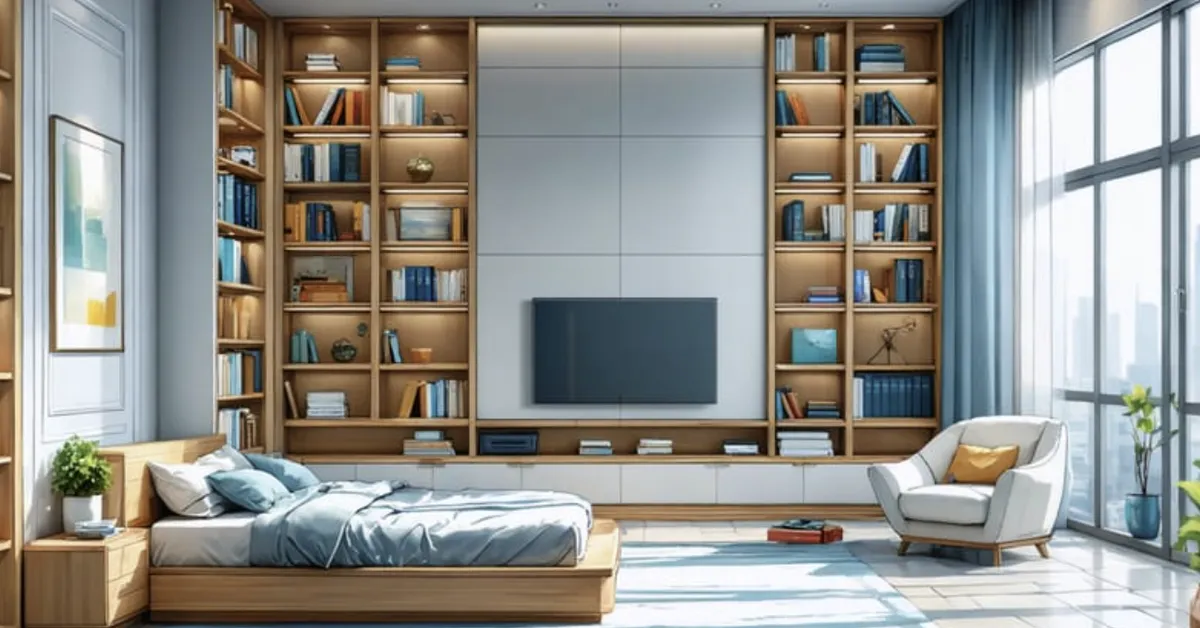
The bed is non-negotiable, but the frame is a choice. Platform beds with low profiles keep the visual weight close to the ground and leave more wall visible above. Beds with built-in storage drawers underneath eliminate the need for a separate dreser that’s potentially 12 to 18 square feet of floor space reclaimed. Avoid tall, heavy headboards that dominate the wall; a simple upholstered panel or even a floating shelf at head height does the job without the bulk.
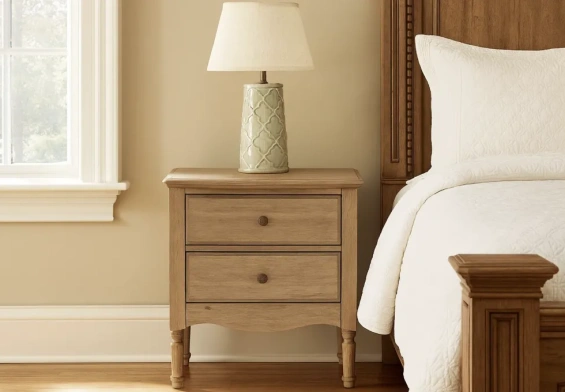
Nightstands are another area where people default to the obvious. A small wall-mounted shelf takes up zero floor space and keeps the area beside the bed functional. A slim pedestal table, a stack of books, even a wall-mounted sconce with a small ledge these alternatives keep the floor clear and the room breathing.
If you need a dresser, go vertical rather than horizontal. A tall, narrow chest of drawers takes up less floor space than a wide, low one while offering comparable storage. The same logic applies to shelving: floor-to-ceiling shelves on one wall create storage without eating into the room’s footprint, and the vertical lines draw the eye upward.
Mirrors: The Oldest Trick, Still the Best One
There’s a reason designers have been using mirrors to expand small spaces for centuries it works. A large mirror on one wall effectively doubles the visual depth of the room. Your brain processes the reflection as actual space, and the room feels twice as wide.
Placement matters. A mirror positioned to reflect a window will bounce natural light back into the room, amplifying both the brightness and the sense of openness. Avoid placing mirrors where they reflect clutter or a blank wall that just doubles the problem.
Mirrored closet doors are a practical version of the same idea. They serve a functional purpose while doing the visual work of a large decorative mirror. If your closet has standard doors, replacing them with mirrored panels is one of the highest-return upgrades you can make in a small bedroom.
Smaller mirrors grouped together can work too, but they need to be intentional a curated arrangement rather than a random scatter. The goal is always to create the impression of depth, not decoration for its own sake.
The Vertical Dimension Most People Ignore
Small rooms tend to be thought of in terms of floor space, but the vertical dimension is where a lot of untapped potential lives. Most bedrooms have eight or nine feet of ceiling height, and most people use maybe the bottom five feet of that.
Shelving that runs from floor to ceiling even in a narrow alcove or along a short wall creates storage and draws the eye upward. The visual effect is a room that feels taller and more intentional. Style the upper shelves with lighter objects and leave some breathing room; the goal is to suggest height, not to pack every inch.
Hanging artwork higher than feels natural is another underused trick. Most people hang pictures at eye level, which anchors everything to the middle of the wall. Raising artwork a few inches or grouping pieces that extend toward the ceiling lifts the visual center of the room and makes the walls feel taller.
Curtains, as mentioned earlier, are one of the most powerful vertical tools available. A rod mounted two or three inches below the ceiling, with panels that fall to the floor, creates a column of fabric that the eye reads as architectural height. The actual window might be modest; the curtain treatment makes it feel grand.
Clutter Is the Real Enemy
Here’s the uncomfortable truth: no amount of design strategy will make a clutered small room feel spacious. Clutter is visual noise, and visual noise is exhausting in a confined space. The brain can’t relax when it’s processing dozens of competing objects.
This doesn’t mean the room has to be minimalist in a cold, austere way. It means that everything visible should be intentional. A few carefully chosen objects on a shelf feel curated; a shelf packed with random items feels chaotic regardless of how small the room is.
The solution is almost always more storage, not less stuff. Under-bed storage boxes, over-door organizers, built-in shelving, ottomans with hidden compartments these tools let you keep what you need while keeping it out of sight. A room where the surfaces are clear and the floor is visible feels dramatically larger than the same room with things piled on every horizontal surface.
One habit that makes a measurable difference: make the bed every morning. It sounds almost too simple, but a made bed the largest object in the room immediately makes the space feel ordered and intentional. When the bed is mesy, the whole room reads as chaotic.
Textiles and Layering: Softness Without Weight
The fabrics you choose affect how a room feels as much as how it looks. Heavy, dark bedding in a small room adds visual weight that makes the space feel denser. Light, airy textiles linen, cotton, soft chambray keep things feeling open.
Stick to a limited palette for beding and soft furnishings. Two or three tones that relate to each other create cohesion; too many competing colors and patterns fragment the eye and make the room feel busier than it is. A neutral base with one accent color is a reliable formula that rarely fails.
Layering adds warmth and texture without bulk. A lightweight throw at the foot of the bed, a single decorative pillow or two, a simple woven rug these elements add personality without overwhelming the space. The restraint is the point.
Scent and Sound: The Overlooked Dimensions
Spatial perception isn’t purely visual. The way a room smells and sounds contributes to how large or small it feels a fact that interior designers rarely talk about but that anyone who’s walked into a spa can confirm.
A room that smells fresh and clean feels more open. This isn’t metaphorical; scent is processed in the same part of the brain that handles memory and emotion, and a pleasant, airy scent signals safety and openness. A diffuser with eucalyptus or light citrus, a linen spray on the bedding, or simply good ventilation can shift the feeling of a room in ways that no paint color can.
Sound matters too. Hard surfaces in a small room create echo and a kind of acoustic tightness that feels confining. Soft furnishings rugs, curtains, upholstered pieces absorb sound and create a quieter, more enveloping atmosphere. A room that sounds calm tends to feel larger.
The smallest bedrooms, handled well, often become the most intimate and considered spaces in a home. There’s something about working within tight constraints that forces intentionality every object earns its place, every surface is considered, every inch is used with purpose. That kind of deliberate design has a quality that sprawling, underconsidered rooms rarely achieve.