
There’s a particular kind of exhaustion that has nothing to do with how much you’ve worked or how little you’ve slept. It creps in when you walk through your front door and the first thing you see is a pile of mail on the counter, shoes scattered near the entrance, and a chair that’s quietly become a second closet. The space around you is talking, and it’s talking too loud. What most people don’t realize is that the solution isn’t always a bigger home or a more aggressive cleaning schedule. It’s smarter storage the kind that works with how you actually live, not against it.
Why Clutter Feels Like Noise
The brain processes visual information constantly, even when you’re not consciously paying attention. Every object in your field of vision competes for a small slice of your cognitive bandwidth. Researchers at Princeton found that physical clutter in your environment competes for your attention and reduces your ability to focus, which in turn increases stress. That stack of books on the floor isn’t just an aesthetic problem. It’s a low-grade distraction running in the background of your mind all day.
This is why serene spaces feel the way they do. It’s not that they’re empty it’s that everything in them has a place, and that place makes sense. The goal of good storage isn’t minimalism for its own sake. It’s intentionality. When objects are stored thoughtfully, the room stops demanding your attention and starts giving it back to you.
The Entryway Sets the Tone for Everything
Walk into almost any chaotic home and the entryway will tell you the whole story. Bags dropped on the floor, keys the nearest flat surface, coats draped over whatever’s closest. The entryway is where the outside world collides with your interior life, and without system in place, it loses that battle every single time.
A dedicated drop zone changes this completely. A narrow console table with a drawer for keys and mail, hooks at eye level for bags and coats, and a low bench with hidden storage underneath for shoes this combination handles the daily flood of incoming items before they migrate deeper into the home. The bench is particularly underated. It gives you a place to sit while putting on shoes, and the storage underneath keeps the floor clear without requiring any extra discipline from the people who live there.
If the entryway is tight, a wall-mounted pegboard or a row of hooks with a small shelf above them can accomplish the same thing in a fraction of the footprint. The point isn’t the specific furniture it’s the principle. Every item that enters your home needs a designated landing spot, or it will find its own.
Vertical Space Is the Most Underused Real Estate in Any Room
Most people think about storage horizontally. Shelves at eye level, bins on the floor, drawers in the usual places. But the vertical dimension of a room from floor to ceiling is almost always ignored, and it holds an enormous amount of potential.
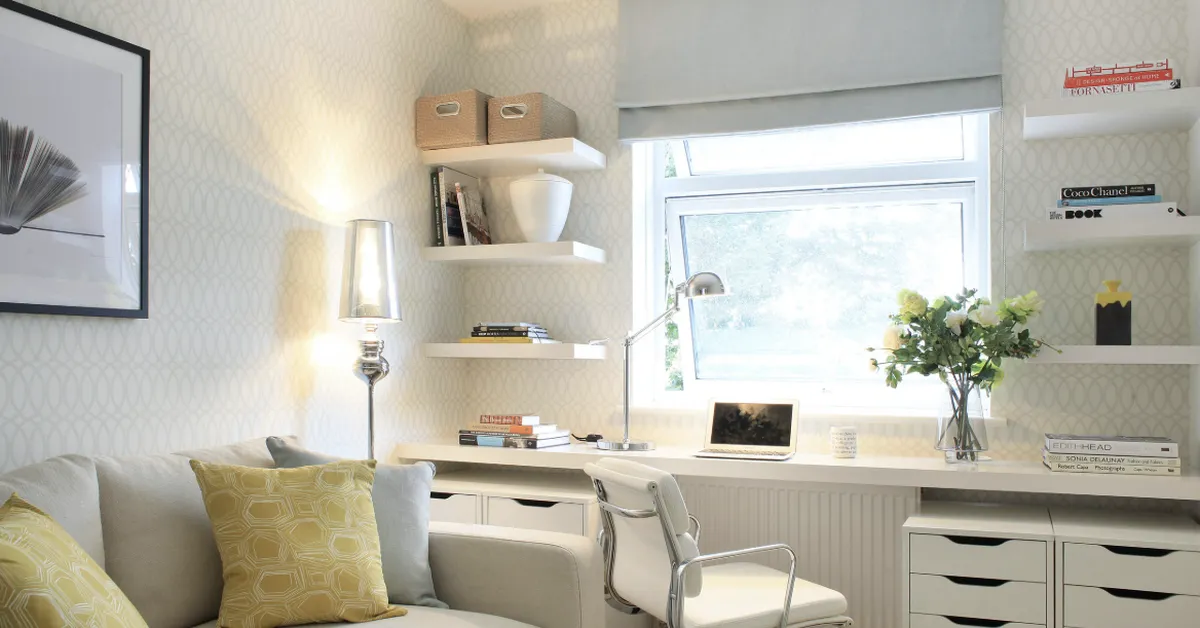
Floor-to-ceiling shelving in a living room or home office doesn’t just add storage. It draws the eye upward, making the room feel taller and more expansive. Built-in shelving around a doorframe turns dead architectural space into functional storage without consuming any floor area. In a kitchen, open shelving above the counter keeps frequently used items accessible while freeing up cabinet space for things you reach for less often.
The key to making vertical storage feel serene rather than overwhelming is grouping. Items stored together by category, color, or use create a visual rhythm that reads as organized rather than clutered. A wall of books arranged by spine color is calming. The same books stacked randomly in every direction is not. The storage solution is identical the difference is entirely in how it’s arranged.
Furniture That Does Two Jobs
In smaller homes and apartments, every piece of furniture needs to justify its presence. A coffee table that’s just a coffee table is a missed opportunity. An ottoman with a lift-top lid stores blankets, board games, or extra linens while serving as a footrest and occasional extra seating. A bed frame with deep drawers underneath effectively doubles the storage capacity of a bedroom without adding single piece of furniture to the room.
Window seats are another example that tends to get overlooked. A built-in bench beneath a window with hinged storage underneath is one of the most efficient uses of space in a home it creates a cozy reading nook, adds seating, and hides away seasonal items, sports equipment, or anything else that needs a home but doesn’t need to be seen.
The dining room is often the last place people think to add storage, but a sideboard or buffet along one wall can hold table linens, serving pieces, candles, and all the items that tend to pile up on the dining table itself. When the table is clear, the room breathes differently.
The Kitchen Deserves More Thought Than It Usually Gets
Kitchens accumulate things at a rate that no other room in the house can match. Appliances, pantry goods, cookware, utensils, cleaning supplies the list is relentless. And because the kitchen is a working space, the storage solutions there need to be functional first and beautiful second.
Drawer organizers are one of the simplest and most effective upgrades you can make. A junk drawer that gets a set of dividers stops being a junk drawer almost immediately. The same principle applies to utensil drawers, spice cabinets, and the cabinet under the sink, which tends to become a graveyard for cleaning products and plastic bags.
Pull-out shelves inside lower cabinets solve one of the most persistent kitchen frustrations: the items at the back that you can never reach without emptying the entire cabinet first. A lazy Susan in a corner cabinet does the same thing. These aren’t glamorous solutions, but they make the kitchen dramatically easier to use, and a kitchen that’s easy to use stays cleaner with less effort.
For pantry storage, clear containers are worth the investment. When you can see what you have at a glance, you stop buying duplicates, you use things before they expire, and the pantry itself becomes something you’re not afraid to open in front of guests.
Bedroom Storage and the Case for Editing
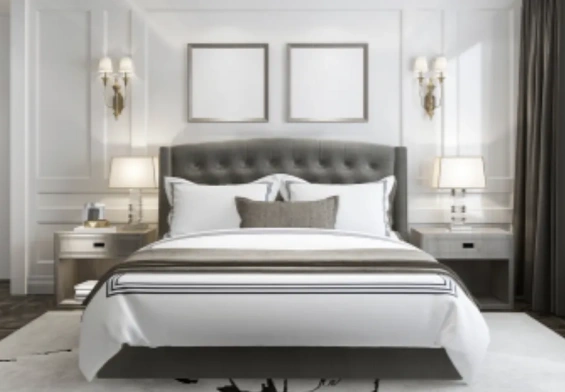
The bedroom is where storage problems tend to become most personal. Clothes that don’t fit anymore, gifts you feel guilty getting rid of, items that belong somewhere else but ended up here the bedroom absorbs all of it. And because it’s the last thing you see before you sleep and the first thing you see when you wake up, the visual noise there has an outsized effect on how rested you actually feel.
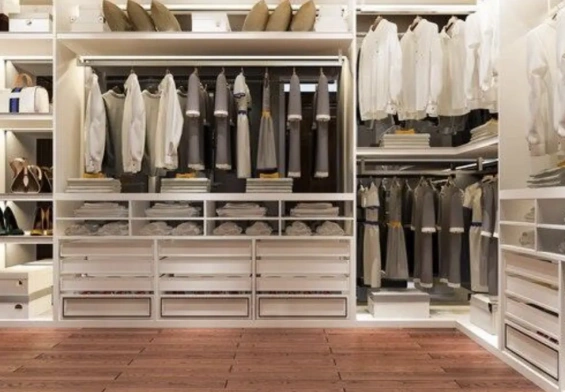
Closet organization systems even simple ones make a significant difference. Doubling the hanging rod to create two levels for shorter items, adding shelf dividers, using uniform hangers none of these are expensive changes, but together they transform a closet from a place you avoid into one that actually works.
The harder conversation is about editing. Storage solutions can only do so much if the volume of stuff exceds what the space can reasonably hold. A well-organized closet with too many clothes is still a stressful closet. The most effective storage strategy always involves some degree of reduction not as a punishment, but as a recognition that the things you keep should be things you actually use and value.
The Bathroom’s Hidden Potential
Bathrooms are small, and the storage options in them are often limited to whatever came with the house. But there’s usually more room to work with than it appears. The space above the toilet is almost always unused and can hold a simple shelving unit or a wall-mounted cabinet. The inside of cabinet doors can be fitted with organizers for hair tools, cleaning supplies, or small bottles. A magnetic strip inside a medicine cabinet door holds bobby pins, nail clippers, and other small metal items that otherwise disappear into the back of a drawer.
Under-sink storage in bathrooms sufers from the same problem as kitchen cabinets the pipes make it awkward, and things pile up in the corners. Adjustable shelving units designed to work around plumbing solve this without any installation required.
Seasonal Rotation as a Long-Term Strategy
One of the most overlooked storage strategies is the idea of rotating what’s accessible based on the time of year. Winter coats, holiday decorations, summer sports equipment these items don’t need to be within reach year-round. Vacuum storage bags compress bulky items dramatically, and labeled bins on high shelves or in a basement or garage keep seasonal things out of the way without losing track of them.
This rotation mindset extends beyond seasons. If you haven’t used something in a year, it probably doesn’t need to live in your primary storage. Moving it to secondary storage or out of the home entirely keeps the spaces you interact with daily from becoming overwhelmed by things that are only occasionally relevant.
The homes that feel genuinely serene aren’t the ones with the most storage. They’re the ones where the storage that exists is used thoughtfully, where things are put away not because someone forced the habit but because the system makes it easy. That ease is what you’re really designing for not perfection, but a space that works quietly in the background, letting you focus on everything else.