
There’s a moment most people recognize but rarely name. You walk into a restaurant a good one, the kind where the food almost doesn’t matter and something shifts before you’ve even sat down. The noise softens. Your shoulders drop. The evening feels like it belongs to you. That feeling isn’t just the wine list or the ambient music. It’s the light. Specifically, it’s the absence of harsh, unforgiving light. It’s the warm, low glow that tells your nervous system: you can relax now.
We’ve spent decades optimizing our homes for productivity. Bright overhead fixtures, cool-toned LEDs, screens at full blast. And then we wonder why we can’t wind down at night, why sleep feels elusive, why the transition from workday to evening feels like hitting a wall rather than crossing a threshold. The answer, in large part, is sitting right above your head.
Why Your Brain Cares So Much About Light
The human body runs on a roughly 24-hour internal clock called the circadian rhythm. This system governs everything from cortisol levels to body temperature to the timing of melatonin release the hormone that signals it’s time to sleep. And the single most powerful external cue for this clock? Light.
Specifically, the blue-wavelength light that dominates daylight hours and, unfortunately, most modern LED bulbs and screens suppresses melatonin production. This is useful at 9 a.m. It’s a problem at 9 p.m. When your living room is flooded with the same quality of light as a midday office, your brain genuinely cannot tell that the day is ending. It keeps running the daytime program.
Dimmable lighting, particularly warm-toned, low-intensity light in the 2700K to 3000K color temperature range, works in the opposite direction. It mimics the amber quality of sunset and firelight, the light humans evolved alongside for hundreds of thousands of years. Your brain recognizes it. It responds. Melatonin starts to rise. The nervous system begins its slow, necessary descent.
This isn’t soft science or wellness marketing. The research is consistent: exposure to dim, warm light in the two to three hours before bed measurably improves sleep onset, sleep quality, and morning alertness. The light in your home is either working with your biology or against it. There’s no neutral.
The Ritual Power of Diming
Beyond the neuroscience, there’s something more intimate happening when you reach for that dimmer switch. Rituals work because they’re signals. They tell the mind that a transition is occurring that one mode of being is ending and another is beginning. The act of dimming the lights is, in this sense, a kind of ceremony.
Think about how many evening routines fail not because of bad intentions but because of bad environments. You tell yourself you’ll decompress after work, but you’re sitting under the same fluorescent-adjacent brightness you’ve been under all day. The environment is sending the wrong message. The body doesn’t know it’s supposed to shift gears.
When you make dimming the lights a consistent part of your evening say, at 7 p.m., or after dinner, or when the kids are in bed you’re training a response. Over time, the act of lowering the lights becomes a cue that carries its own weight. The body starts to anticipate what comes next: slower movement, quieter thoughts, the gradual approach of sleep. You’re not just adjusting lumens. You’re writing a script for your nervous system.
Choosing the Right Setup
Not all dimmable lighting is created equal, and the difference between a setup that actually transforms your evenings and one that just sort of works comes down to a few key decisions.
The first is color temperature. A bulb can be dimmable and still be the wrong color. Cool white bulbs at 4000K and above, dimed to 20%, are still sending blue-spectrum light into your eyes. For evening use, you want bulbs in the 2200K to 2700K range the warm amber end of the spectrum. Many smart bulbs now allow you to shift color temperature throughout the day, automatically transitioning from cool and bright in the morning to warm and dim by evening. Philips Hue, LIFX, and Govee all offer this functionality at various price points.
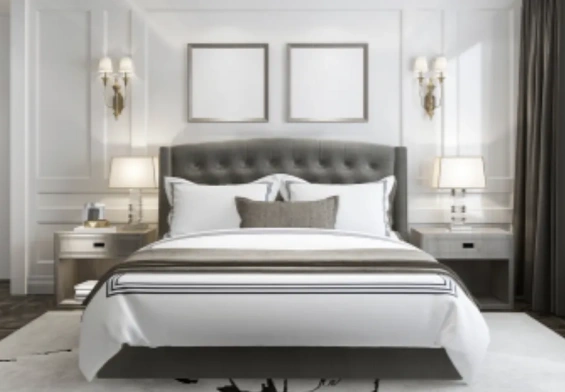
The second consideration is placement. A single overhead fixture on a dimmer is better than nothing, but it’s not the full picture. Overhead lighting, even when dimmed, still casts light downward into your eyes. Table lamps, floor lamps, and sconces positioned at eye level or below create a fundamentally different quality of light softer, more enveloping, less stimulating. The goal is to light the room without lighting your retinas directly.
Layering is the word interior designers use, and it applies here both aesthetically and physiologically. A combination of a dimed overhead, a warm table lamp, and maybe a candle or two creates depth and warmth that a single source simply can’t replicate. Each layer adds to the sense of enclosure and calm.
Smart Lighting and the Automated Evening
One of the most underrated features of modern smart lighting systems is scheduling. The friction of remembering to dim the lights, of actually getting up and doing it, is small but real. Automating the transition removes that friction entirely.
A simple schedule lights at 100% and 4000K until 6 p.m., then a gradual shift to 40% and 2700K by 8 p.m., down to 20% by 10 p.m. can run silently in the background every day without any conscious effort. You come home, you cook dinner, you move through your evening, and the light is quietly doing its job. By the time you’re thinking about bed, your body is already halfway there.
Some systems take this further. Circadian lighting features built into Apple HomeKit or Google Home can sync your lighting to your local sunrise and sunset times, adjusting automatically through the seasons. In December, when the sun sets at 4:30, the system knows. It starts the warm-down earlier. In June, it holds the brighter light longer. It’s a small thing, but it keeps your indoor environment in conversation with the natural world outside which is, after all, what your circadian system is trying to track.
The Rooms That Matter Most
Not every room needs the same treatment. The kitchen, where you’re chopping vegetables and reading labels, can stay brighter longer. The bathroom is worth paying attention to a harsh vanity light at 11 p.m. is a reliable way to undo everything the rest of your evening routine accomplished. A dimmer on the bathroom lights, or a secondary warm lamp tucked into a corner, makes a real difference.
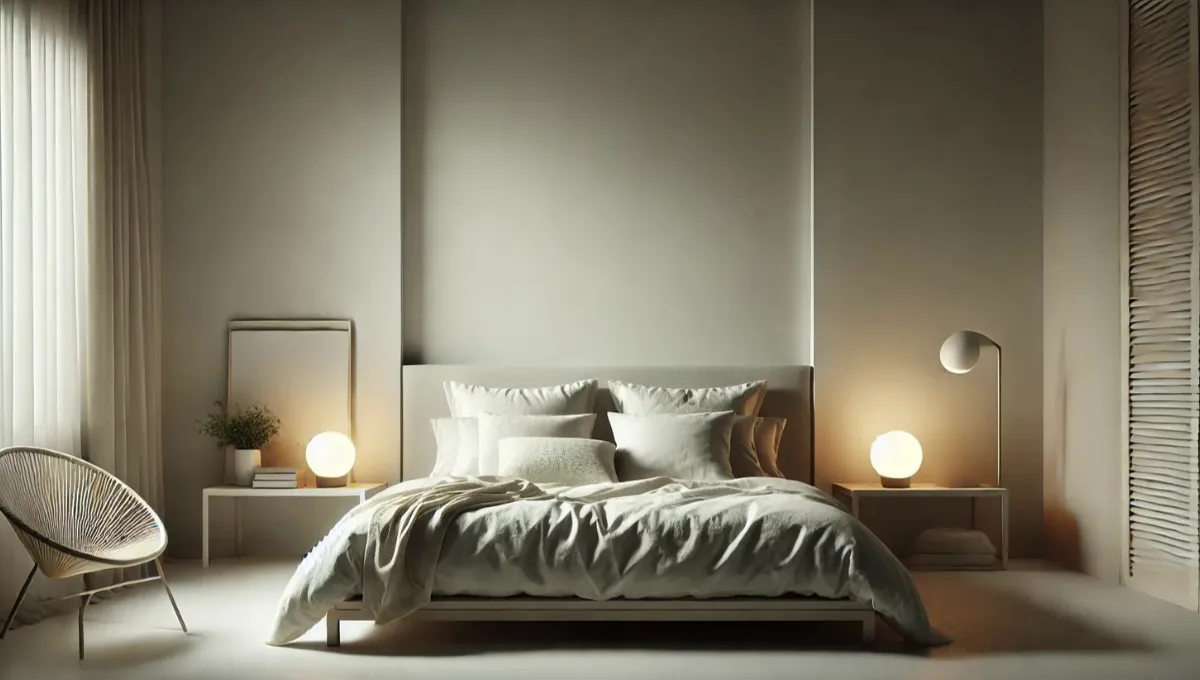
The bedroom is the obvious priority. Many sleep researchers recommend keeping the bedroom at the dimmest possible light levels for the hour before sleep think 10 to 20 lux, roughly the brightness of a single candle. If you read before bed, a warm bedside lamp pointed at the page rather than your face is far less disruptive than overhead light or a bright tablet screen.
The living room is where most people spend their evenings, and it’s where the transformation tends to be most dramatic. A living room that shifts from bright and functional to warm and dim around 7 or 8 p.m. feels like a different room. The same couch, the same walls, the same furniture but the atmosphere changes completely. It becomes a place that invites you to slow down rather than one that keeps you in motion.
What You’re Actually Creating
There’s a concept in environmental psychology called restorative environments spaces that allow the mind to recover from the directed attention and cognitive load of daily life. Natural settings score high on this scale. So do spaces that feel enclosed, warm, and low-stimulation. Dim, warm lighting is one of the most accessible ways to push a domestic space in this direction.
You don’t need a renovation. You don’t need a significant budget. A few smart bulbs, a dimmer switch, and a deliberate approach to how you use light in the evening hours can meaningfully change how your nights feel and, by extension, how your mornings begin.
There’s also something worth sitting with here that goes beyond sleep hygiene and circadian biology. The quality of your evenings shapes the quality of your inner life. The hours between dinner and sleep are when most people do their actual living reading, talking, thinking, being present with the people they love. Harsh, bright light keeps you in a state of mild alertness that’s incompatible with depth. It keeps you on the surface.
Dim the lights, and something opens up. Conversations go longer. Books pull you in further. The mind, no longer braced against stimulation, starts to wander in the good way making connections, processing the day, settling into itself.
That restaurant feeling, the one where the evening feels like it belongs to you? You can build it at home. It starts with a switch.