
There is a version of minimalism that feels cold. You know the one. White walls so stark they hum under fluorescent light. Furniture that looks like it belongs in a showroom where no one actually sits down. Spaces so pared back they seem to reject the very idea of a person living inside them. For years, that was the dominant image. Clean lines, zero clutter, and an emotional temperature hovering somewhere around freezing.
But something shifted. People started craving rooms that breathed. Spaces that held stillness without feeling sterile. A home that whispered calm rather than shouting perfection. That shift has a name now, and it is warm minimalism.
What Warm Minimalism Actually Means
Strip away the Pinterest aesthetics for a moment and sit with the philosophy. Warm minimalism is not about owning fewer things for the sake of a number. It is not a competition to see who can live with the least. At its core, it is an intentional curation of your environment so that everything present earns its place through function, beauty, or emotional resonance. Often all three at once.
The warmth comes from texture, from organic materials, from color palettes roted in the natural world. Think plaster walls with visible imperfections. Linen curtains that pool slightly on a hardwood floor. A single ceramic vase, handmade, sitting on a shelf where it catches afternoon light. These are not decorative afterthoughts. They are the architecture of feeling.
Where traditional minimalism often leans Scandinavian in its coolness, warm minimalism pulls from Japanese wabi-sabi, Mediterranean earthiness, and the quiet elegance of Belgian design. It borows without copying. It synthesizes rather than replicates.
The Palette That Holds You
Color does more psychological work than most people give it credit for. In a warm minimalist space, the palette tends to hover in a specific emotional range. Creams that lean toward wheat rather than clinical white. Teracotta that recalls sun-baked clay. Soft taupes, warm grays with undertones of blush or sand, and the occasional deepumber as anchor.
This is not about avoiding color. It is about choosing hues that feel like they emerged from the earth rather than a factory. A muted sage green on a single accent wall. The deep brown of a walnut dining table. The faded indigo of a vintage textile draped over a chair. These colors do not compete with each other. They converse quietly.
Why White Alone Falls Short
Pure white can feel expansive, yes. But in a home where life actually happens, where coffee gets spilled and books pile up and a dog stretches across the couch, all-white becomes a source of anxiety rather than peace. Warm minimalism acknowledges that a home is not a gallery. It replaces the pressure of pristine with the comfort of lived-in. An off-white wall with a slightly uneven lime wash finish has more soul in one square foot than an entire apartment painted in flat bright white.
Materials That Speak
If warm minimalism has a secret language, it is spoken through materials. This is where the soulfulness lives. Smooth concrete floors paired with a thick wool rug. A rough-hewn oak bench beside a sleek linen sofa. The contrast matters. It creates visual rhythm without clutter.
Natural materials age. They patina. A leather chair darkens where hands rest. A wooden cutting board develops knife marks that map years of meals. A brass light fixture oxidizes into something richer than it was the day it was installed. Warm minimalism does not fight this aging. It welcomes it as evidence of a life being lived.
Synthetic materials, by contrast, tend to degrade rather than age. They chip, peel, discolor in ways that feel like failure rather than character. Choosing natural over synthetic is not snobbery. It is a long-term investment in how your space will feel five, ten, twenty years from now.
The Discipline of Editing
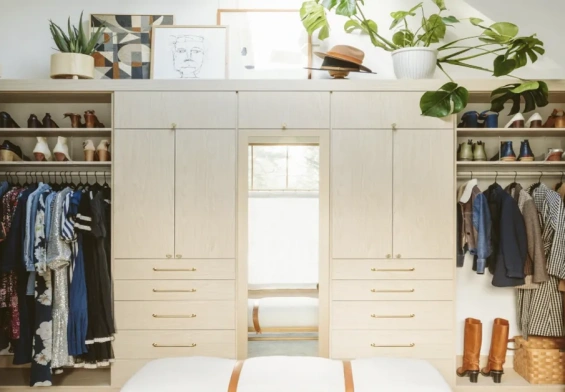
Here is where minimalism still demands something of you. Warm minimalism is not maximalism in disguise. It does not give you permission to fill every surface with objects just because those objects are beautiful. The editing is rigorous. Maybe more rigorous, actually, because each remaining piece carries more weight.
Think of it like a sentence. A clutered room is a run-on, breathless and overwhelming. A cold minimalist room is a sentence stripped to subject and verb, grammatically correct but emotionally flat. A warm minimalist room is a sentence with perfect rhythm. Every word chosen. Nothing wasted. But the meaning lands fully.
This means saying no to things you like but do not love. It means resisting the impulse to fill an empty corner just because emptiness makes you uncomfortable. That discomfort, by the way, is worth sitting with. Empty space in a room functions like silence in music. It gives the notes around it room to resonate.
Lighting as Emotional Infrastructure
Most conversations about minimalist interiors focus on furniture and decor. Lighting gets treated as an afterthought, something functional rather than atmospheric. But in a warm minimalist space, lighting is arguably the single most important element.
Overhead lighting, especially the harsh recessed kind, flattens a room. It eliminates shadow, and shadow is where warmth lives. Warm minimalism favors layered lighting. A floor lamp casting a pool of amber in one corner. A pendant with a linen shade diffusing light softly over a dining table. Candles, obviously. Not as decoration but as actual light sources in the evening.
The color temperature matters enormously. Anything above 3000 Kelvin starts to feel institutional. Aim for 2700K or lower. That golden tone mimics the quality of late afternoon sun, and there is a reason humans have always gathered around firelight. It signals safety. Rest. Home.
Living Spaces That Breathe
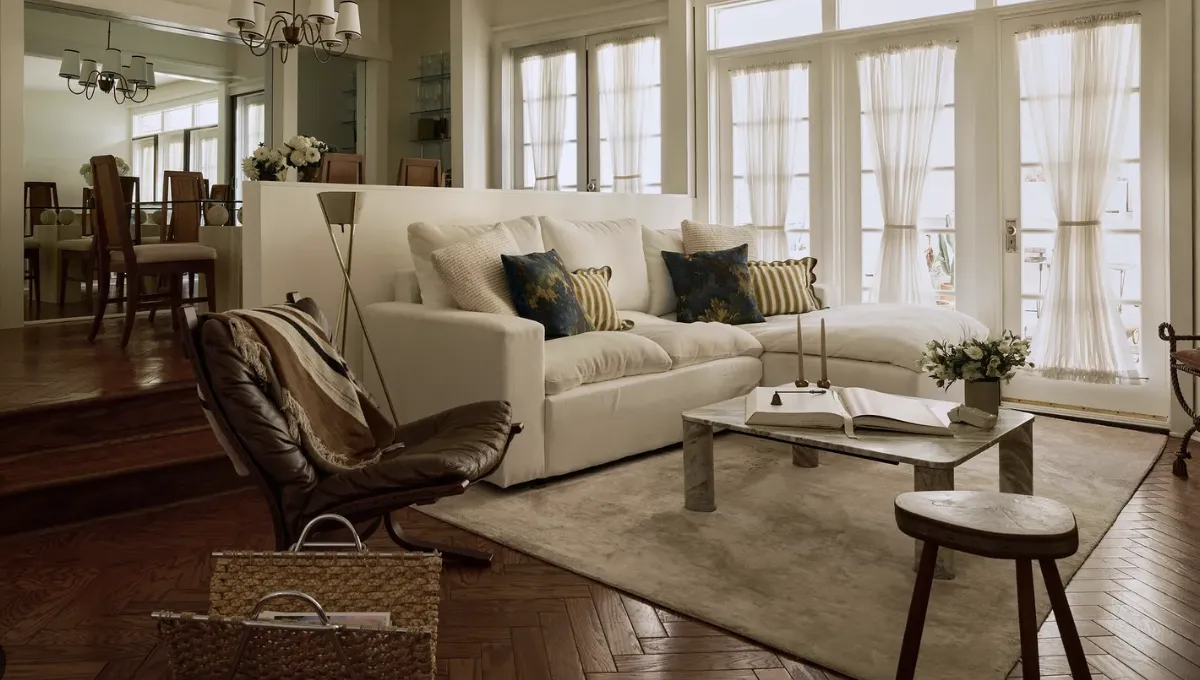
A warm minimalist living room does not look like a catalog page. It looks like someone thoughtful lives there. A sofa in a natural fabric, deep enough to curl into. A coffee table with visible grain, maybe a single book and a candle on its surface. Shelving that holds a few objects with breathing room between them rather than packed tight.
The floor might be bare wood with a single area rug defining the seating zone. The walls might hold one piece of art, something that means something, rather than a gallery wall assembled for visual density. There is space to move. Space to think. The room does not demand your attention. It simply holds you.
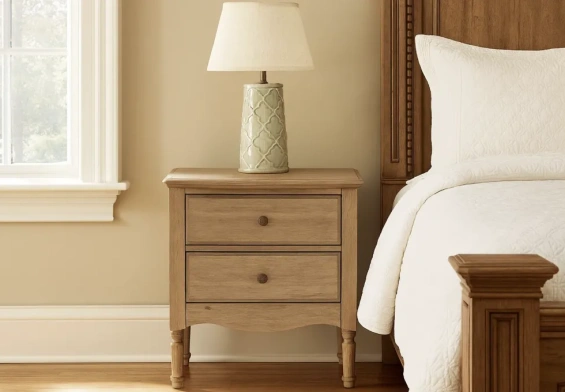
In bedrooms, this philosophy becomes even more potent. A low bed frame in natural wood. Linen beding in oatmeal or soft clay tones. Nightstands with nothing on them except maybe a lamp and a glass of water. The absence of visual noise in a bedroom is not emptiness. It is an active gift you give yourself every night.
The Kitchen as Quiet Workshop
Kitchens test minimalism harder than any other room. They are functional spaces with unavoidable tools, appliances, and supplies. Warm minimalism in a kitchen means closed storage where possible, open shelving where beautiful. It means keeping countertops clear except for what you use daily. A ketle. A cutting board leaning against the backsplash. A bowl of fruit.
The materials here do heavy lifting. A stone countertop with natural veining. Wooden shelves that warm up a wall of white tile. Hardware in brushed brass or matte black that adds just enough contrast. The kitchen should feel like a place where someone cooks with care, not a laboratory.
Why This Matters Beyond Aesthetics
There is a reason warm minimalism resonates so deeply right now. We live in an era of relentless visual noise. Screens demand attention every waking hour. Advertisements saturate every surface. Social media feeds scroll endlessly. The home has become one of the last spaces where you can control what your eyes take in.
A warm minimalist home is not an escape from reality. It is a deliberate counterweight. It says that not every surface needs to communicate something. That rest is not earned through exhaustion but designed through environment. That beauty does not require abundance.
There is also something quietly radical about choosing to own less in a culture that equates accumulation with success. Every empty shelf is a small refusal. Every clear surface is a statement that you have enough. Not in a performative way. Not for the photograph. Just for the feeling of walking into a room and finding nothing that agitates you.
Where Soul Enters the Equation
The soulfulness of warm minimalism cannot be purchased in a single shopping trip. It accumulates. The bowl you found at a flea market in a town you loved. The blanket your grandmother knitted that happens to be the perfect shade of cream. A photograph printed and framed rather than left in a phone. These objects carry stories, and stories are what transform a space from designed to inhabited.
Soul also lives in imperfection. The slightly croked shelf bracket you installed yourself. The plant that is thriving in one corner and struggling in another. The stack of books that refuses to stay neat. Warm minimalism has room for these things because it is not pursuing perfection. It is pursuing presence.
A room can be clean and still feel alive. It can be simple and still feel rich. That is the entire premise, and it is not a contradiction. It is a practice. One you return to every day when you choose what stays and what goes, what deserves your attention and what does not.
The vibe is not curated emptiness. It is considered fullness. And the difference between those two things is everything.