
Where to Hide the Clutter When You Don’t Have a Walk-In Closet
There’s a particular kind of frustration that comes with standing in a small bedroom, holding a stack of sweaters, and realizing there is simply nowhere left to put them. No cavernous closet with cedar shelves. No dedicated dressing room with a velvet bench and full-length mirror. Just a narrow door, a single rod, and the quiet judgment of everything you own piled on a chair.
Most homes especially apartments, older houses, and starter spaces were not designed with the modern accumulation of stuff in mind. And yet here we are, trying to fit a life’s worth of belongings into rooms that were built for a simpler era. The walk-in closet has become a kind of aspirational shorthand for having it all figured out. But the truth is, you don’t need one. What you need is a different way of thinking about where things live.
The Problem Isn’t the Stuff It’s the System
Before you start buying storage bins or rearranging furniture at midnight, it’s worth pausing on something most organization advice skips over: clutter isn’t just a physical problem. It’s a routing problem. Things pile up not because you have too much (though sometimes you do), but because there’s no clear place for them to go. A coat gets draped over a chair because the closet is already full. A bag lands on the kitchen counter because there’s no hook near the door. The mess compounds itself.
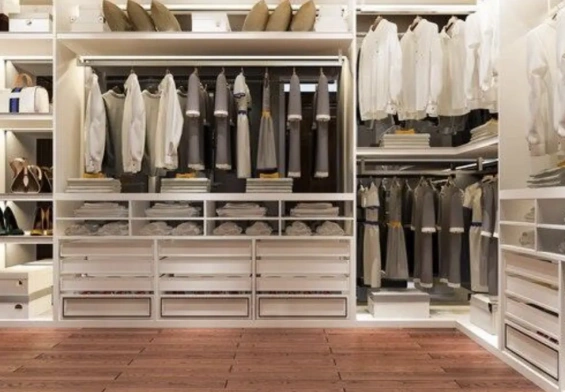
This is why the walk-in closet feels so liberating it’s not the square footage, it’s the dedicated space. Everything has a zone. The solution for smaller homes isn’t to mourn the absence of that room; it’s to manufacture the same logic in the space you actually have.
Furniture That Earns Its Keep
The most underused strategy in small-space living is choosing furniture that does two jobs at once. An ottoman at the foot of the bed that opens up to store extra blankets, off-season clothes, or the board games you only pull out twice a year. A bed frame with built-in drawers underneath not the flimsy kind with plastic sliders, but solid ones with real depth. A storage bench in the entryway that holds shoes inside while offering a place to sit while you put them on.
None of this is revolutionary, but the execution matters. A lot of people buy a storage ottoman and then fill it with things they never need to access, essentially turning it into a sealed box. The trick is to use these pieces for items you rotate seasonally or occasionally things that don’t need to be grabbed daily, but that still need a home. Winter coats in July. Extra towels. The gift wrap situation that gets out of hand every November.
A narrow console table with baskets underneath can transform a hallway from a dumping ground into something that looks intentional. The baskets do the heavy lifting visually they contain chaos without hiding it behind a closed door, and they’re easy enough to pull out when you need something.
Going Vertical Changes Everything
Most people use about the bottom four feet of their walls. The space above from shoulder height to ceiling is essentially wasted in the average home. This is where a lot of hidden storage potential lives.
Floating shelves installed high on a bedroom wall can hold folded sweaters, books, or decorative boxes that contain less-decorative things. The key is keeping what’s visible on those shelves relatively tidy, because high shelves are harder to ignore than low ones they’re in your sightline. Use matching containers, baskets, or bins to keep the visual noise down. What’s inside them doesn’t matter as long as the outside looks calm.
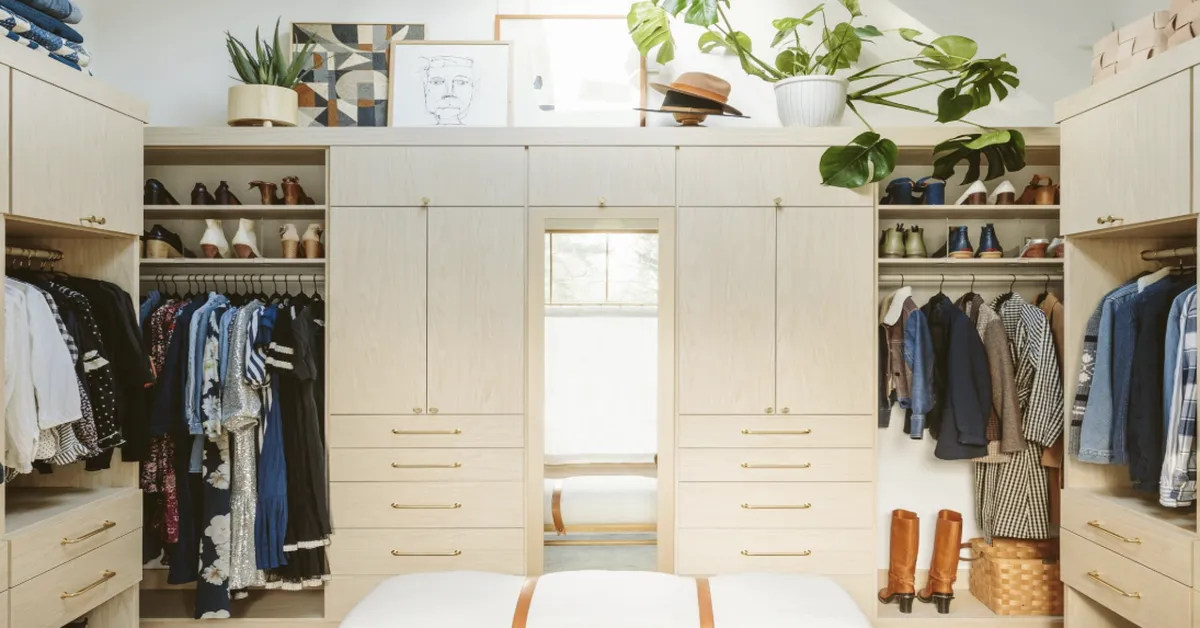
In a small closet, the vertical space above the existing rod is almost always underused. A second rod installed below the first one doubles your hanging capacity for shorter items shirts, jackets, folded pants. Above the original rod, a shelf can hold boxes, bags, or folded items you don’t reach for every day. It sounds obvious, but most people never reconfigure the single-rod setup that came with the apartment, even when it’s clearly not working.
Pegboards, originally a garage staple, have made their way into bedrooms and home offices for good reason. Mounted on a wall, they can hold bags, hats, jewelry, accessories the small stuff that tends to scatter across every surface. They’re endlessly reconfigurable and surprisingly good-looking when done with some intention.
The Entryway Is Where It All Falls Apart
Walk into almost any home and the entryway tells the whole story. Shoes kicked off in a pile. Bags dropped wherever there’s floor space. Mail stacked on whatever surface is closest to the door. The entryway is the first place clutter accumulates because it’s the transition zone the place where outside life meets inside life, and nobody has the energy to be organized in that moment.
A few well-placed hooks change this completely. Not a single hook, but a row of them enough for every person in the household to have their own. Coats, bags, keys, dog leashes, umbrellas. If the hook is there and it’s easy to reach, things get hung up. If it’s not, they get dropped.
Shoe storage is its own category of problem. A slim shoe cabinet that looks like a piece of furniture can hold a surprising number of pairs while keeping the floor clear. Over-the-door shoe organizers are less elegant but genuinely effective, especially for a closet door that’s otherwise doing nothing. For households with kids, a low bench with cubbies underneath gives everyone a spot and makes it easy enough that even a seven-year-old can actually use it.
The goal in an entryway isn’t perfection it’s friction reduction. The easier it is to put something away correctly, the more likely it is to happen.
Under the Bed: The Most Honest Storage in the House
Under-bed storage has a reputation problem. It tends to become a graveyard things go in and never come out, dust accumulates, and eventually you forget what’s even down there. But used correctly, it’s some of the most valuable real estate in a small home.
The key is using it for things you actually need to access, just not often. Seasonal clothing is the obvious choice: summer dresses in January, heavy wool sweaters in June. Spare beding the extra set of sheets, the guest pillows fits well here too. Flat, rolling bins with lids keep things dust-free and make it easy to slide them out when you need them.
What doesn’t work under the bed: random overflow. If you’re sliding things under there because you don’t know where else to put them, you’re not solving the problem, you’re just relocating it. Under-bed storage works when it’s intentional and when you actually know what’s in it.
Bed risers can add several inches of clearance if your frame sits low, which opens up the possibility of using deeper bins. It’s a small investment that meaningfully expands your options.
The Visual Calm of Closed Storage
There’s a reason people feel more relaxed in hotel rooms. It’s not just the fresh sheets it’s the absence of visible stuff. Everything is behind doors, in drawers, or simply not there. The visual field is clear, and the brain interprets that as calm.
You can manufacture this at home without a walk-in closet. Baskets with lids on open shelves. Boxes that look like décor but hold charging cables and remote controls. A wardrobe or armoire that closes completely, hiding whatever chaos lives inside. Curtains hung in front of open shelving a trick that’s been used in small Parisian apartments for decades can make a wall of storage disappear visually.
The principle here is that closed storage reads as calm even when it’s full. Open storage requires more curation because everything is always on display. Neither is better; they serve different purposes. But if you’re working with limited space and a tendency toward accumulation, leaning toward closed storage reduces the daily visual noise considerably.
Matching containers matter more than people expect. A shelf of mismatched bins and random boxes looks chaotic even when it’s technically organized. The same shelf with uniform baskets or matching boxes looks intentional, even if the contents are equally mesy. It’s a small thing that makes a disproportionate difference.
The Closet You Have Is More Than You Think
A standard reach-in closet, used well, can hold more than most people realize. The problem is that most reach-in closets are set up with a single rod and a single shelf, which is one of the least efficient configurations possible.
Doubling the rod for short items, adding a shoe rack to the floor, installing a few hooks on the inside of the door, and adding a shelf organizer or two can effectively double the usable capacity of a closet that seemed maxed out. Slim velvet hangers instead of bulky plastic ones recover several inches of rod space it sounds minor until you actually try it.
A hanging organizer with pockets, the kind that hangs from the rod, can hold folded items, accessories, or small bags without taking up any floor space. The back of the closet door is another overlooked surface an over-the-door organizer there can hold shoes, accessories, cleaning supplies, or whatever category of small things tends to pile up on your surfaces.
The closet you have is probably not the problem. The configuration is.
Living Without the Dream Closet
There’s something worth sitting with here. The walk-in closet has become so embedded in the idea of a well-organized life that its absence can feel like a personal failing like you haven’t arrived yet, haven’t earned the space, haven’t figured it out. But plenty of people live in beautifully organized, genuinely calm homes without a single dedicatedressing room.
The homes that feel good to be in aren’t always the ones with the most storage. They’re the ones where things have places, where the system is simple enough to actually maintain, and where the visual environment isn’t constantly demanding attention. That’s achievable in a studio apartment. It’s achievable in a house with one small closet per bedroom and no room to add more.
The clutter doesn’t need a walk-in closet to disappear. It just needs somewhere to go.