
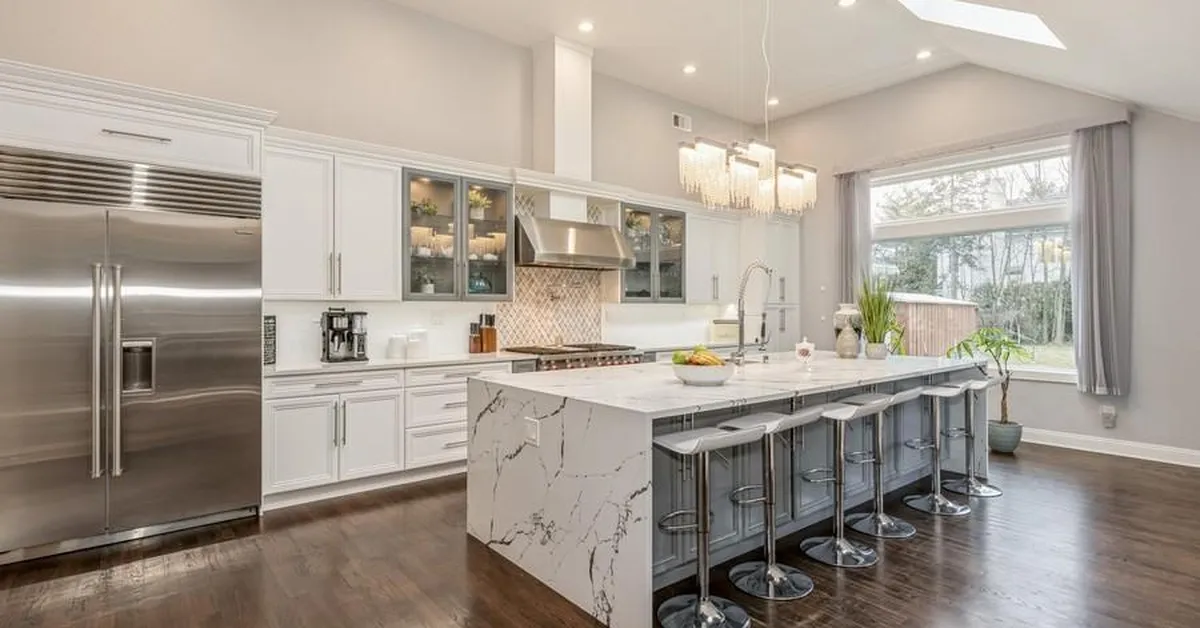
There’s a moment most homeowners recognize in hindsight standing in their newly renovated kitchen, coffee in hand, realizing the island they spent months obsessing over has quietly colonized the room. The refrigerator door swings open and grazes the corner. Two people can’t pass each other without doing an awkward sideways shuffle. The kitchen feels less like a workspace and more like a maze with a marble countertop.
Nobody planned for this. That’s the problem.
The Island Dream vs. The Island Reality
Kitchen islands became a cultural obsession somewhere between the rise of open-plan living and the golden age of home renovation television. They represent something emotionally loaded abundance, gathering, the idea that your kitchen is the kind of place where people linger. Designers and showrooms know this. Walk into any kitchen display and the island is always the centerpiece, always generous, always gleaming under perfectly calibrated lighting.
What those showrooms never show you is the surrounding square footage. The island sits in a vacuum, surrounded by invisible, consequence-free space. You fall in love with the object, not the relationship between that object and everything else in your kitchen.
That emotional gap between the island as an idea and the island as a physical reality inside your specific four walls is where most kitchen renovation regrets are born.
The Numbers People Ignore Until It’s Too Late
Kitchen design has established clearance guidelines for good reason 42 inches of walkway for a single-cook kitchen, 48 inches when two people regularly share the space. These aren’t arbitrary bureaucratic measurements. They come from the practical reality of how human bodies move, how appliance doors arc open, how someone carrying a hot pan needs room to pivot without catastrophe.
Most homeowners hear these numbers during the planning phase and nod along. Then they look at the island dimensions again and think, surely a few inches won’t matter.
A few inches always matters in a kitchen.
The compounding effect is what catches people off guard. Shave three inches off one clearance zone, two inches off another, and suddenly you haven’t just made the space slightly tighter you’ve fundamentally changed how the room functions. Traffic patterns collapse. The kitchen becomes a source of daily low-grade friction, the kind that never rises to the level of a complaint but quietly erodes the pleasure of cooking.
Why Flat Plans Fail You Every Single Time
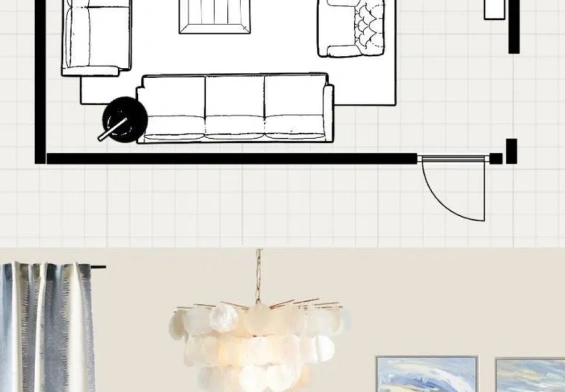
The traditional approach to kitchen planning involves a 2D floor plan a top-down drawing with labeled dimensions. It’s the standard, it’s what contractors work from, and it is genuinely inadequate for the task of helping a human being understand what a space will feel like.
Here’s why. A 2D floor plan shows area. It does not show volume. It does not show the way a 48-inch island reads differently in a 10-foot-wide kitchen versus a 14-foot-wide kitchen. It cannot communicate the visual weight of a large structure, or the way natural light gets blocked when a mass sits between a window and the rest of the room.
People are not naturally good at translating flat measurements into three-dimensional spatial experience. This is not a personal failing it’s just how human perception works. We understand space by being inside it, moving through it, sensing its proportions relative to our own bodies. A number on a page bypasses all of that entirely.
So homeowners approve plans they cannot truly visualize, contractors build what was approved, and the island that looked perfectly proportioned on paper turns out to be a room-dominating presence that nobody quite anticipated.
What 3D Planning Actually Changes
This is where the conversation shifts from diagnosis to solution and it’s a more significant shift than people initially expect.
3D kitchen planning software, particularly the tools that have become accessible to everyday homeowners over the last several years, does something that floor plans simply cannot. It places you inside the space before anything is built. You can walk a virtual path from the refrigerator to the sink. You can watch the oven door open and see exactly how much clearance remains. You can stand at the island and look toward the window and understand, viscerally, whether the proportions feel right or feel suffocating.
The difference in decision-making quality is substantial. When a homeowner can actually see that their planned 5-foot island leaves only 36 inches of clearance on the traffic side, the abstract number becomes a felt reality. The correction happens in software, not in demolition.
One scenario worth considering: a couple renovating a galley-style kitchen with an open end wanted to add an island for prep space and casual seating. Their initial plan called for a 48-by-36-inch island reasonable on paper. When they loaded the dimensions into a 3D planning tool and walked through the virtual space, they immediately saw that the seating overhang on one side pushed into the natural path between the kitchen and the dining area. They scaled the island down by eight inches in length and repositioned it six inches toward the window wall. Small adjustments, but the 3D model showed them clearly how those changes opened the traffic flow without sacrificing meaningful counter space.
They would never have caught that from a floor plan. The floor plan showed clearance numbers that technically met the minimum guidelines. The 3D model showed them how the space would actually live.
The Hidden Cost of Getting It Wrong
Beyond the daily inconvenience of a kitchen that doesn’t flow well, there’s a financial dimension that rarely gets discussed during the excitement of planning. Kitchen renovations are among the most expensive home projects most people undertake. Mid-range kitchen remodels routinely run between $25,000 and $75,000 depending on scope and market. At those numbers, the cost of a planning error is not trivial.
Removing or resizing a built island after the fact means new countertop fabrication, potential reconfiguration of electrical or plumbing if those were integrated, flooring repairs where the original footprint was, and the labor costs threading through all of it. The price of correcting a poorly proportioned island can easily reach several thousand dollars for a mistake that better visualization would have prevented entirely.
There’s also the subtler cost of living in a space that doesn’t work. Kitchens are high-frequency rooms. Most people use them multiple times daily, every single day. A kitchen that creates friction where movement feels cramped, where two people can’t cook together comfortably, where the island functions more as obstacle than asset compounds that friction across thousands of interactions over the years you live in the home.
Rethinking What the Island Is Actually For
Part of what makes 3D planning valuable isn’t just the technical accuracy. It’s that the process forces a more honest conversation about function.
When you’re standing in a showroom or scrolling through inspiration images, the island is always doing everything at once prep surface, breakfast bar, storage, statement piece. In your actual kitchen, with your actual square footage and your actual daily routines, it probably needs to do one or two things well rather than everything adequately.
3D planning makes you confront the tradeoffs in concrete spatial terms. Maybe the breakfast bar seating means sacrificing the prep space you actually needed more. Maybe the waterfall edge detail that looked stunning in the render reads as visually heavy in the context of your lower ceilings. These aren’t failures of taste they’re the normal result of seeing something in context rather than in isolation.
The homeowners who end up happiest with their kitchen islands are rarely the ones who built the largest island they could fit. They’re the ones who understood, before the first cabinet was installed, exactly what they were trading and what they were gaining. They made their mistakes in software, in an afternoon, for free.
The island still gleams. It just doesn’t block the refrigerator anymore.